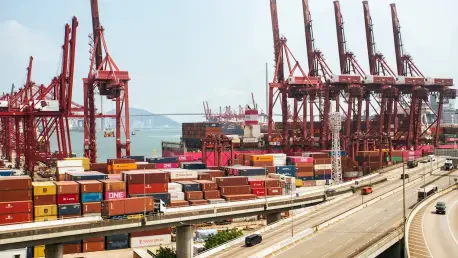

On the surface, China’s economic machinery appeared to be firing on all cylinders last year, churning out goods for the world at a pace that shattered trade records and defied geopolitical headwinds. This surge in exports allowed Beijing to declare its mission accomplished by hitting its official growth target. Yet, this tale of international success conceals a far more troubling domestic story of stagnant consumer spending, a persistent property crisis, and waning confidence among citizens and private businesses. The contrast between a booming external sector and a fragile home front reveals a fundamental imbalance, raising critical questions about the sustainability of the nation’s economic model.
The Official Story vs. The On-the-Ground Reality
Beijing’s official data for 2025 painted a picture of controlled success, with the economy expanding by 5%, precisely meeting the government’s target of “around 5%.” This figure continued a trend of managed, albeit slowing, growth following expansions of 5.2% in 2023 and 5.0% in 2024. However, the annual headline number obscured a concerning trend of deceleration. Economic growth in the fourth quarter of last year slowed to a 4.5% annual rate, down from 4.8% in the previous quarter. This marked the slowest quarterly expansion since the country began its recovery from stringent pandemic restrictions, signaling that the economy was losing momentum as the year closed.
This disconnect between the headline number and underlying weakness creates a stark contrast between China’s role in the world and the reality for its populace. While the nation functions as a powerful engine for global trade, supplying a vast array of goods to international markets, its own domestic core is sputtering. The economic anxiety felt by ordinary citizens and small business owners, who are grappling with job insecurity and uncertain futures, matters immensely. A slowdown in Chinese domestic consumption not only impacts Beijing’s long-term stability but also has ripple effects for international brands and the global economy, which has long relied on the Chinese consumer as a key source of growth.
The Export Powerhouse: A Double-Edged Sword
The primary force propping up China’s headline economic figures in 2025 was its formidable export sector. An exceptionally strong performance in foreign trade more than compensated for anemic domestic activity, culminating in a record-breaking annual trade surplus of $1.2 trillion. This massive influx of external demand became the single most important driver of the economy, allowing the government to report growth that would have been otherwise unattainable. The reliance on this single pillar, however, highlights a significant structural vulnerability in an increasingly fractured global trade environment.
This export resilience was put to the test amid renewed trade hostilities. Following the return of Donald Trump to the U.S. presidency, new tariffs led to a steep 20% decline in China’s exports to the American market last year. In a remarkable display of adaptability, Chinese manufacturers pivoted, successfully redirecting shipments to other global markets and largely offsetting the losses from the U.S. This maneuver showcased the sector’s agility, but it also exposed the precariousness of its position. The trade truce eventually agreed upon by President Trump and Chinese leader Xi Jinping provided a temporary reprieve, but the underlying tensions and the risk of further disruptions remain a persistent threat.
The Cracks Beneath the Surface: A Fragile Domestic Front
In sharp contrast to the booming export sector, China’s domestic economy remains mired in weakness, primarily due to sluggish consumer demand. Across the country, households and private businesses are holding back on spending, daunted by significant uncertainty about their jobs and future income. This sentiment is captured in the experience of small business owners like Liu Fengyun, a noodle restaurant owner in Guizhou, who noted her customers were cutting back on even small luxuries because, as they told her, “money is hard to earn now.” This cautious consumer behavior has become a major roadblock to a balanced economic recovery.
The root cause of this diminished public confidence is the unshakeable crisis in the property market. The prolonged downturn in real estate has had a profound chilling effect on the national psyche, as property often represents the largest share of household wealth. According to Chi Lo of BNP Paribas Asset Management, stabilizing this critical sector is the essential first step toward reviving public confidence. Without a recovery in the property market, a rebound in household consumption and private investment remains unlikely, trapping the domestic economy in a low-growth cycle.
The government’s attempts to invigorate domestic demand through stimulus measures have yielded limited success. Throughout 2025, Beijing rolled out policies such as trade-in subsidies for automobiles and home appliances to encourage spending. While these programs provided a temporary lift, their effects are now “losing steam.” Weiheng Chen, a strategist at J.P. Morgan, suggests that these major consumer stimulus policies may even be scaled back this year, leaving a significant gap in efforts to boost internal consumption and further exposing the economy’s reliance on external demand.
Expert Voices: A Chorus of Caution and Skepticism
A growing consensus among independent economists is that China’s export-led growth model is both precarious and unsustainable. Lynn Song, chief economist at ING, openly questions how long external demand can single-handedly drive the economy, particularly as global trade frictions intensify. The risk of a protectionist backlash is rising, as other nations begin to shield their own industries from a surge in Chinese imports. Mexico’s recent implementation of tariffs and threats from the European Union to do the same suggest that trade conflicts are expanding far beyond the U.S.-China dynamic.
Moreover, the official economic data released by Beijing has been met with significant skepticism. While officials like Kang Yi of the National Bureau of Statistics speak of “steady progress” and “solid foundations,” some independent analysts believe these figures overstate the economy’s health. The Rhodium Group, a respected think tank, estimated that actual growth in 2025 was likely much lower than the official 5%, suggesting a figure closer to a range of 2.5% to 3%. This discrepancy fuels concerns that the official narrative masks deeper structural problems that are not being fully addressed.
The Path Forward: Balancing Ambition with Economic Reality
Looking ahead, the consensus forecast points toward a continued deceleration of the Chinese economy. Projections for 2026 from institutions like Deutsche Bank suggest that growth will slow to approximately 4.5%. This cooling trend presents a significant challenge for a government that has staked its legitimacy on delivering consistent economic prosperity. Navigating this slowdown will require a difficult balancing act between managing short-term stability and implementing long-term structural reforms to foster a more balanced, consumption-driven economy.
The stakes for Beijing are incredibly high. The government’s long-term strategy has been to use robust economic growth as the bedrock of social stability and a tool for achieving its ambitious goal of reaching a GDP per capita of $20,000 by 2035. According to analyst Neil Thomas, hitting this target requires sustained annual growth of around 4% to 5%. As growth rates falter, the pressure to find new, more sustainable drivers of the economy has become more urgent than ever. The path chosen in the coming years will determine whether China can successfully transition toward a more balanced economic future or will remain vulnerable to the volatility of global markets.