
A geopolitical tremor originating from a remote Arctic territory has sent powerful shockwaves across the global financial system, raising urgent questions about the stability of long-standing economic alliances. On Monday, January 19, 2026, markets awoke to the stunning news that the United States had threatened significant new tariffs against eight of its closest European allies over the sovereignty of Greenland. This sudden escalation has forced investors, policymakers, and business leaders to confront a high-stakes question: Is this an isolated diplomatic firestorm, or the opening salvo in a new and unpredictable global trade war? This roundup synthesizes diverse analyses of the market’s immediate reaction, the strategic political fallout, and the underlying economic vulnerabilities this crisis has exposed.
The Arctic Chill: How a Geopolitical Gambit Shook Global Markets
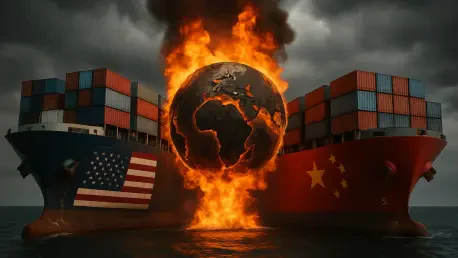
The catalyst for the market turmoil was a weekend announcement from the Trump administration detailing plans to impose a 10% import tax on Denmark, Norway, Sweden, France, Germany, the United Kingdom, the Netherlands, and Finland. This punitive measure, directly linked to the nations’ unified opposition to U.S. overtures regarding Greenland, injected a potent dose of uncertainty into global markets. The threat instantly transformed a territorial issue into a front-line economic conflict, demonstrating how quickly geopolitical posturing can translate into tangible financial risk.
The financial gravity of the situation became immediately apparent. Even with U.S. markets closed for a holiday, futures trading painted a bleak picture, signaling a sharp downturn at the next opening bell. Simultaneously, European stock indices absorbed the initial blow, closing with significant losses. This immediate, negative consensus among Western investors established the incident not as a minor diplomatic spat but as a serious threat to economic stability. The core question that emerged was whether this targeted dispute could metastasize, creating a systemic rupture in the worldwide economic framework.
Deconstructing the Global Economic Response
From Wall Street to Frankfurt: Charting the Initial Shockwave of Tariff Threats
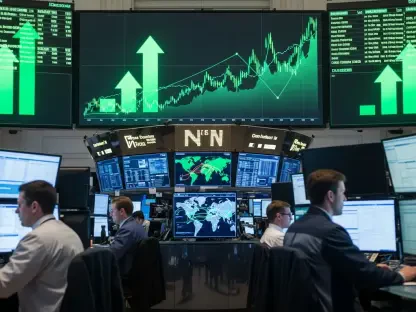
The initial financial shockwave was both swift and severe, with market data providing a clear narrative of investor fear. Futures for the S&P 500, Dow Jones Industrial Average, and the tech-heavy Nasdaq all registered significant declines, pointing toward widespread apprehension. Across the Atlantic, the damage was already done; Germany’s DAX, France’s CAC 40, and Britain’s FTSE 100 all closed firmly in the red, reflecting the direct economic exposure of the targeted nations.
This sell-off in equities triggered a classic flight to safety, a textbook indicator of deep-seated market anxiety. Precious metals surged as investors sought refuge from volatility, with gold and silver prices climbing sharply. In contrast, other asset classes showed a more nuanced reaction. Oil prices saw only a modest rise, and currency markets fluctuated as traders processed the complex implications. However, the overarching sentiment was unmistakably risk-off, as capital moved from exposed assets toward traditional safe havens in anticipation of further instability.
Beyond the Balance Sheets: Cracks Emerge in the Western Economic Bloc
Beyond the immediate market numbers, the dispute exposed deep fractures within the Western economic alliance. The targeted European nations issued a forceful and unified condemnation of the U.S. tariff threat, a rare and significant public rebuke that signaled a serious rupture in transatlantic relations. This joint statement was widely interpreted not merely as diplomatic protest but as a warning that the foundational trust undergirding the alliance was in jeopardy.
Analysts quickly warned that the long-term consequences could far outweigh the short-term market volatility. The core of this concern is the potential erosion of institutional trust, which could prompt Europe to rethink its deep economic integration with the United States. A slow but deliberate rebalancing of capital away from U.S. assets is seen as a credible risk, a development that would be far more consequential than a temporary stock market downturn. This raises a critical debate: whether the Greenland gambit is a fleeting crisis or a foundational shift that could permanently alter the global economic power structure.
Asia’s Calculated Response: A Tale of Resilience, Caution, and Opportunity
In stark contrast to the West, Asian markets presented a divergent and more complex picture. China’s Shanghai Composite posted modest gains, buoyed by new data showing resilient export-driven growth in 2025. South Korea’s KOSPI continued its record-setting rally, powered by its dominant tech sector. This performance suggests that regional economic factors provided a degree of insulation from the immediate transatlantic fallout.
However, not all of Asia was immune. Hong Kong’s Hang Seng and Japan’s Nikkei 225 both declined, with Tokyo’s market also reacting to domestic political uncertainty. This mixed response highlights how regional economies are assessing the situation. Many analysts believe that Asian economies may be positioning themselves to capitalize on a prolonged U.S.-Europe trade dispute. Such a scenario could accelerate a shift in global supply chains, presenting both immense challenges and strategic opportunities for the region.
Compounding Factors: How Broader Economic Headwinds Amplify the Crisis
The Greenland tariff threat did not occur in a vacuum; it landed in a global market already burdened by significant anxieties. Persistent inflation, high-stakes corporate earnings reports, and intense scrutiny over the lofty valuations of AI-driven stocks had already created a tense environment. This new geopolitical crisis acts as a powerful accelerant, amplifying these preexisting vulnerabilities and compounding the uncertainty investors face.
This development places the U.S. Federal Reserve in an exceptionally precarious position. The central bank must now weigh this new and unpredictable geopolitical risk against its ongoing and delicate battle to control inflation without triggering a recession. The Greenland issue, therefore, challenges the assumption that it is an isolated event. Instead, it is increasingly viewed as a destabilizing factor that could tip an already fragile global economy into a more serious downturn.
Navigating the New Geopolitical Minefield: Strategic Imperatives for Investors
The primary takeaway from this episode is clear: geopolitical risk has moved from a secondary consideration to a primary driver of market volatility. The crisis has revealed the fragility of transatlantic trust and reinforced the interconnected, yet not monolithic, nature of global markets. Investors must now integrate this new reality into their strategic planning, recognizing that politically motivated trade disruptions can emerge with little warning.
In response, financial advisors recommend several key strategies. Diversifying portfolios beyond heavily exposed regions is paramount, as is increasing allocations to traditional safe-haven assets to hedge against sudden shocks. Furthermore, businesses are being urged to stress-test their supply chains for vulnerabilities to geopolitical disruptions. For both investors and corporations, closely monitoring diplomatic communications is no longer optional but a critical component of risk management in this new environment.
The Greenland Gambit: A Tipping Point for the Global Economic Order
The dispute over Greenland demonstrated with stunning clarity how a seemingly localized territorial issue could rapidly destabilize global financial markets and threaten decades-old alliances. The immediate financial damage was significant, but the longer-term risk of escalation remains the primary concern. The possibility of a “slow rebalancing” of global capital away from the U.S. could fundamentally redefine economic power structures over the coming years.
Ultimately, this incident served as a stark wake-up call. It left the international community at a crossroads, facing a critical question about the future of global commerce. It remained to be seen whether this would inspire a renewed commitment to diplomatic de-escalation and cooperation or if it was indeed the first shot in a new and unpredictable era of global trade warfare.