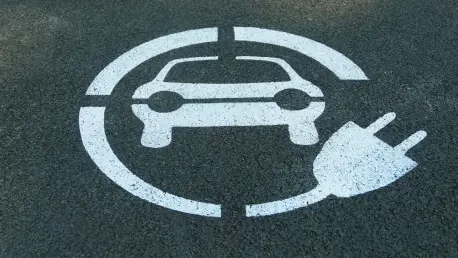

A legal firestorm has erupted across the United States as a formidable coalition of sixteen states and the District of Columbia launched a federal lawsuit against the Trump administration, accusing it of illegally strangling the nation’s transition to electric transportation. This high-stakes confrontation is not merely about bureaucratic procedure; it centers on more than $2 billion in congressionally approved funding intended to build a robust national network of electric vehicle charging stations. The outcome of this battle, now unfolding in the U.S. District Court for the Western District of Washington, carries profound implications for the automotive industry, national climate goals, and the everyday decisions of American drivers. It forces a critical question: is federal policy acting as a catalyst or a roadblock for the country’s electric vehicle ambitions?
The Two-Billion-Dollar Question: What Happens When Federal Ambition Hits a Red Light
The lawsuit, spearheaded by the attorneys general of California and Colorado, represents a direct challenge to the executive branch’s authority over funds explicitly allocated by Congress. The coalition, which includes states like Michigan, New York, and Pennsylvania, argues that the Department of Transportation and the Federal Highway Administration are unlawfully “impounding” money designated for the Charging and Fueling Infrastructure Grant program and the Electric Vehicle Charger Reliability and Accessibility Accelerator program. These programs were established under a law passed during the prior Biden administration, designed to accelerate the build-out of a convenient and reliable public charging network, a cornerstone of the nation’s previous electrification strategy.
This legal maneuver signals an escalation in the simmering conflict between Democratic-led states committed to environmental action and a White House that has systematically worked to reverse those policies. The states view the withheld funds not as discretionary spending but as a legal obligation from the federal government, essential for meeting their own climate targets and fostering economic growth in the green technology sector. By taking the fight to federal court, they are attempting to force the administration’s hand, arguing that political ideology cannot override legislative mandate.
Beyond the Lawsuit: Why a Fight Over Charging Stations Matters to Every Driver
For the average American consumer, a legal dispute over federal grants may seem distant, but its consequences are felt directly at the dealership and on the road. The persistent issue of “range anxiety”—the fear that an electric vehicle will run out of power before reaching a charging station—remains a primary barrier to widespread EV adoption. The very funds at the center of this lawsuit were designed to alleviate that fear by building tens of thousands of new public chargers. Without this investment, the infrastructure gap widens, leaving potential EV buyers hesitant to make the switch, particularly those in rural or less-developed areas.
This infrastructure bottleneck occurs within a broader political context of sharp reversal. The current administration has made its opposition to EVs a central tenet of its energy policy, dismantling the previous administration’s goals for vehicle electrification. Upon taking office, President Trump moved to end what was often mischaracterized as an “EV mandate,” which was in reality a set of emissions targets designed to encourage automakers to produce more electric models. This policy shift, combined with the earlier elimination of a popular $7,500 consumer tax credit by congressional Republicans, has created a chilling effect, placing the burgeoning EV industry at a critical and uncertain crossroads.
The Anatomy of a Political Showdown
At the heart of the states’ legal argument is the claim that the administration is illegally impounding approximately $1.8 billion for the Charging and Fueling Infrastructure Grant program and an additional $350 million for the EV Charger Reliability and Accessibility Accelerator. Their filing contends that the executive branch does not have the authority to simply refuse to spend money that Congress has specifically appropriated for a designated purpose. This principle, they argue, is fundamental to the separation of powers, and they are asking the court to compel the administration to release the funds as intended by law.
This is not the first time the administration has been taken to court over this issue. A clear pattern of resistance emerged earlier in the year when the White House ordered a halt to state spending from the separate, $5 billion National Electric Vehicle Infrastructure (NEVI) program. That move also prompted a lawsuit, which resulted in a federal judge ordering the administration in May to release a significant portion of the withheld NEVI funding. In response, Transportation Secretary Sean Duffy issued revised guidance to streamline the application process, but the incident established a precedent of administrative delay and legal challenges, setting the stage for the current, larger confrontation.
The ripple effects of this policy uncertainty are already being felt across the automotive sector. With the pace of EV sales growth slowing, major manufacturers are being forced to recalibrate their strategies. Consumers, wary of high purchase prices and an unreliable public charging landscape, are showing renewed interest in hybrid and gasoline-powered vehicles. This market shift is exemplified by Ford Motor Co., which recently announced a significant pivot away from its previously aggressive electrification targets to focus more on producing hybrids, a move that reflects the industry’s need to adapt to a landscape shaped by administrative resistance and wavering consumer confidence.
Voices from the Front Lines: Rhetoric, Data, and Dueling Narratives
The states’ position is articulated with a sense of urgency. California Attorney General Rob Bonta described the administration’s actions as a “reckless attempt” to derail progress on multiple fronts. He asserted that withholding the funds not only undermines efforts to combat air pollution and climate change but also stifles technological innovation, prevents the creation of green jobs, and denies communities access to cleaner, more affordable transportation. This narrative frames the legal battle as a defense of environmental health, economic opportunity, and the future of American manufacturing.
In stark contrast, the administration has employed a public narrative aimed at discrediting the EV transition altogether. In a recent press conference, President Trump justified his policies by repeating the inaccurate claim that “$8 billion” had been spent in parts of the Midwest “to build nine chargers” under the previous administration. This rhetoric, while factually incorrect, is designed to portray the federal EV programs as wasteful and ineffective, thereby building public support for their termination and justifying the withholding of congressionally approved funds.
Beneath the political rhetoric lies a data-driven reality that highlights the tangible challenges facing consumers. According to Kelley Blue Book, the average sale price for a new electric vehicle last month was $58,638, significantly higher than the $49,814 average for a new vehicle overall. This price premium, coupled with concerns about charging availability, grounds the debate in concrete economic pressures. The funds being contested are seen by proponents as a critical tool to help close this accessibility gap by making the EV ecosystem more robust and, ultimately, more affordable for the mainstream buyer.
A Framework for Conflict: The Strategies Shaping the EV Tug-of-War
Faced with an executive branch actively hostile to their policy goals, the coalition of states has adopted a clear playbook: leveraging the judicial system. Their strategy hinges on using the courts to enforce the letter of the law, arguing that Congressional intent and appropriation supersede the policy preferences of the current administration. The lawsuit is their primary tool to unlock the frozen infrastructure funds, viewing it as the most direct path to holding the federal government accountable to its legislative obligations.
The administration, in turn, is deploying a multi-pronged strategy to advance its agenda. This approach combines direct executive action, such as the initial orders to halt funding, with the issuance of revised guidance designed to control and potentially slow the deployment of any funds that are eventually released. This bureaucratic maneuvering is powerfully supplemented by a consistent public relations campaign that uses strong rhetoric to shape public opinion against electrification, creating a political environment that is more permissive of its policy reversals.
Caught in this political tug-of-war, automakers are pursuing a strategy of adaptation and risk mitigation. While long-term investments in electrification continue, companies are simultaneously ramping up production of hybrid and fuel-efficient gasoline vehicles to meet current market demand. This dual approach allows them to balance their ambitious, multi-billion-dollar bets on an electric future with the immediate need to remain profitable in a marketplace where policy is unpredictable and consumer sentiment is in flux. It is a cautious dance, reflecting the profound uncertainty that now clouds America’s path toward an electric vehicle future.
The legal challenge mounted by the states ultimately did more than just contest the withholding of federal funds; it highlighted a fundamental schism in the nation’s vision for its industrial and environmental future. The court proceedings laid bare the intricate strategies employed by both state and federal governments as they vied for control over the direction of American transportation. In the end, the resolution of this conflict had lasting repercussions, influencing not only the speed at which charging stations were built but also shaping automaker investment decisions and consumer choices for years that followed, marking a pivotal moment in the country’s complex journey toward vehicle electrification.