
A persistent gap between market expectations and economic reality continues to widen, challenging assumptions that a swift return to lower interest rates is on the horizon.
The Fed’s Rate Cut Calculus Navigating a Contradictory Economic Landscape
Market participants have been eagerly anticipating a pivot toward lower interest rates, but the Federal Reserve remains steadfast in its data-driven caution. This fundamental disagreement stems from an economy sending mixed signals, where signs of cooling are offset by surprising pockets of strength. The central bank’s cautious stance underscores a delicate balancing act, as it must weigh the risks of stifling growth against the danger of allowing inflation to become entrenched.
This tug-of-war between reining in inflation and maintaining economic stability directly influences financial conditions for everyone. For consumers, it means prolonged high rates on mortgages, auto loans, and credit cards. For businesses, it translates to higher borrowing costs that can delay investment and expansion. The Fed’s policy decisions, therefore, ripple through every corner of the economy, shaping household budgets and corporate strategies alike.
Conflicting signals from the latest economic reports are forcing a strategic pause on monetary policy adjustments. While inflation has cooled significantly from its peak, it remains stubbornly above target. At the same time, resilient consumer spending suggests the economy is still running hot, even as the job market begins to show signs of moderation. This complex picture leaves policymakers with little room to maneuver, making a “wait-and-see” approach the most prudent path forward.
Dissecting the Data Behind the Delay
Inflation’s Final Mile Proves the Toughest
The journey to bring inflation back to the Federal Reserve’s target is proving to be a challenging final stretch. A recent Commerce Department report for November revealed that consumer prices held firm at 2.8% year-over-year, slightly defying expectations for a more rapid decline. This persistence highlights the difficulty in eliminating the last vestiges of upward price pressure from the economy.
While this figure is a vast improvement from the four-decade peak seen in 2022, it underscores that the fight is not yet over. The central bank has a clear 2% inflation target, and any reading above that level is cause for concern. The data shows that while significant progress has been made, underlying inflationary forces have not been fully vanquished.
A more granular look at the data offers a glimmer of optimism, as prices rose a moderate 0.2% on a monthly basis. If sustained, this pace would align with the Fed’s annual goal. However, this has sparked a debate among analysts: is this a definitive sign that inflation is under control, or does the stickiness of the annual figure suggest that underlying pressures are more resilient than they appear?
The Unstoppable Engine Why Consumer Spending Complicates the Fed’s Plan
American consumers continue to be a powerful, and perhaps complicating, force in the economy. The November report showed a robust 0.5% climb in consumer spending, a clear indicator that demand remains strong despite higher prices and interest rates. This resilience is a key factor fueling economic activity and, by extension, contributing to inflationary pressure.
This spending vigor is a primary reason the economy has avoided a recession, as evidenced by a remarkable 4.4% GDP growth rate in the third quarter. While positive on the surface, such a hot economy presents a dilemma for the Fed. An environment this strong makes it difficult to justify rate cuts, as easing monetary policy could risk reigniting inflation.
The risk is that this continued economic strength could undermine the progress made in the inflation fight. If strong demand allows companies to continue passing on higher costs to consumers, it could prolong the high-rate environment. The Fed is keenly aware that cutting rates prematurely in the face of such robust spending could undo much of its hard work.
A Cooling Labor Market Introduces a New Variable
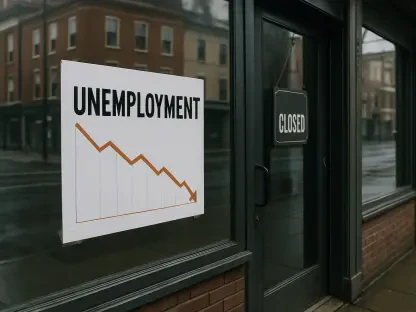
While consumer spending remains hot, the labor market is introducing a new variable into the economic equation. Recent data highlights a clear trend of slowing hiring, a critical development that both helps and complicates the inflation battle. Slower job growth can reduce wage pressures, a key component of inflation, but it also signals a potential weakening of the broader economy.
This creates a dichotomy for policymakers. The unemployment rate remains historically low, suggesting a healthy labor market. However, anecdotes from job-seekers and slowing hiring data indicate a less dynamic environment where finding new employment is becoming more challenging. This cooling is a necessary component of the Fed’s strategy, but it must be managed carefully to avoid a sharp economic downturn.
The situation challenges the conventional wisdom that a strong economy is unequivocally positive in the current context. A moderating job market, while difficult for those seeking work, may be a necessary ingredient for achieving the Fed’s goal of price stability. It provides a counterweight to strong consumer spending and gives the Fed a reason to believe its policies are having the intended effect.
Decoding the Fed’s Strategic Patience
The combination of stubborn inflation, strong spending, and a cooling labor market has forged a consensus that the central bank feels little urgency to ease its policy. The prevailing view among officials is that the risks of cutting rates too soon outweigh the risks of waiting too long, especially when the economy is still growing at a healthy clip. This underpins a strategy of “strategic patience.”
The most likely path forward is an extended hold on the key interest rate. Policymakers will likely keep rates at their current level as they await more conclusive evidence that inflation is on a sustainable path back to 2%. This means the market’s hope for early and aggressive rate cuts may be misplaced, with a more cautious and gradual approach being the probable course of action.
Ultimately, this holding pattern is a direct synthesis of all the conflicting data points. The strength in consumer spending provides a buffer, allowing the Fed to maintain its restrictive stance without immediate fear of causing a severe recession. Meanwhile, the persistent inflation figures justify the caution, and the cooling labor market offers hope that their policy is working as intended, albeit slowly.