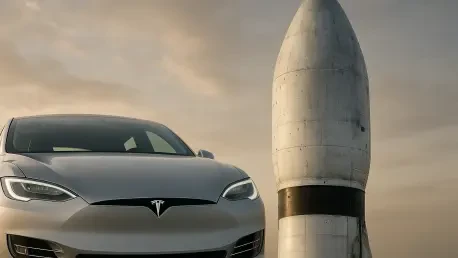

The ambitious Terafab semiconductor project serves as a primary catalyst for merging these two giants to streamline the production of essential artificial intelligence chips. This development comes as the global industrial landscape is witnessing a massive tectonic shift where the boundaries between automotive manufacturing, aerospace engineering, and advanced computing begin to dissolve into a single technological frontier. Analysts suggest that this unprecedented consolidation would mark the end of the siloed approach to Musk’s various ventures, creating a singular entity capable of dominating the next decade of technical innovation. By unifying the logistical and developmental operations of these firms, the move aims to solve persistent inefficiencies that have plagued cross-company collaborations for years. Financial institutions, including Barclays, have noted that the sheer scale of shared projects has reached a tipping point where remaining separate no longer serves the interests of rapid deployment or institutional governance in a competitive environment. This strategic realignment is expected to redefine the parameters of corporate structure for the modern era.
Strategic Rationale: The Drive for Unified Development
Technological Convergence: The Terafab Factor
The central pillar of this proposed unification is the Terafab semiconductor facility, which represents the pinnacle of shared hardware goals between the two organizations. This facility is not merely a production plant but a specialized hub designed to manufacture the next generation of silicon required for high-speed computation and autonomous decision-making. For Tesla, the success of the Optimus humanoid robot relies entirely on the availability of these high-performance chips, while SpaceX requires similar processing power for the complex telemetry and orbital maneuvers of its massive Starship fleet. By merging, the companies can internalize the entire supply chain for these critical components, reducing dependency on external vendors and significantly lowering production costs. Musk has indicated that without the streamlined coordination of Terafab, the scaling of robotic labor would face nearly insurmountable hurdles, making the merger a functional necessity for the current and upcoming fiscal cycles as the demand for proprietary AI hardware continues to surge across all sectors.
Industrial Logic: Scaling the Optimus Project
Beyond the immediate manufacturing concerns, the industrial logic behind this merger rests on the premise that the two companies are already deeply interdependent at a fundamental engineering level. By merging, they can eliminate the administrative and legal complexities inherent in their current cross-company collaborations, allowing for a more fluid transfer of intellectual property and talent. The primary driver is a new form of vertical integration, which aims to accelerate artificial intelligence development and streamline the production of high-tech hardware across both the terrestrial and orbital domains. This integration is no longer seen as an optional strategic advantage but as a core requirement for maintaining leadership in the rapidly evolving robotics market. Experts suggest that the convergence of these two entities will create a powerhouse that possesses the unified capital and technical infrastructure necessary to pursue high-risk, high-reward ventures that require decades of sustained investment to reach maturity while maintaining a dominant market share.
Structural Realities: Managing the Financial Transition
Financial Framework: The All-Stock Swap Mechanism
The financial mechanics of the proposed merger suggest a massive restructuring where SpaceX would serve as the primary acquiring entity in an all-stock swap. Current market projections place the valuation of SpaceX at a staggering $2.1 trillion, while Tesla maintains a strong position with a valuation of $1.5 trillion. Financial analysts, including Dan Levy from Barclays, have proposed a swap ratio of approximately 0.7 SpaceX shares for every Tesla share to facilitate a fair transition for existing investors. This structure is intended to stabilize the combined market cap while providing Tesla shareholders with direct exposure to the high-growth aerospace sector. By utilizing SpaceX as the vehicle for acquisition, the merger avoids the traditional pitfalls of cash-heavy buyouts, instead focusing on the long-term appreciation of equity within a diversified industrial giant. This approach provides a clear pathway for consolidating the massive resources required for the next phase of global expansion and technical dominance without depleting the liquid reserves.
Institutional Alignment: Future Governance Models
The narrative of converging paths between these two industrial leaders became a central focus for institutional investors as the complexity of shared projects demanded a formal resolution. Boards of directors from both companies recognized that the administrative hurdles of cross-company licensing were slowing the pace of critical breakthroughs in semiconductor design. The proposed merger addressed these concerns by providing a clear legal and financial framework for future cooperation. Actionable next steps for the leadership teams involved the thorough vetting of valuation models to ensure transparency for minority shareholders during the upcoming December vote. Moving forward, the focus shifted toward harmonizing the distinct corporate cultures of the automotive and aerospace sectors to foster a unified engineering mindset. This consolidation set a new standard for vertical integration, proving that the future of technology lay in the total synchronization of hardware, software, and energy systems within a cohesive global infrastructure.