
A chilling new precedent may have been set in the shadowy world of cyber warfare, where the price of unvarnished truth could be corporate survival itself, as a major American cybersecurity firm, Palo Alto Networks, stands accused of censoring its own findings. The allegation is that the company intentionally removed a direct link to the Chinese government from a major cyberespionage report out of fear of political and economic retaliation. This incident highlights a growing and deeply troubling trend: the collision of the technical discipline of threat intelligence with the high-stakes world of international diplomacy and corporate risk management. The following analysis will dissect the Palo Alto Networks case, explore the evidence and motivations behind the alleged self-censorship, analyze the broader dilemma facing the industry, and consider the future implications for global cybersecurity.
The Anatomy of a Politicized Report
Case Study: The “Shadow Campaigns” Attribution
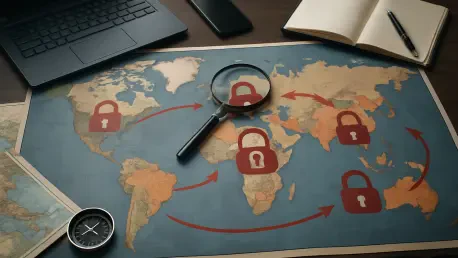
The controversy centers on a report from Unit 42, Palo Alto’s threat intelligence division, detailing a massive hacking operation dubbed “The Shadow Campaigns.” The campaign’s scope was breathtaking, involving reconnaissance against nearly every country on the planet and the successful compromise of critical infrastructure in at least 37 nations. Orchestrated by a group the firm code-named TGR-STA-1030, the operation represented a significant global threat.
However, the report’s public-facing conclusion is where the integrity of the intelligence came into question. According to two sources familiar with the matter, an initial draft of the report explicitly attributed the campaign to a hacking group with clear connections to Beijing. In the final version published for public consumption, this direct attribution was sanitized. The specific link to the Chinese state was replaced with the far more ambiguous description of a “state-aligned group that operates out of Asia,” a deliberate softening that obscures the true origin of the threat.
The Digital Trail and Geopolitical Clues
Despite the softened language, the published report contained a trail of digital breadcrumbs that strongly pointed toward Chinese involvement. The Unit 42 researchers themselves noted that the hackers’ activity patterns were overwhelmingly concentrated within the GMT+8 time zone. This time zone, which encompasses all of China, serves as a significant, albeit circumstantial, piece of evidence suggesting the operational base of the threat actors.
Furthermore, the specific targeting choices documented in the report aligned with uncanny precision to Beijing’s known geopolitical interests and grievances. For instance, the hackers mounted a focused assault on government infrastructure in Czechia shortly after the Czech president met with the Dalai Lama, a figure Beijing views as a separatist threat. In another pointed example, Thailand’s networks were targeted on November 5, immediately preceding the Thai king’s first state visit to Beijing. These actions suggest an intelligence-gathering mission driven not by financial gain, but by the strategic priorities of a nation-state.
Balancing Disclosure, Duty, and Danger
Corporate Motivations and Official Denials
The primary motivation behind the alleged redaction appears to be rooted in corporate fear. According to the sources, Palo Alto Networks executives grew anxious after Chinese authorities recently banned software from approximately 15 U.S. and Israeli firms, including their own, citing national security concerns. This move was interpreted as a clear signal of Beijing’s willingness to use economic leverage against foreign technology companies.
This anxiety was compounded by the direct risks to the company’s assets and personnel. Palo Alto Networks maintains a significant presence in China, with five offices and over 70 employees on the ground. The leadership reportedly feared that publicly accusing the Chinese state of a global hacking campaign could provoke severe retaliation, endangering their staff and creating adverse consequences for their global clients who operate in or with China.
When questioned about the altered report, the company’s initial response was a terse statement that “Attribution is irrelevant.” Later, a company vice president denied any connection between the report’s wording and Chinese regulations, calling such suggestions “speculative and false.” Meanwhile, the Chinese Embassy in Washington issued a standard denial, stating its opposition to all cyberattacks and cautioning against “unfounded speculation and accusations.”
Perspectives from Industry and Academia
The forensic evidence presented in the report, however, resonated with other experts in the field. Tom Hegel, a senior threat researcher at the cybersecurity firm SentinelOne, reviewed the findings and confirmed his team had observed similar activity. He stated that their assessment aligns with the conclusion that the campaign is “part of a broader pattern of global campaigns linked to China that seek intelligence and persistent internal access.” This external validation lends significant credibility to the original, un-redacted findings of the Unit 42 researchers.
This incident perfectly encapsulates a core dilemma facing the modern cybersecurity industry, as articulated by Thomas Rid, a professor at Johns Hopkins University. Publicly naming and shaming a state-sponsored hacking group can earn a firm industry accolades and media attention. In contrast, directly challenging a powerful foreign intelligence service risks severe reprisals, a threat that is magnified for multinational corporations with a physical presence in the accused country. For companies like Palo Alto Networks, the decision transcends a simple business calculation, becoming a question of balancing transparent reporting against the fundamental duty to ensure the physical safety of their employees.
The Future of Threat Intelligence in a Fractured World
The Chilling Effect on Cybersecurity Transparency
This case risks establishing a dangerous new industry norm where cybersecurity firms increasingly self-censor their findings to avoid provoking powerful and vindictive nation-states. If direct attribution becomes a liability, the industry may retreat toward the kind of vague, non-committal language seen in the “Shadow Campaigns” report. Such a trend would represent a significant step backward for transparency in the cybersecurity space.
The primary challenge created by this chilling effect is the erosion of public knowledge and the degradation of the collective threat landscape. When the true origins of major cyber campaigns are deliberately obscured for business reasons, the public, policymakers, and even other security professionals are left less informed. This information deficit makes it more difficult to understand attackers’ motives, anticipate their next moves, and build effective defenses, ultimately making everyone less secure.
Broader Implications for Global Security Policy
The trend toward muted attribution has severe implications for international security. Public “naming and shaming” has been a key, albeit imperfect, tool used by governments and the private sector to create a deterrent against state-sponsored cyber operations. By removing the reputational cost of being caught, self-censorship effectively emboldens these threat actors, signaling that they can operate with a greater degree of impunity.
This development could hinder international cooperation against cybercrime, as holding nations accountable becomes nearly impossible without clear, public evidence. Moreover, it creates a risk that policymakers will be forced to act on incomplete or intentionally vague intelligence. When security leaders do not have the full picture of who is attacking their critical infrastructure and why, their ability to craft effective defensive strategies and foreign policy responses is critically weakened, undermining both national and global security postures.
Conclusion: Navigating the New Geopolitical Battlefield
The Palo Alto Networks incident served as a stark case study in how corporate interests and intense geopolitical pressures are actively reshaping the practice of threat intelligence. The world of cybersecurity has fundamentally shifted from a purely technical domain into a complex geopolitical battlefield where every report and every attribution carries diplomatic weight and potential corporate consequences. This trend marked a critical juncture for the industry.
Understanding this dynamic was no longer optional; it was essential for grasping the future of global security. The challenge this presented to the cybersecurity industry, policymakers, and the public was profound. It demanded a new consensus on how to preserve the integrity and transparency of threat reporting in an era of escalating international tensions, ensuring that the defenders of cyberspace are not silenced by the very threats they seek to expose.