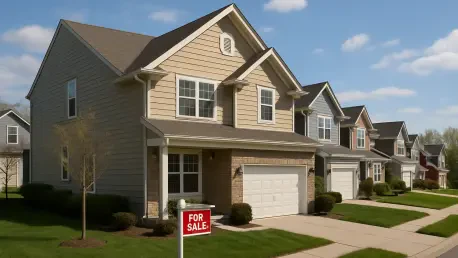

The American dream of homeownership felt more distant than ever for millions in 2025, as the United States housing market grappled with its most severe and protracted slump in three decades. The year was defined by a frustrating paradox: despite a historic freeze in sales activity that saw transaction volumes plummet to generational lows, home prices continued their relentless march upward. This difficult environment, exacerbated by mortgage rates that remained stubbornly high for much of the year, created a landscape of profound unaffordability, effectively shutting the door on a vast number of aspiring buyers. The fourth consecutive year of this downturn solidified the market’s status as a central challenge for the nation’s economic health, leaving analysts to sift through the wreckage for signs of a potential, albeit fragile, recovery. The convergence of these negative factors painted a bleak picture of a sector stuck in a low-activity, high-cost equilibrium that benefited few and frustrated many.
The Anatomy of a Stagnant Market
A Historic Sales Plunge
The most stark indicator of the market’s deep malaise was the dramatic decline in home sales, which reached a level of inactivity not seen since the mid-1990s. The National Association of Realtors (NAR) reported that a mere 4.06 million previously occupied homes were sold throughout 2025. This figure represents a profoundly stagnant market, essentially mirroring the dismal sales total from 2024 and continuing a multi-year downward trend that began in 2022. To place this in proper context, these sales levels are significantly below the 5.2 million annual transactions that economists generally consider to be the hallmark of a healthy and fluid housing market. The persistence of sales figures hovering near the 4-million mark for several years running highlights not just a temporary downturn, but a sustained market contraction that has fundamentally altered the landscape for buyers and sellers alike, freezing mobility and keeping a new generation of potential homeowners on the sidelines waiting for an opening that never seemed to materialize.
The sustained stagnation in sales volume throughout 2025 created a ripple effect across the broader economy, impacting industries from construction and home improvement to furniture and appliance retail. This prolonged period of low activity reflected a deep-seated buyer paralysis, where the cost of entry into homeownership became prohibitively high for a significant portion of the population. The market has been operating well below its traditional velocity, a condition that points to fundamental structural issues rather than a simple cyclical dip. The period since 2023, with sales locked into this low-4-million range, established a new, depressed baseline that frustrated real estate professionals and would-be buyers. The inability for the market to break out of this slump underscored the depth of the affordability crisis and the powerful economic forces that were keeping a lid on housing activity, creating a backlog of demand that could not be met under the prevailing financial conditions. This environment left many feeling that the housing ladder had been pulled up, out of reach.
The Vise Grip of High Prices and Rates
Compounding the misery of low sales was the perplexing and persistent rise in home prices, which defied conventional market logic. In a typical downturn where demand evaporates, prices would be expected to soften or decline. Yet, in 2025, the median national home price continued to appreciate, climbing by 1.7% to reach an unprecedented high of $414,400. This continued growth, even in a market with historically low transaction volume, pointed directly to a severe and unresolved imbalance between supply and demand. The chronic shortage of available homes for sale meant that the few properties that did come onto the market often attracted competition, preventing any meaningful price relief for buyers. This dynamic created a frustrating scenario where even as fewer people were buying, the cost of purchasing a home continued to escalate, further squeezing affordability and ensuring that the market remained inaccessible for a large swath of the public, particularly those who did not have existing home equity to leverage.
The other blade of the affordability scissors was the punishingly high cost of borrowing money. The average interest rate for a standard 30-year fixed mortgage began 2025 hovering around a prohibitive 7% and remained elevated for most of the year. This financial reality meant that even if a potential buyer could find a suitable home, the monthly cost of financing that purchase was substantially higher than it had been just a few years prior. For instance, a mortgage on a median-priced home became hundreds, if not thousands, of dollars more expensive per month compared to the low-rate environment of previous years. This one-two punch of record-high home prices and onerous financing costs was particularly devastating for first-time homebuyers. Without the benefit of accumulated equity from a prior home sale to apply toward a down payment, these buyers faced an almost insurmountable financial barrier, effectively pricing them out of the market entirely and delaying a key milestone of financial security.
The Supply Crisis and Late-Year Rebound
The “Lock-In” Effect and Inventory Shortage
At the heart of the market’s dysfunction was a critical and long-standing shortage of available homes, a problem rooted in more than a decade of home construction failing to keep pace with population growth. This foundational supply issue was severely exacerbated in 2025 by a powerful market-paralyzing phenomenon known as the “lock-in” effect. An overwhelming majority of current homeowners—nearly 69%—were sitting on fixed-rate mortgages with interest rates of 5% or lower, with over half enjoying rates at or below the 4% mark. For these homeowners, the prospect of selling their property was financially illogical. Doing so would require them to forfeit an incredibly low-cost loan only to take on a new mortgage for their next home at a much higher, and more expensive, rate. This created a massive financial disincentive to move, leading many would-be sellers to stay put. This widespread reluctance to list properties severely constrained the inventory of available homes for would-be buyers.
The consequences of this constrained supply were starkly reflected in the inventory data from the end of 2025. By December, there were only 1.18 million unsold homes on the market nationwide. While this figure represented a modest 3.5% increase from the previous year, it remained drastically below the pre-pandemic norm of roughly 2 million available homes. This limited inventory translated to a mere 3.3-month supply at the current sales pace. This is far short of the 5-to-6-month supply that housing economists typically associate with a balanced market, where neither buyers nor sellers have a distinct advantage. In a market with such a severe shortage, buyers are forced to compete for a very limited pool of properties, a dynamic that keeps firm upward pressure on prices. This vicious cycle—where the lock-in effect limits supply, and limited supply inflates prices—was a central reason why the housing market remained so stubbornly expensive despite the dramatic drop in sales activity.
A Glimmer of Hope and Pent-Up Demand
However, after three quarters of stagnation, the final months of 2025 offered a promising, albeit tentative, shift in the market’s trajectory. A gradual but significant easing of mortgage rates, which began in the late summer and accelerated through the fall, provided a much-needed dose of relief to beleaguered homebuyers. By the end of the year, the average rate on a 30-year fixed mortgage had fallen to 6.15%, its lowest level since October 2024. This improvement in borrowing costs immediately spurred a noticeable uptick in market activity. In December, sales of existing homes surged to a seasonally adjusted annual rate of 4.35 million units. This represented a robust 5.1% increase from November and marked the fastest sales pace recorded in nearly three years. This end-of-year rally, which significantly surpassed the forecasts of most economists, served as powerful evidence of the immense “pent-up demand” simmering just below the market’s surface from buyers who were eager to enter as soon as conditions became even slightly more favorable.
This late-year surge in activity, though welcome, took place against the familiar backdrop of rising prices, as the median home price in December still reached an all-time high for that month at $405,400. This marked the 30th consecutive month of year-over-year price increases, highlighting that the fundamental supply issue had not been resolved. As the market moved into 2026, a consensus formed among economists that some form of recovery was likely, though the projected scale of this rebound varied widely. Lawrence Yun, the chief economist for the NAR, presented a particularly optimistic forecast, predicting a substantial 14% increase in existing home sales. Other housing analysts remained more conservative, with their forecasts for sales growth ranging from a modest 1.7% to 9%. Most agreed that while mortgage rates were expected to continue easing, they would likely remain above 6%, roughly double the rates seen just six years prior. Ultimately, the market’s performance in 2026 was seen as contingent on a continued decline in rates to bolster affordability and, most critically, a significant increase in housing inventory to finally meet the latent demand from a nation of hopeful homebuyers.