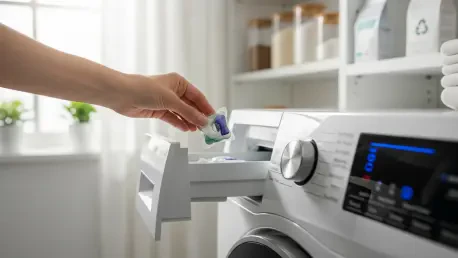

The global household infrastructure depends heavily on the maintenance of textiles, transforming the act of doing laundry from a simple domestic chore into a massive multi-billion dollar industrial engine that fuels economic growth across every continent. This sector, which encompasses everything from basic powdered soaps to the most advanced enzymatic fabric conditioners, has evolved into a cornerstone of the broader household cleaning market, reflecting deeper changes in human behavior and societal standards. As households prioritize the preservation and hygiene of their garments, the market has expanded its reach far beyond the rudimentary function of soil removal to include complex disinfectants, scent boosters, and specialized fiber-protective agents. By the end of 2025, the global home laundry care market reached a formidable valuation of approximately $235 billion, a milestone that underscores its status as an essential, non-discretionary staple in the modern consumer budget. This massive financial footprint is not merely a result of population growth, but rather a testament to the increasing sophistication of global cleaning standards. Manufacturers are moving away from utility-based products toward those that offer a better lifestyle experience, supported by urbanization and a fundamental change in how consumers perceive cleanliness. Today, the market is defined by a trifecta of wellness, convenience, and environmental responsibility, setting the stage for a period of unprecedented innovation and expansion.
Market Geography and Economic Foundations
Global Regional Distribution: Continental Market Shares
The current landscape of the laundry care industry is characterized by a distinct geographic distribution, where North America, the Asia-Pacific region, and Europe collectively dictate the pace of global trends and product availability. North America remains the dominant force in the sector, holding a commanding 34% market share, driven by a high concentration of premium product users and a deeply entrenched culture of automatic machine washing. Closely following is the Asia-Pacific region, which currently accounts for 30% of the market and is rapidly closing the gap as industrialization and middle-class expansion continue to reshape consumption patterns. Europe maintains a significant presence with 27% of the market, characterized by a mature consumer base that prioritizes high-quality, specialized products and stringent environmental standards. The remaining portion of the global market is distributed across Latin America, the Middle East, and Africa, where emerging economies are beginning to see a surge in demand as modern appliances become more accessible to the general population.
While these broad continental percentages provide a macro-level view, the true power of the industry lies within specific high-consumption urban hubs that serve as testing grounds for new formulations. In the Asia-Pacific region, China stands out as a massive powerhouse, representing more than a third of the regional sector and exerting immense influence over supply chains and pricing. Within Europe, Germany and the United Kingdom are the primary engines of growth, together representing more than half of the European market share and setting the standard for product safety and marketing transparency. These nations are not just consumption leaders; they are also the primary locations for research and development facilities where the next generation of concentrated liquids and eco-friendly sheets are conceptualized. By focusing on these concentrated urban centers, global brands can effectively pilot new technologies before scaling them to meet the diverse needs of rural or developing markets across the globe.
Quantitative Growth: Projections for the Decade
As we move through the period from 2026 to 2034, the home laundry care industry is projected to undergo a steady and resilient expansion that will see its total valuation climb toward the $430 billion mark. This growth trajectory is supported by a consistent compound annual growth rate that reflects both the rising costs of raw materials and the increasing volume of products sold in developing territories. In mature markets, such as those in Western Europe and North America, growth is largely driven by “premiumization,” where consumers are opting for higher-priced, specialized items rather than simply buying more of the same basic detergents. This shift in value ensures that even as population growth stabilizes in some regions, the financial output of the industry remains on an upward curve. The stability of the laundry sector is one of its most attractive features for investors, as it remains largely insulated from the volatile swings often seen in the luxury goods or electronics markets.
Building on this financial foundation, the dual-track growth model ensures that the industry remains balanced between high-value innovations and high-volume basic necessities. In emerging economies, the primary catalyst for growth is the increasing penetration of automatic washing machines, which replaces hand-washing practices and necessitates the purchase of specific detergent formats. As millions of households gain access to modern appliances for the first time, the demand for affordable yet effective cleaning solutions creates a massive volume boost for global manufacturers. Simultaneously, the established markets are focusing on the development of “value-added” products, such as those that combine cleaning, softening, and scent enhancement into a single unit-dose format. This combination of widening accessibility in the East and increasing product complexity in the West creates a robust global ecosystem that is well-positioned to handle localized economic shifts without compromising overall market momentum.
Primary Catalysts for Industry Growth
Hygiene Priorities: Beyond Surface Cleanliness
One of the most transformative shifts in consumer behavior over the last few years has been a heightened obsession with deep hygiene that extends far beyond the removal of visible stains or odors. In the current global climate, consumers view their laundry as a front-line defense against microscopic pathogens, leading to a massive surge in the demand for antibacterial detergents and specialized sanitizers. What were once considered niche products for hospitals or households with young children have now become everyday essentials for the average urban resident seeking peace of mind. This trend has forced manufacturers to rethink their chemical formulations, incorporating silver ions, stabilized peroxides, and other antimicrobial agents that promise to eliminate 99.9% of bacteria even at lower washing temperatures. The focus is no longer just on how a garment looks, but on the invisible level of cleanliness that ensures the health and safety of the wearer.
In tandem with this hygiene focus, the concept of clothing as a long-term investment has led to the rapid premiumization of fabric care products globally. Consumers are increasingly aware of the environmental and financial costs of “fast fashion,” leading them to seek out laundry solutions that actively preserve the integrity of their garments over hundreds of washes. This has created a lucrative market for high-end fabric conditioners, color-lock technologies, and enzyme-based cleaners that specifically target protein or starch stains without damaging delicate fibers. The willingness to pay a premium for products that offer fiber maintenance and color preservation highlights a shift from a “disposable” mindset to one of stewardship. By positioning laundry care as a form of garment “skincare,” brands have successfully convinced consumers that the right detergent is just as important as the quality of the fabric itself, driving significant revenue growth in the luxury segment.
Urbanization: The Pursuit of Convenience
The relentless trend of urbanization is fundamentally altering how people approach their household chores, with a particular emphasis on time-saving solutions that fit into busy, professional lifestyles. As more individuals move into high-density city environments and join dual-income households, the luxury of time has become more valuable than the cost of the cleaning product itself. This shift is most clearly visible in the massive adoption of unit-dose formats, such as laundry pods and capsules, which eliminate the need for measuring, pouring, and the subsequent cleanup of spills. These pre-measured solutions offer a level of “idiot-proof” convenience that appeals to younger generations who may lack the experience of traditional laundry methods but demand consistent, high-quality results every time. The pod format has successfully bridged the gap between efficiency and performance, becoming the preferred choice for the modern urbanite.
Furthermore, the rise of smart home technology and high-efficiency (HE) washing machines is acting as a major technological catalyst for the evolution of laundry chemistry. Modern appliances are designed to use less water and energy, which requires specialized low-foam, high-concentration formulations that can perform effectively in restricted environments. Standard detergents often fail in these high-tech machines, leading to residue buildup or poor cleaning performance, which has forced consumers to upgrade their laundry supplies in tandem with their appliances. As smart washing machines become standard in new urban developments, the synergy between hardware and chemical software becomes increasingly critical. This technological transition ensures that manufacturers must stay in constant communication with appliance designers to ensure that their products are optimized for the latest mechanical innovations, creating a cycle of continuous improvement and replacement.
Navigating Industry Obstacles
Regulatory Pressures: The Cost of Compliance
Despite the steady growth of the market, manufacturers are facing unprecedented hurdles in the form of tightening environmental regulations that target the very chemicals that made traditional detergents effective. Legislative bodies in North America and Europe are increasingly aggressive in their efforts to phase out phosphates, certain synthetic surfactants, and microplastics that contribute to aquatic toxicity and water pollution. These regulatory shifts are not merely suggestions; they are mandatory requirements that force companies to invest millions of dollars into the complete reformulation of their core product lines. Developing a plant-based alternative that cleans as effectively as a petroleum-derived chemical is a complex and expensive scientific challenge. While these changes are necessary for the long-term health of the planet, they place a significant immediate burden on research and development budgets and can disrupt established supply chains.
Economic volatility adds another layer of complexity to the industry, as the production of most laundry care items is inextricably linked to the global petroleum and palm oil markets. Fluctuations in the price of crude oil directly impact the cost of synthetic surfactants and plastic packaging, while shifts in agricultural policy can cause the price of bio-based ingredients to skyrocket without warning. Manufacturers are caught in a difficult position where they must manage rising input costs while trying to avoid passing the full financial burden onto consumers who are already struggling with general inflation. This has led to a major push toward “light-weighting” and concentration, where brands reduce the water content in their products to lower shipping weights and logistics costs. By selling smaller, more potent bottles, companies can mitigate some of the economic pressure, but the initial transition requires a massive overhaul of manufacturing facilities and consumer education.
Competitive Rivalry: Brand Loyalty versus Value
The global marketplace for home laundry care has become a fierce battlefield where established household names must defend their territory against the rising tide of private-label brands and budget-friendly alternatives. Retail giants have successfully launched their own store-brand detergents that mimic the packaging and performance of premium leaders at a fraction of the price, appealing to price-sensitive consumers who prioritize value over brand heritage. This “squeezing” of the middle market forces major manufacturers to either innovate aggressively to justify their higher price points or engage in costly promotional wars that can erode profit margins over time. Maintaining brand loyalty in an era where consumers have instant access to price comparisons and reviews is more difficult than ever, requiring a constant stream of new scents, formats, and marketing narratives to keep the product relevant.
In addition to legitimate competition from store brands, the industry must also contend with the persistent threat of counterfeit products, particularly in rapidly developing regions where regulation is less stringent. Counterfeit detergents often use harsh, unapproved chemicals that can cause skin irritation or damage clothing, posing a significant risk to consumer safety and the reputation of the original brand. These “fake” products are often sold through unofficial digital channels or local markets, making them difficult for global corporations to track and eliminate. To combat this, many brands are now investing in sophisticated packaging technologies, such as QR codes and holographic seals, that allow consumers to verify the authenticity of their purchase using a smartphone. This struggle for market integrity highlights the importance of building a transparent and secure supply chain that protects both the company’s intellectual property and the well-being of the end user.
Evolution through Science and Connectivity
Sustainability: The New Market Standard
The “Green Chemistry” movement has moved from the fringes of the industry to its absolute center, driven by a consumer base that is increasingly using its purchasing power to demand environmental accountability. Modern shoppers are no longer satisfied with products that just work; they want to know that the ingredients are biodegradable, the packaging is plastic-free, and the carbon footprint of the manufacturing process is minimal. This has led to the rise of laundry sheets and refillable systems that eliminate the need for heavy plastic jugs, which have historically been one of the biggest environmental detractors of the industry. By replacing harsh synthetic chemicals with plant-derived surfactants and enzymes, manufacturers are proving that high-performance cleaning does not have to come at the expense of the ecosystem. This shift is not just about ethics; it is about future-proofing the industry against a world where plastic waste is increasingly stigmatized and taxed.
Energy efficiency has also become a central theme in the sustainability narrative, specifically through the promotion of cold-water washing as a standard household practice. By engineering detergents that are optimized to break down stains at lower temperatures, brands are helping consumers significantly reduce their home energy consumption and utility bills. This alignment of environmental benefit and financial savings is a powerful marketing tool that resonates with a broad demographic, from eco-activists to budget-conscious families. Furthermore, the development of “waterless” laundry solutions and concentrated formulas reflects a broader industry recognition that water is a finite resource that should not be used as a cheap filler in detergent bottles. These innovations are transforming the laundry room into a hub of household sustainability, where every load of washing contributes to a larger global effort to conserve energy and reduce chemical runoff into the environment.
Digital Integration: The E-Commerce Explosion
The digital transformation of the retail landscape has completely redefined how consumers interact with laundry care brands, with e-commerce now accounting for a staggering 41% of the total market share. Laundry supplies are uniquely suited for online shopping because they are heavy, bulky, and represent a recurring, predictable need that is perfect for automated subscription models. Consumers have embraced the “set it and forget it” convenience of having their preferred detergent delivered to their doorstep every month, which has allowed brands to bypass traditional retailers and build direct relationships with their customers. These digital platforms provide a wealth of data that allows companies to personalize their offerings, providing targeted discounts on scent boosters or fabric softeners based on the user’s past purchase history. This shift toward direct-to-consumer sales is fundamentally changing the power dynamics of the global supply chain.
Beyond the point of sale, technology is entering the actual laundry process through the integration of artificial intelligence and smart dispensing systems. Some of the most advanced washing machines on the market today are equipped with sensors that can detect the specific type of fabric and the level of soil, automatically dispensing the exact amount of detergent required for the load. Some machines are even programmed to “re-order” supplies automatically when they detect that the detergent reservoir is running low, creating a seamless and friction-free experience for the homeowner. This high-tech integration is turning a traditionally manual and guess-work-heavy chore into a data-driven process that ensures optimal cleaning while minimizing waste. As the “Internet of Things” continues to expand within the home, the laundry care industry is finding new ways to integrate its products into the digital ecosystem, making the concept of a “smart laundry room” a reality for millions.
Structural Analysis and Future Trajectory
Channel Dynamics: Physical versus Digital Sales
The distribution of laundry care products is currently split between traditional offline channels and the rapidly expanding digital marketplace, each serving a distinct set of consumer needs and preferences. While online sales are growing at an accelerated rate, physical supermarkets and convenience stores still hold the majority of the market share because many consumers still prefer the sensory experience of shopping in person. For many, the choice of a laundry detergent is heavily influenced by fragrance, and being able to smell a product on the shelf remains a significant driver of first-time purchases. Additionally, local grocery stores provide immediate access for “emergency” purchases when a household unexpectedly runs out of supplies. This hybrid retail environment means that manufacturers must maintain a dual strategy, ensuring that their products are eye-catching on a physical shelf while also being optimized for the logistics of home delivery.
The online channel, however, offers a level of transparency and information that physical stores simply cannot match, providing consumers with easy access to ingredient lists, environmental certifications, and peer reviews. For the modern “conscious consumer,” this information is vital in making an informed decision that aligns with their personal values regarding health and sustainability. Digital platforms also allow for the sale of bulk quantities and specialized niche products that might not have the shelf space in a traditional retail environment, catering to specific needs like hypoallergenic formulas or high-performance athletic wear cleaners. This divergence in sales channels is forcing brands to diversify their packaging and marketing strategies to fit the specific strengths of each platform. Whether through the convenience of a subscription or the immediate gratification of a local store, the industry is focused on meeting the consumer exactly where they are.
Corporate Strategy: Innovation as a Survival Tool
The global home laundry care industry successfully navigated a period of rapid transformation between 2024 and 2026, setting a new standard for household maintenance and textile preservation. This era was defined by the strategic dominance of a few major titans, such as Procter & Gamble and Unilever, who effectively utilized their massive resources to lead the charge in both technological innovation and sustainable practices. P&G focused its efforts on the perfection of unit-dose technology, ensuring that its pod formulations provided superior cleaning power even in the most challenging water conditions. Meanwhile, Unilever positioned itself as the leader in the “clean future” movement, investing heavily in the development of surfactants derived from waste carbon rather than virgin petroleum. These strategic pivots allowed the market leaders to maintain their relevance in a world where consumers demanded both high-performance results and ethical manufacturing.
Manufacturers successfully adopted a more holistic approach to garment care, transitioning from being simple soap providers to becoming comprehensive fabric management partners. Investments in digital infrastructure and sustainable supply chains paved the way for the industry to reach its projected $430 billion valuation, as brands proved they could balance environmental stewardship with corporate profitability. Consumers eventually gravitated toward products that offered the most seamless integration into their smart homes, favoring brands that provided transparency through digital labeling and automated replenishment. As the decade progressed, the industry moved away from the one-size-fits-all model of the past toward a future of intelligent, personalized cleaning solutions. This successful evolution ensured that the home laundry care sector remained a vital and innovative pillar of the global economy, protecting both the garments of the world and the planet they inhabit.