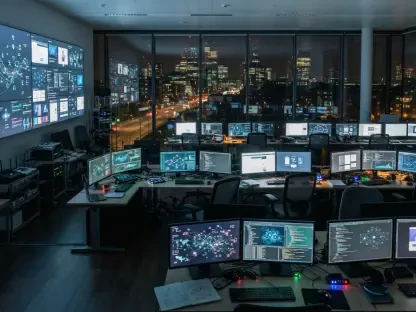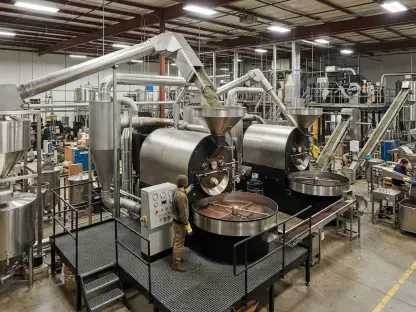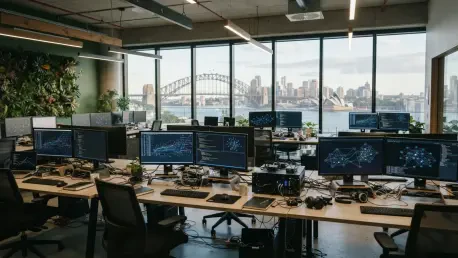

By utilizing existing camera infrastructure to track trucks and trailers in real time, Indrus is bringing digital visibility to the often-neglected outdoor logistics yard. This Perth-based venture addresses a persistent blind spot in the global supply chain, where internal warehouse automation has far outpaced the chaotic environments of loading docks and staging areas. Founded by mechatronics engineers Ryan Liebregts and Dre Siwela, the startup has successfully secured $750,000 in pre-seed funding led by Purpose Ventures, signaling a shift in investor appetite toward practical, hardware-integrated solutions. The broader Australian tech ecosystem is currently witnessing an influx of institutional capital, with over $125 million recently flowing into domestic AI firms. This movement suggests that the era of speculative investment in generic software is giving way to a more disciplined focus on industrial-grade applications. As these companies prove their ability to solve high-stakes problems, the regional landscape is maturing into a hub for deep-tech research.
Scaling Intelligent Infrastructure for Global Markets
The Economic Logic: Advanced Silicon Design
One of the most significant barriers to sustainable AI adoption has been the astronomical cost of compute resources required to train and serve massive models. To address this, the University of Melbourne spin-off i14, also known as Intelligent Silicon, has secured $9 million to refine its specialized architecture. Backed by institutional players like Salus Ventures and the super fund Hostplus, the startup focuses on the fundamental hardware layer of the AI stack. Their proprietary technology claims to reduce operational costs by as much as 85%, a figure that has caught the attention of enterprise leaders looking to scale their digital infrastructure without bankrupting their balance sheets. By optimizing how silicon processes machine learning tasks, i14 moves beyond the limitations of general-purpose GPUs. This approach is critical as organizations transition from experimental pilot programs to full-scale production environments where efficiency and power consumption directly dictate the viability of the entire platform.
Efficiency Benchmarks: Reducing Operational Costs
The success of i14 highlights a growing trend among Australian investors to support fundamental deep-tech research that offers long-term defensive moats. Unlike software-only solutions that can be easily replicated, hardware-level optimization requires years of academic rigor and specialized engineering talent. This investment cycle reflects a broader consensus that the sustainability of the industry depends on making AI more affordable and less resource-intensive. As the global demand for processing power continues to outstrip supply, domestic startups that can squeeze more performance out of existing or specialized hardware are becoming high-value targets for acquisition and integration. The backing from major superannuation funds like Hostplus further underscores the institutional belief that these technologies are not just speculative bets but essential utilities for the modern digital economy. By anchoring AI progress in tangible hardware improvements, the sector is building a more resilient foundation.
Automating Complexity in the Enterprise Sector
Strategic Integration: Mastering the Red Zone
The most substantial move in the current market involves Sydney-based Future Secure AI, which recently closed an $115.3 million funding round. This injection of capital, led by Square Peg, Yarra Capital Management, and Firetrail, has propelled the company to a $1.7 billion valuation, officially reaching unicorn status. Led by Mehrdad Baghai and Michael Hunter, former leaders at McKinsey and Macquarie, the company focuses on what they term the Red Zone of business. This refers to complex, multi-stakeholder workflows like intricate tax analysis and rostering management that have historically been resistant to simple automation. Instead of creating another generic assistant, Future Secure AI develops specialized co-workers that integrate deeply into existing corporate structures. This strategic focus on trust and seamless integration rather than just the underlying language models provides a competitive edge in an environment where basic AI tools are becoming increasingly commoditized and indistinguishable.
Market Evolution: Beyond Generative Assistants
This pivot toward high-complexity automation signals a new phase in the evolution of enterprise software where the goal is no longer just task completion but comprehensive workflow management. Investors are betting heavily on the idea that the true value of AI lies in its ability to navigate the nuances of highly regulated industries. Future Secure AI’s success demonstrates that there is a massive market for platforms that can handle the heavy lifting of professional services, such as legal compliance or financial reporting. By moving into these high-stakes areas, the company is effectively automating the core functions of middle management and specialized analysis. This transition is being watched closely by global competitors, as it proves that Australian firms can compete at the highest levels of the software market. The focus is shifting from what the technology can do in a laboratory to how it can be deployed to solve the most frustrating and expensive bottlenecks in the corporate world.
Practical Imperatives: Sustainable Technological Adoption
The recent surge in Australian AI funding established a clear roadmap for organizations seeking to capitalize on these technological shifts. To maintain a competitive edge, businesses prioritized the adoption of specialized tools that addressed specific operational bottlenecks rather than investing in generic, all-purpose platforms. The success of firms like i14 and Future Secure AI indicated that the market rewarded deep integration and cost-efficiency over mere novelty. Decision-makers evaluated their current infrastructure to identify Red Zone tasks where human-AI collaboration yielded the highest return on investment. Furthermore, the focus on hardware optimization suggested that procurement strategies accounted for long-term operational costs, favoring solutions that offered significant reductions in compute requirements. As the domestic ecosystem transitioned into a more mature phase, the emphasis moved toward building secure, reliable, and scalable systems that operated within complex regulatory frameworks.