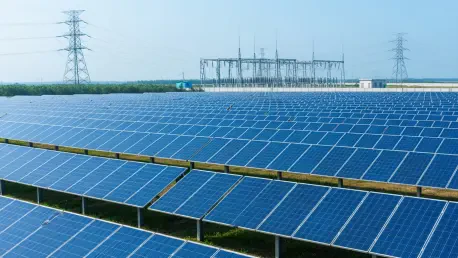

Bangladesh’s financial sector is currently navigating a complex structural paradox where green finance has seen a massive expansion in recent years, yet the actual lending for renewable energy generation has remained surprisingly stagnant despite urgent climate needs. This disconnect is particularly striking because total green lending has reached record highs, yet the capital moving toward a clean energy transition is a tiny fraction of the whole, raising questions about the efficacy of current sustainability policies. The issue is not just about the amount of money being spent, but where that money is going, as there is a visible gap between the government’s ambitious clean-power targets and the cautious, risk-averse behavior of commercial banks. Addressing this gap has become an urgent matter as global energy markets become increasingly unpredictable and the necessity for domestic energy security grows. While factories are becoming more efficient and buildings are using fewer resources, the country is failing to finance the generation of clean power. Without a shift toward funding actual energy production, the broader goal of an energy transition remains out of reach for the near future. This imbalance indicates that lenders are opting for the path of least resistance rather than driving systemic change.
The Growth Narrative: Divergence Between Capital and Capacity
The core of this issue is a growth narrative that hides a lack of meaningful diversification within the green lending portfolio. By late 2025, green finance disbursements reached an impressive Tk30,369.26 crore, marking a fourfold increase from just four years prior, which suggests that green initiatives have moved from the sidelines to become a core part of the country’s financial strategy. However, a closer look at the outstanding loans tells a different story that complicates this optimistic picture. Renewable energy projects account for less than 8% of the total green finance portfolio, while the vast majority of the funds are instead funneled into energy efficiency projects and eco-friendly buildings. These projects are seen as safer bets by traditional lenders because they involve established technologies and predictable returns within existing industrial structures. The financial landscape has changed significantly, with green finance now making up nearly 14% of total term loans, yet the stagnation in renewables means that the country’s energy mix remains heavily reliant on fossil fuels. This statistical paradox highlights the need for a more targeted approach to how capital is allocated across the different sectors of the green economy.
Traditional banks often prioritize energy-efficient machinery for textile mills or the construction of LEED-certified factories because these assets provide tangible, familiar collateral. In contrast, large-scale solar farms or wind energy projects involve complex land acquisition processes and long-term power purchase agreements that many local banks are not yet comfortable navigating. This preference for “low-hanging fruit” creates a scenario where the industrial sector becomes greener at the margins while the underlying power grid remains carbon-intensive. As a result, the massive influx of green capital is not translating into the megawatts of clean energy needed to displace coal and gas. To fix this, financial regulators must distinguish between “light green” projects like office efficiency and “dark green” projects like utility-scale renewable generation. Without such a distinction, the impressive growth in green finance numbers will continue to serve as a distraction from the lack of progress in transforming the national energy supply. The goal must be to ensure that at least a quarter of green finance is directed specifically toward renewable capacity over the period from 2026 to 2030 to meet international commitments.
Economic Sovereignty: High Costs of Fossil Fuel Dependence
The failure to finance renewables is no longer just an environmental concern; it is a major risk to national economic security that threatens long-term industrial viability. Recent geopolitical instability has exposed the dangers of Bangladesh’s heavy reliance on imported fuel, which makes the domestic economy vulnerable to international price shocks. When global oil and gas prices spike due to international conflict or supply chain disruptions, the domestic economy feels the pressure immediately through inflation and power shortages. Bottlenecks in global shipping routes, such as the Strait of Hormuz or the Red Sea, demonstrate how precarious the energy supply chain can be for a nation that depends on long-distance fuel shipments. Every megawatt of solar or wind power produced locally reduces the country’s exposure to these volatile international markets and preserves precious foreign exchange reserves. Financing local energy projects is therefore a vital strategy for protecting the nation’s fiscal health and ensuring that industries can operate without the constant threat of energy rationing or sudden price hikes.
The government has already been forced to seek billions in external financing to cover the rising costs of energy imports, a burden that drains resources away from social development and infrastructure. This fiscal strain could be significantly alleviated if more capital were directed toward domestic renewable projects that utilize the country’s abundant sunlight and coastal winds. In this context, clean energy is not a luxury but a tool for achieving long-term industrial stability and reducing the trade deficit. The current reliance on Liquefied Natural Gas (LNG) is particularly problematic, as prices are dictated by global demand shifts that Bangladesh cannot control. By shifting the financial focus toward renewables, the country can build a decentralized and resilient energy network that is immune to the geopolitical maneuvers of major oil-producing nations. Achieving this shift requires a coordinated effort between the central bank, commercial lenders, and the energy ministry to treat renewable energy as a strategic national asset rather than a niche investment category. The focus from 2026 to 2032 should be on creating a domestic energy cushion that protects the populace from global market volatility.
Bridging the Divide: Policy Ambitions and Infrastructure Reality
Bangladesh’s policy framework for the future is quite ambitious, calling for a significant percentage of electricity to come from renewable sources by 2030 and 2040. These goals are outlined in the Renewable Energy Policy 2025 and the Nationally Determined Contribution (NDC 3.0), providing a clear roadmap for a low-carbon future. However, the physical reality of energy production is far behind these targets, creating a credibility gap that could deter international climate finance. As of mid-2026, the country’s installed renewable capacity is less than a third of what is needed to stay on track for the end of the decade, reflecting a failure of the financial system to support these high-level goals. Solar power dominates the existing setup, but even that is not growing fast enough to meet the 5,851MW goal set for 2030. This massive shortfall highlights a lack of coordination between policy language and financial execution, where the rules of the game have not changed fast enough to encourage the necessary investment. Without a significant surge in capital, the government’s clean energy promises will remain unfulfilled, leading to continued reliance on fossil fuels.
To meet these targets, the country needs nearly $1 billion in annual investment, but the current pace is roughly a quarter of that, according to recent financial assessments. This funding gap is the primary obstacle to achieving a sustainable power grid and meeting the demands of a modern, energy-hungry economy. The discrepancy between the vision of a “Green Bangladesh” and the actual data on energy generation suggests that the incentives currently in place are insufficient. For instance, while there are tax breaks for importing solar panels, the lack of low-interest, long-term financing makes it difficult for private developers to launch large-scale projects. Bridging this divide requires more than just setting targets; it requires a complete overhaul of how renewable energy projects are appraised and funded. The government must work with private banks to create a pipeline of bankable projects that align with national climate goals. If the current trajectory does not change, the country will miss its 2030 milestones, potentially complicating its access to global carbon markets and green bonds. The alignment of financial flows with policy targets is the most critical task for the banking sector between 2026 and 2028.
Navigating the Labyrinth: Administrative Roadblocks for Investors
Investors who try to launch renewable energy projects often face a frustrating wall of administrative delays that can kill a project before it even starts. Rather than outright rejections, banks often use a “soft rejection” strategy, overwhelming applicants with endless documentation requests and unrealistic technical requirements. This bureaucratic red tape can exhaust an investor’s patience and resources long before a project ever breaks ground, leading many to abandon renewables in favor of traditional real estate or trade finance. These delays have real-world consequences, such as equipment prices rising or government approvals expiring while the bank stalls for months or even years. For a business owner looking to install rooftop solar, these hurdles make the project seem more like a burden than a benefit, discouraging the adoption of clean technology at the retail level. This lack of accountability in the lending process effectively kills many viable clean energy ideas that could have contributed significantly to the national grid. The administrative burden is often disproportionate to the risk involved, reflecting a fundamental misunderstanding of renewable energy business models.
Another major hurdle is the traditional lending model, which relies heavily on land as collateral to secure large loans. Many renewable energy service companies (RESCOs) do not own large tracts of land, even if their projects are highly profitable and have guaranteed revenue streams from power sales. Because banks are stuck in old ways of thinking, they struggle to value the future energy savings or the power purchase agreement (PPA) as a valid form of security. This “land-first” mentality excludes a wide range of innovative energy startups and prevents the scaling of decentralized solar solutions. To overcome this, the financial sector needs to adopt more flexible collateral requirements that take into account the unique nature of renewable assets. For example, the equipment itself or the projected cash flows from energy sales should be considered as primary security for loans. Without this shift, the only entities capable of building renewables will be large conglomerates that already own vast amounts of property, severely limiting the diversity and speed of the energy transition. Simplifying the application process and expanding collateral definitions are essential steps for the period from 2026 to 2029.
Structural Deficiencies: Technical Knowledge Gap in Finance
There is a significant technical gap within the banking sector when it comes to evaluating renewable energy, which leads to inflated risk perceptions and high interest rates. Many banks lack staff who understand the technical performance of solar installations, the reliability of wind turbines, or the complexities of battery storage systems. This lack of knowledge leads to a “higher perceived risk,” causing lenders to stick with familiar categories like green buildings or energy-efficient lighting where the technical specs are easier to verify. When a loan officer cannot accurately assess the probability of a solar farm’s output, they are more likely to demand excessive interest or reject the application entirely. This technical debt within the financial workforce is a major bottleneck that prevents the efficient flow of capital toward innovative energy solutions. Training programs for bank staff are currently inadequate, often focusing on general sustainability rather than the specific engineering and financial modeling required for energy production projects. Without a team of experts who can vet these projects, banks will remain hesitant to commit significant capital.
The central bank’s refinancing schemes are also underutilized due to their flawed structure, which often discourages participation from smaller commercial banks. Currently, commercial banks must use their own capital to fund a project entirely before they can apply for refinancing from the central bank, which is a slow and cumbersome process. This places the initial risk solely on the lender, providing little incentive for them to experiment with new technologies or long-term projects that may take years to become profitable. Furthermore, participation in green finance is very uneven across the industry, with a few proactive banks doing the heavy lifting while others do the bare minimum. While most banks have dedicated sustainability units, many are just checking boxes by focusing on easy social projects or small SME loans that count toward their green targets without requiring much technical effort. The complex, long-term commitments required for large-scale wind or solar projects are still being avoided by the majority of financial institutions because they lack the specialized expertise to manage them. Strengthening the internal capacity of banks to evaluate clean energy is a priority that must be addressed between 2026 and 2030.
Path to Transformation: Actionable Reforms for a Sustainable Grid
Despite these challenges, there are success stories that prove renewable energy is a safe and profitable investment when managed correctly. International projects have successfully mobilized private capital for large-scale solar power with virtually no loans at risk, demonstrating that the technical and financial hurdles are surmountable. These examples show that with the right technical assistance and long-term capital, the perceived risks of renewables can be managed effectively to create a win-win scenario for both lenders and the environment. To fix the current system, several reforms are necessary, including the creation of dedicated financing windows specifically for clean energy generation. Implementing risk-sharing tools like green credit guarantees could encourage banks to lend to companies that lack traditional land collateral, as the government or an international donor would cover a portion of the potential loss. Standardizing contracts and simplifying the due diligence process would also help speed up approvals and reduce the administrative costs associated with renewable energy loans. These steps are essential for moving from a stagnant market to one that is vibrant and competitive.
The success of Bangladesh’s green finance sector over the next decade will be measured by the actual deployment of clean energy on the ground. It is not enough to report rising loan numbers if those funds are not displacing fossil fuel imports and reducing the national carbon footprint. The financial sector had to evolve from a passive participant to an active driver of the energy transition by adopting new risk models and prioritizing energy sovereignty. By the end of 2025, it was clear that the existing methods were insufficient for the scale of the challenge, leading to a renewed focus on structural reform in the following year. Regulators and financial institutions worked together to eliminate bureaucratic bottlenecks and introduced specialized training for credit officers to better evaluate green technologies. This shift ensured that the capital was not just “green” in name but was actively building the infrastructure for a sustainable future. Ultimately, the transition required a bold commitment to move beyond low-risk efficiency projects toward the high-impact renewable generation that the country desperately needed. Through these concerted efforts, the financial landscape was transformed into a powerful engine for national energy independence and environmental resilience.