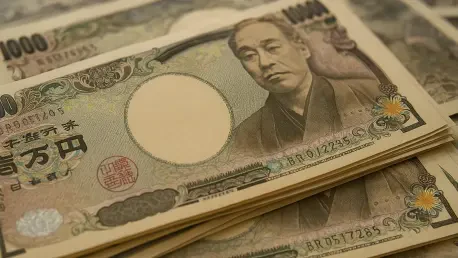

Japan’s public debt, which currently exceeds double its Gross Domestic Product, limits the government’s ability to combat inflation while maintaining a weak currency. This fiscal reality has pushed the yen to its lowest valuation in nearly forty years, creating an urgent dilemma for the Ministry of Finance and the Bank of Japan. Traditionally, central banks support their currency by selling foreign assets to buy back their own, but Japan’s massive holdings of U.S. Treasuries make this a risky maneuver. If Japanese authorities were to liquidate these securities on a large scale, they would likely drive up U.S. interest rates, which in turn would make the dollar even more attractive to global investors. This phenomenon, often called the Paradox of Yen Defense, risks creating a self-defeating feedback loop that accelerates the very currency devaluation it intends to stop. Consequently, financial leaders are now shifting their focus toward more sophisticated tactical alternatives that can provide liquidity without disrupting the global bond market.
Leveraging the FIMA Repo Facility for Market Stability
As the world’s largest foreign creditor, Japan maintains a portfolio of U.S. government debt that exceeds $1.1 trillion, a position that gives it immense influence over global capital markets. However, this influence is a double-edged sword when it comes to currency intervention. Any significant sale of these Treasuries would flood the market with supply, causing bond prices to fall and yields to climb sharply. Because global investors naturally gravitate toward higher yields, a spike in U.S. Treasury rates would strengthen the dollar against virtually all other currencies, including the yen. This structural link means that a standard intervention strategy could inadvertently provide the U.S. currency with the bullish momentum that Japanese officials are desperate to counteract. The fear of a bond vigilante reaction has forced a rethink of how Japan utilizes its vast reserves, moving away from direct sales toward methods that prioritize market stability and prevent a chaotic spike in international borrowing costs.
The Foreign and International Monetary Authorities (FIMA) Repo facility has emerged as the primary tool to resolve this mechanical conflict by allowing Japan to access dollars without selling its bonds. Through this facility, the Bank of Japan can pledge its Treasuries as collateral to borrow cash directly from the Federal Reserve at a pre-determined rate. This repurchase agreement provides the necessary dollar liquidity for market intervention while keeping the underlying securities off the open market, thus preventing a surge in yields. By utilizing this strategic loophole, Japan can defend the yen while avoiding a visible depletion of its foreign reserves that might otherwise spook currency traders. This approach is increasingly favored by international financial officials who recognize that maintaining stability in the U.S. bond market is just as critical as stabilizing the yen. It allows for a more controlled and less predictable intervention, which can catch speculators off guard without causing broader systemic damage to global finance.
Structural Realities of the Yen Carry Trade and Monetary Policy
Recent market history demonstrates that even the most aggressive interventions often struggle to reverse long-term economic trends when they run against fundamental pressures. A notable example occurred earlier this year when a rare, coordinated effort between the United States and Japan initially managed to push the exchange rate in a more favorable direction for Tokyo. While the immediate impact was a sharp appreciation for the yen, the relief proved to be short-lived as the currency began to slide back toward its previous lows within a few weeks. This outcome highlights the limitations of technical market smoothing when the underlying drivers of currency weakness remain unaddressed. Traders quickly realized that unless there was a shift in interest rate trajectories or fiscal outlooks, the intervention was merely a temporary hurdle rather than a genuine change in direction. This persistent downward pressure suggests that the market remains skeptical of Japan’s ability to sustain its currency’s value solely through occasional tactical buybacks in the foreign exchange market.
The primary driver behind this persistent weakness is the substantial gap between interest rates in the United States and Japan, which continues to fuel the massive yen carry trade. In this pervasive strategy, investors take advantage of Japan’s low interest rates to borrow yen and then invest that capital into higher-yielding assets denominated in U.S. dollars. This process creates a constant, structural outflow of capital from Japan, placing downward pressure on the yen regardless of any short-term intervention efforts. Experts increasingly worry that this carry trade has become so deeply embedded in the global financial system that any sudden or aggressive attempt to narrow the rate gap could lead to a catastrophic unwinding of these positions. If investors were forced to liquidate their dollar holdings and buy back yen simultaneously to cover their loans, the resulting volatility could trigger a broader sell-off across global equity and bond markets. This systemic risk makes the Bank of Japan extremely cautious about raising rates too quickly to defend the currency.
Navigating Fiscal Challenges and Institutional Capital Flows
Internal political dynamics within Japan are further complicating the central bank’s efforts to stabilize the yen through traditional or tactical means. Recent shifts in leadership have brought about proposals for significant government spending and widespread tax cuts, aimed at stimulating domestic growth but raising alarms about fiscal sustainability. With the national debt already at unprecedented levels, these expansionary policies suggest that the government may rely on the Bank of Japan to keep interest rates artificially low for the foreseeable future to keep debt servicing costs manageable. This perception of fiscal instability has made the yen less attractive to international institutional investors, who fear that the currency will continue to lose purchasing power over the long term. As long as fiscal policy appears to be at odds with the goals of monetary tightening, the yen will likely face headwinds that no amount of technical intervention can fully overcome. This disconnect between government spending and currency defense remains a primary concern for global analysts.
In the final analysis, the move toward utilizing tools like the FIMA Repo facility represented a shift in focus from immediate firefighting to long-term structural management. Analysts reached a consensus that while technical maneuvers could temporarily shield the yen from speculative attacks, a sustainable recovery required a more fundamental adjustment of Japan’s economic framework. This involved a gradual move away from massive purchases of government bonds and a slow narrowing of the interest rate differential with the rest of the world. Additionally, the government looked toward incentivizing large domestic institutions, such as national pension funds, to repatriate their offshore capital into yen-denominated assets. By encouraging home-grown investment and addressing the fiscal imbalances that historically weakened investor confidence, Japan aimed to create a more resilient currency. These forward-looking measures, rather than simple market interventions, provided the necessary foundation for the yen to regain its status as a stable global reserve currency in the coming years.