
The ability of European corporations to generate record-breaking profits while navigating a landscape of 10% universal tariffs is currently redefining the traditional relationship between geopolitics and equity performance. As the global trade environment becomes increasingly fragmented, investors are witnessing a remarkable phenomenon where microeconomic success is effectively neutralizing macroeconomic anxieties. While the shadow of protectionist policies from the U.S. administration remains a constant variable, the recent surge in high-value mergers and acquisitions suggests that the Continent’s industrial leaders are no longer waiting for favorable trade winds to expand. This analysis explores the mechanisms through which internal corporate health has become the primary driver of market stability, even as global trade risks threaten to disrupt traditional supply chains.
Navigating the Shift From Macro Anxieties to Micro Success
The current state of the European market is best understood by examining the transition away from the high-inflation environment that characterized the previous two years. Firms entered the current fiscal period bracing for a significant downturn, yet the actual results have told a story of surprising adaptability. The implementation of universal tariffs served as a stress test for the Stoxx 600, yet rather than a broad retreat, the market has seen a strategic pivot toward sectors that are less reliant on vulnerable trans-Atlantic trade routes.
This evolution marks a departure from past cycles where European indices were hypersensitive to every rhetorical shift from Washington. Today, the focus has moved toward fundamental balance sheet strength and the aggressive pursuit of market share within regulated industries. By prioritizing internal restructuring over external speculation, European firms have successfully insulated themselves from the most volatile aspects of the current global trade war, proving that a well-executed “reset” can be more powerful than geopolitical headwinds.
The Power of Strategic M&A and Financial Fortitude
Infrastructure Deals: The Strengthening of Utility Giants
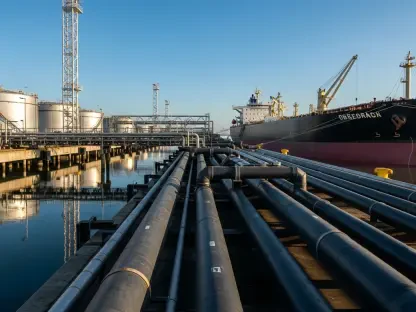
A primary driver of recent market stability is the pursuit of massive, transformative acquisitions that secure long-term revenue. The French utility leader Engie recently completed a £10.5 billion acquisition of U.K. Power Networks, a move that grants it control over the electricity grid for London and Southeast England. This deal is a masterclass in diversification; by moving into regulated infrastructure, Engie has effectively decoupled a significant portion of its future earnings from the sectors most vulnerable to trade tariffs. Such moves provide a predictable cash flow that acts as a natural hedge against international policy shifts.
The Transition Logic: Why Investor Patience Matters
Another essential angle is the changing psychology of the market, where investors are increasingly rewarding companies for their future guidance rather than punishing them for past losses. Puma and Rolls-Royce exemplify this “transition year” logic. Despite reporting significant sales declines or operating losses during their restructuring phases, both companies have seen their share prices surge. Investors are looking past immediate trade disruptions to focus on the completion of internal overhauls. This willingness to prioritize a long-term strategic reset over immediate macroeconomic pressure suggests a deep-seated confidence in the underlying corporate machinery.
Regional Resilience: Balancing Global Tech Volatility
When compared to the volatility seen on Wall Street—often driven by the erratic cycles of the semiconductor and AI sectors—European bourses have shown a distinct form of stability. While American giants like Nvidia can experience sharp declines despite beating earnings, European firms are being valued on traditional fundamentals like share buybacks and operating profit margins. This regional difference is crucial; Europe’s market composition, heavily weighted toward utilities, insurance, and industrial engineering, offers a defensive posture. By focusing on fundamental valuation, these markets have created a cushion that mitigates the contagion effect of global trade anxieties.
Future Projections: Technological Integration and Regulatory Evolution
Looking ahead, the evolution of European markets will likely be shaped by how firms integrate technological innovations into their “reset” strategies. There is a visible push toward digitizing traditional industries, such as the London Stock Exchange Group’s shift toward advanced data analytics. This transition further decouples corporate success from physical trade barriers, as digital services are inherently more resistant to physical tariffs. Additionally, as regulatory frameworks in the EU and U.K. adapt to a protectionist global environment, firms that have secured domestic infrastructure and energy assets will likely remain the best positioned to thrive.
Strategies for Investors in a Protectionist Era
For businesses and investors, the current landscape offers several actionable takeaways. First, it is vital to prioritize companies with high “moats”—those in regulated industries or those with dominant positions in financial services—as they are naturally shielded from tariff impacts. Second, pay close attention to companies that have spent the last two years cutting costs and streamlining; these leaner entities are now better equipped to handle economic friction. Finally, diversification into European equities can provide a necessary balance to a portfolio heavily weighted in volatile global tech stocks, offering a more stable path through the current era of protectionism.
Sustaining Momentum in an Uncertain World
The recent performance of European equities demonstrated that corporate resilience was not merely a byproduct of luck, but the result of disciplined financial management and strategic foresight. Analysts observed that the shift from geopolitical apprehension to a focus on fundamental valuation allowed markets to remain buoyant despite the 10% universal tariffs. The long-term significance of this trend resided in the realization that internal health—driven by record profits and transformative M&A—was capable of outweighing external pressures. As stakeholders moved forward, the ability to maintain this fundamental strength proved to be the ultimate defense against an increasingly fragmented global trade landscape.