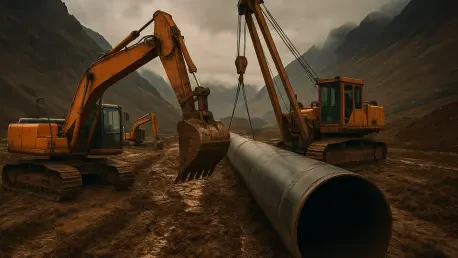

In October 2026, the deep hum of heavy machinery echoing through the dense forests of northern Alberta signals a shift in the Canadian political landscape that transcends mere industrial expansion or resource extraction. As the federal government fast-tracks the Pacific Link pipeline, the project stands as a multibillion-dollar effort to preserve the integrity of a nation under immense regional strain. With the capacity to transport one million barrels of oil per day toward the Pacific coast, this infrastructure is being framed as an emergency intervention to prevent a fracturing of the federation.
The Multibillion-Dollar Gamble to Keep a Nation Whole
The announcement, delivered in the heart of Fort McMurray, marks a deliberate attempt to reconcile Western economic interests with national cohesion. Prime Minister Mark Carney and Alberta Premier Danielle Smith presented a rare united front, signaling that the pipeline is the primary tool to counteract rising separatist sentiment. For many in the energy sector, the project represents a long-awaited recognition of Alberta’s contribution to the national economy, yet for others, it remains a high-stakes bet on a volatile commodity.
By accelerating the approval process, the federal government aims to demonstrate that Canadian federalism can still deliver tangible results for its provinces. The pipeline is not just a conduit for bitumen but a political lifeline intended to soothe years of perceived neglect. As the deadline for a crucial provincial vote nears, the success of this gamble depends on whether steel in the ground can outweigh the ideological divide that has grown between the Prairies and Ottawa.
A Perfect Storm of Separatism and Trade Volatility
The political urgency surrounding the Pacific Link is driven by an upcoming public vote on October 19, which could serve as the precursor to a formal secession referendum in Alberta. This domestic tension is exacerbated by a shifting international environment where trade relations with the United States have become increasingly unpredictable. With nearly 90% of Alberta’s oil exports currently tied to American markets, the Carney administration views this reliance as a significant structural vulnerability that necessitates immediate diversification.
Utilizing “national interest” designations, the federal government is now bypassing the traditional bureaucratic gridlock that historically stalled major energy projects. This shift in statecraft reflects a realization that economic sovereignty depends on reaching new markets beyond the southern border. By positioning Canada as a reliable energy provider to the Pacific, the administration hopes to insulate the national economy from the protectionist waves currently sweeping through the United States.
Engineering a Pivot: Specs, Costs, and the Asian Market
The technical scale of the Pacific Link involves a 1,250-kilometer route stretching from Bruderheim, Alberta, to the deep-water ports of Delta, British Columbia. By utilizing the existing Trans Mountain corridor, the project seeks to minimize land-use conflicts while maximizing throughput. The objective is to reduce the dominance of U.S. pipeline capacity from 83% to 65% by the early 2030s, creating a direct gateway to the growing energy demands of Asian nations.
Financial hurdles remain significant, with price tags estimated between $25 billion and $31 billion. Although the government provided $2.8 billion in initial seed funding, the project’s future relies on securing private capital from major industry players like Pembina. The 2027 open season will be the ultimate test of market confidence, requiring oil producers to commit to the long-term contracts necessary to sustain such a massive investment.
The Friction Points: Expert Skepticism and Social Hurdles
Despite the rhetoric of unity, the project faces criticism from experts who argue that eleventh-hour federal intervention may validate the separatist narrative of Ottawa’s heavy-handedness. Scholars such as Ian Brodie point out that the timing of the fast-tracking appears more like a tactical political maneuver than a long-term economic strategy. This skepticism is compounded by the challenge of balancing resource wealth with Canada’s international climate commitments, which demand a steady reduction in carbon intensity.
Social friction is also evident in the ongoing negotiations with Indigenous communities along the pipeline route. While the government proposed a 10% ownership stake for Indigenous groups, many leaders remain concerned about treaty rights and potential environmental impacts on traditional lands. Moving from intensive consultation to genuine partnership requires navigating a complex landscape of sovereignty and stewardship that goes beyond financial incentives.
The Roadmap to 2033: Strategic Milestones for Success
The strategy for the Pacific Link pipeline focused on establishing a clear regulatory framework to ensure long-term operational success. Officials prioritized a September 2027 deadline to clear environmental and engineering assessments, aiming for a final investment decision that secured the project’s private funding. This approach sought to create a stable environment for energy producers while addressing the immediate need for market diversification away from traditional trading partners.
As the project targeted an operational start date in 2032, the federal government emphasized the importance of maintaining a balance between resource development and social responsibility. The roadmap necessitated a transition toward more inclusive economic models that integrated provincial and Indigenous stakeholders into the core of the project’s structure. These milestones served as a blueprint for stabilizing the federation and repositioning Canada as a critical player in the global energy transition.