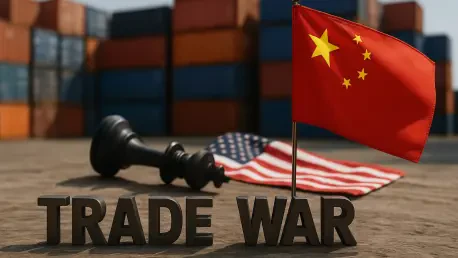

The prevailing assumption that China’s internal economic woes would force a swift concession in the renewed trade war proved to be one of the most significant geopolitical miscalculations of 2025. Instead of capitulating to Washington’s pressure, Beijing executed a masterclass in economic statecraft, emerging from the conflict with its external economic engine not only intact but running stronger than ever. This victory, however, is a complex one, masking deep-seated domestic fragility and setting the stage for a new, precarious equilibrium. As 2026 unfolds, a fragile diplomatic truce hangs in the balance, forcing global investors and policymakers to navigate a volatile landscape defined by strategic competition and a carefully “managed decoupling” between the world’s two largest economies.
A Pyrrhic Victory for a Divided Economy
How China Weathered the Storm
Washington’s strategy, which leveraged tariffs and advanced technology restrictions, was predicated on the belief that China’s slowing growth and beleaguered property sector would compel it to seek a quick resolution. This calculation proved profoundly incorrect. Beijing’s response was not one of panic but of disciplined, strategic maneuvering. It implemented carefully calibrated controls on its rare-earth exports, precisely targeting vulnerabilities within the American defense and automobile manufacturing sectors to maximize leverage without triggering a broader escalation. This was coupled with the subtle application of increased customs and regulatory friction, creating just enough economic pain for U.S. interests to be felt without inciting widespread alarm. This multifaceted approach demonstrated a sophisticated understanding of economic warfare, allowing China to control the tempo of the conflict and counter American moves with punishing accuracy and restraint, turning the tables on an administration expecting a swift victory.
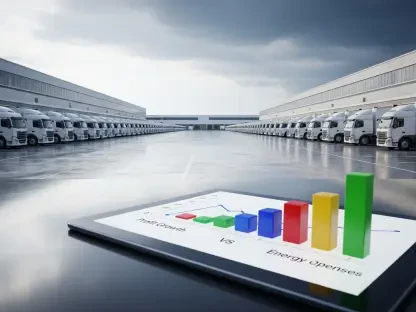
The effectiveness of this counteroffensive was starkly illustrated by economic data released in November 2025. China’s goods trade surplus surpassed the $1 trillion threshold for the first time, a clear testament to the continued power of external demand as a primary driver of its economy. While direct exports to the U.S. plummeted by an estimated 40% year-on-year in the third quarter of 2025, this deficit was more than compensated for by significant export growth to other global markets. Chinese exporters adeptly rerouted trade flows through intermediary nations in Southeast Asia and Mexico, effectively blunting the direct impact of U.S. tariffs. This successful trade diversion, combined with China’s competitive industrial output in key sectors like automobiles, chemicals, solar panels, and advanced machinery, showcased an economic resilience that few in the West had anticipated, solidifying its position as a global manufacturing powerhouse capable of pivoting away from its largest trading partner when necessary.
The Cracks in the Foundation
Despite its formidable external performance, China’s domestic economy tells a far more troubling story of lingering weakness and incomplete recovery. The same macroeconomic reports from late 2025 that highlighted a record-breaking trade surplus also revealed significant internal sluggishness. Industrial activity showed only modest expansion, indicating that the manufacturing boom was primarily for export markets rather than domestic consumption. Moreover, retail sales grew at their slowest rate in years, a worrying sign of persistent consumer caution and a lack of confidence in the economic outlook. This internal demand deficit underscores a core challenge for Beijing: its external resilience has not yet translated into a self-sustaining domestic economic cycle. The economy remains heavily dependent on exports, leaving it vulnerable to shifts in global demand and unable to fully transition toward a consumption-led growth model.
This duality is further compounded by unresolved structural issues that continue to drag on growth. Fixed investment declined through much of 2025, with the deeply troubled property sector remaining a significant anchor on the broader economy. The ripple effects of the real estate crisis persist, impacting household wealth and straining the balance sheets of financial institutions. At the same time, credit stress at the local government level remains a visible and acute problem, limiting the capacity for fiscal stimulus and public investment. While private sector confidence has shown some tentative signs of life, it has not fully recovered from years of regulatory uncertainty and economic headwinds. This confidence gap continues to hinder domestic investment and consumption, creating a scenario where China has won the battle abroad while still fighting a difficult war for economic stability at home, a paradox that will define its policy challenges throughout 2026.
Navigating the New Era of Managed Decoupling
The New Rules of Engagement
The outcome of the 2025 trade conflict has solidified a shared strategic posture in both Washington and Beijing, coalescing around the concept of “managed decoupling.” This approach is more nuanced and targeted than earlier calls for a rapid and complete economic rupture, but it is no less determined in its direction. In the United States, the confrontational “de-risking” rhetoric may have softened, but the institutional architecture of competition remains firmly entrenched. This is underpinned by a robust bipartisan consensus in Congress, where national security hawks from both parties are aligned on maintaining a tough policy toward China. Consequently, strict controls on advanced semiconductors, comprehensive outbound investment screening mechanisms, and persistent concerns over critical infrastructure and data security are now permanent features of the U.S. policy landscape, with further legislative hardening a distinct possibility as the year progresses.
China’s strategy is a mirror image of this posture, driven by a national imperative to achieve technological sovereignty. The government’s “new productive forces” initiative is fundamentally a campaign for self-reliance, designed to reduce dependencies on foreign technology in frontier fields while cultivating a domestic innovation ecosystem. Under this framework, Beijing aims to leverage foreign capital and expertise to accelerate this process but without ceding control or creating new vulnerabilities. This marks a definitive shift away from the open-door policies of the past toward a more strategic and controlled engagement with the global economy. The goal is to build an economy that is not only resilient to external pressure but also capable of setting the standards in the next generation of technology, ensuring its long-term security and global competitiveness in an increasingly fragmented world.
Investing in a Controlled Market
This evolving geopolitical framework has compelled global investors to re-evaluate their approach to the Chinese market, raising the resurgent question: “Has China become investable again?” The answer is complex and reflects a new reality. The China of 2026 is a far cry from the high-growth, low-friction market of two decades prior. It has entered a new phase characterized by “highly selective openness under deep strategic control.” Under this paradigm, foreign capital is welcomed, but only on Beijing’s terms and in sectors that align with its national strategic goals. This creates a bifurcated investment landscape, where opportunities are abundant in some areas but severely restricted in others. This requires a much more granular and politically aware approach from international firms, who can no longer assume that market access will be broad or unconditional.
The “new productive forces” policy serves as a clear roadmap for where foreign investment will be encouraged. Opportunities will be concentrated in sectors that strengthen China’s technological capabilities and advance its goal of self-reliance, including artificial intelligence, robotics, green technology, and advanced manufacturing. Conversely, investment will be restricted or closed off entirely in areas perceived as creating national security vulnerabilities or where domestic champions are being cultivated. The recent weak results from major consumer brands like Nike serve as a stark reminder that consumer sentiment remains fragile, while the challenges faced by firms like Nvidia due to export controls demonstrate how quickly government policy on either side can upend corporate strategies. Navigating this environment requires investors to align their interests with Beijing’s priorities while remaining acutely aware of the geopolitical risks emanating from both capitals.
Flashpoints on the Horizon
The Tenuous Diplomatic Thaw
Following the failure of its initial pressure campaign, the Trump administration pivoted toward diplomacy late in 2025, leading to a temporary stabilization in the U.S.-China relationship. This de-escalation is set to culminate in a planned state visit to Beijing in April 2026, a summit that holds the potential to impose a temporary pause on further conflict and re-establish critical channels of dialogue. This diplomatic opening offers a much-needed breathing room for both sides and for a global economy rattled by the tensions of the previous year. However, there is significant skepticism, particularly in Beijing, about the durability of this thaw. Chinese leadership has not forgotten President Trump’s 2017 state visit, an event hailed at the time as a new era of cooperation, which was followed just months later by the onset of the 2018 trade war. This history fosters a deep-seated wariness and a belief that any calm is likely to be short-lived.
This fragility is amplified by the political dynamics within the United States. The upcoming U.S. midterm elections are likely to intensify pressure on the administration to adopt an even tougher stance on China. A hawkish Congress, enjoying strong bipartisan support for containment policies, could easily pass new restrictive legislation that overrides any diplomatic progress achieved at the executive level. This creates a narrow window for meaningful diplomacy, with the constant threat that domestic political considerations in Washington could abruptly shatter the calm. For corporations and investors, this means planning for a dual reality: one in which the April summit ushers in a period of relative stability, and another in which a “snapback” to a more confrontational stance is triggered by legislative action or other geopolitical events, making long-term strategic planning exceptionally difficult.
The Battle for Technological Supremacy
Technology, and particularly artificial intelligence, remains the most contentious and high-stakes arena of competition. China’s remarkable progress, highlighted by the emergence of powerful foundation models like DeepSeek and its rapid advancements in applied industrial AI for logistics, manufacturing, and energy management, is a major source of concern for U.S. national security strategists. This has sparked an urgent debate in Washington over whether U.S. capital and technology are inadvertently fueling China’s ascent, leading to calls for expanded investment restrictions. This dynamic is setting the stage for what could be described as a “tale of two AIs” in 2026: the U.S. pursuing visionary, breakthrough artificial general intelligence (AGI) while China focuses on building a more grounded, economically impactful ecosystem of ubiquitous applied AI that integrates deeply into its industrial base.
This technological rivalry extends to the foundational elements of the modern economy, especially critical minerals. China retains significant strategic leverage through its dominant control over the processing and supply chains of rare earths and other essential materials. While Beijing is currently loosening export license processes as a gesture of goodwill amid the diplomatic thaw, this flexibility is viewed by analysts as provisional and tactical. China has demonstrated its willingness to use this control as a retaliatory weapon and could quickly tighten these restrictions again if relations deteriorate. This latent threat represents a persistent vulnerability for Western economies, particularly in the defense, consumer electronics, and green technology sectors, forcing companies and governments alike to accelerate efforts to diversify supply chains and reduce their dependency on a single, strategic competitor.
A Retrospective on a Precarious Peace
The events of 2025 conclusively demonstrated that China had become a formidable economic adversary, capable of withstanding direct pressure and leveraging its unique strengths with strategic precision. For global corporations, this period underscored the necessity of preparing for a dual reality. The diplomatic thaw that began late that year offered a window of stability, yet the underlying tensions and the high probability of a legislative “snapback” from Washington meant that planning for renewed conflict was not just prudent but essential. The most promising investment opportunities that emerged were in sectors where China had established itself as a global leader, such as green technology and industrial automation. However, the fragile consumer sentiment and the ever-present threat of sudden policy shifts from either government served as a constant reminder of the significant risks that remained. The key lesson learned was that navigating this new era required extreme caution and a strategy built for both calm and storm.