
The artificial intelligence revolution, once a distant concept, is now directly reshaping the physical world, and its voracious appetite for energy is creating unexpected and powerful political alliances. The rapid proliferation of data centers required to power AI is placing an unprecedented strain on the nation’s electrical grid, leading to a growing chorus of opposition that transcends traditional party lines. This emerging backlash, fueled by tangible concerns over soaring electricity prices for consumers, the looming threat of blackouts, and fundamental questions about resource allocation, is poised to become a significant impediment to the tech industry’s ambitious expansion plans, signaling a major reckoning over the true cost of progress.
The Unlikely Political Alliance
A Cross-Spectrum Coalition
The most striking feature of this opposition is the convergence of figures from opposite ends of the American political landscape, most notably Democratic Socialist Senator Bernie Sanders and Republican Governor Ron DeSantis. Senator Sanders has issued a forceful call for a national moratorium on the construction of all new data centers, framing the issue as a populist struggle against corporate power. In a late December interview, he articulated a deep-seated skepticism, arguing that the public should not be forced to bear the costs of a future dictated by “oligarchs” without receiving concrete societal benefits in return, such as universal healthcare or robust job security for workers displaced by AI technologies. His stance is rooted in a philosophy of social and economic justice, questioning who benefits from this technological surge and demanding that the immense profits generated by the AI industry be redirected toward the public good rather than private enrichment, a position that resonates strongly with his progressive base.
From a starkly different ideological standpoint, Governor Ron DeSantis has echoed similar concerns about unchecked data center growth, though his approach prioritizes infrastructure limitations and local autonomy. He has championed an “AI bill of rights” in Florida, with a key provision designed to empower local communities with the legal authority to block the construction of these power-hungry facilities within their jurisdictions. DeSantis has grounded his opposition in the practical realities of the nation’s energy infrastructure, stating unequivocally, “You do not have enough grid capacity in the United States to do what they’re trying to do.” His argument sidesteps broader social critiques in favor of a focus on pragmatic constraints and the principle of local control, asserting that communities should have the final say on projects that so profoundly impact their resources. This convergence of Sanders and DeSantis on a single issue, albeit for different reasons, illustrates that the data center dilemma has evolved beyond partisan politics into a widespread concern about community impact and resource sustainability.
The Consumer Cost Crisis
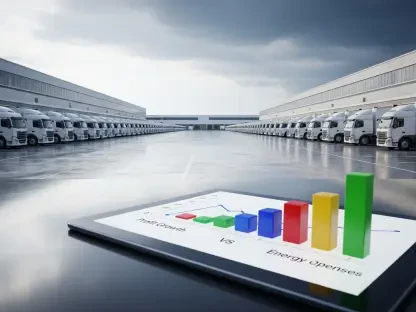
The growing political resistance is directly linked to the tangible economic pressure being placed on American households. The proliferation of data centers is a primary driver behind rising energy costs, a trend that is becoming impossible for consumers and politicians to ignore. Federal Energy Information Administration forecasts paint a clear picture of this financial burden, predicting an average increase in residential electricity prices of 5% in 2025, which will be followed by an additional 4% hike in 2026. These are not abstract statistics; they translate into higher monthly bills for families already grappling with broader inflationary pressures. The direct line between data center demand and the cost of keeping the lights on has transformed an infrastructure issue into a potent kitchen-table concern, providing a powerful motivation for voters to demand action from their elected officials and question the “growth-at-all-costs” mentality of the tech sector.
This issue of affordability has already demonstrated its significant political weight in recent electoral contests. In the Virginia governor’s race, for instance, rising utility bills in the northern part of the state—home to the world’s largest concentration of data centers—emerged as a decisive factor, contributing to the victory of Democrat Abigail Spanberger, who campaigned on the issue. With household finances remaining a central concern for voters nationwide, the impact of data centers on power bills is set to become an increasingly prominent and contentious topic in the upcoming 2026 mid-term elections. Politicians across the political spectrum are finding that they can no longer sidestep voter concerns about the escalating cost of electricity. As a result, the debate over data center expansion is rapidly shifting from corporate boardrooms to the forefront of American political discourse, forcing candidates to articulate clear positions on how to balance technological innovation with economic stability for ordinary citizens.
A Grid on the Brink
The Threat of Blackouts
The political and economic concerns are symptoms of a deeper, more urgent technical crisis unfolding within the nation’s electrical grid. The problem is particularly acute on the PJM Interconnection, the largest grid in the United States, which is responsible for delivering power to over 65 million people across 13 states, including the critical electoral battlegrounds of Pennsylvania and Virginia. According to PJM’s own detailed analysis, the grid is on track to be six gigawatts short of its minimum reliability requirement by 2027. To put this deficit into perspective, it is a power shortfall nearly equivalent to the entire peak demand of the city of Philadelphia. This is not a minor operational challenge but a foundational threat to the grid’s ability to function. Experts like Abe Silverman, a former New Jersey public utility counsel, have issued stark warnings that this level of strain fundamentally alters the risk profile for grid stability, transforming the possibility of blackouts from a rare, once-in-a-decade emergency into a much more frequent and predictable threat to daily life.
The severity of this situation cannot be overstated, as it represents an unprecedented challenge for grid operators. Joe Bowring, the president of PJM’s independent market monitor, has bluntly described the grid as being at a “crisis stage,” highlighting the historic nature of the power deficit by noting that PJM has “never been this short.” This assessment from a top industry monitor underscores that the problem has moved beyond theoretical projections and into the realm of an immediate operational emergency. The insatiable energy demands of the AI industry have pushed the grid to its breaking point far faster than new power generation and transmission capacity can be brought online. This has created a dangerous imbalance that threatens not only residential consumers but also the entire economic ecosystem that relies on a stable and predictable supply of electricity, raising the stakes for regulators and policymakers to find a sustainable solution before the system experiences catastrophic failure.
The Financial Fallout
The financial burden required to accommodate the massive energy needs of data centers is staggering, and these costs are being passed directly to the public. According to the watchdog group Monitoring Analytics, a jaw-dropping $23 billion in power capacity costs on the PJM grid alone can be attributed directly to the increased demand from new data centers. Critically, these immense costs are not being absorbed by the highly profitable tech companies building the facilities. Instead, they are socialized across the entire customer base, meaning every residential and commercial user on the grid helps foot the bill for the industry’s expansion. In a formal letter to PJM, the watchdog group characterized this dynamic in no uncertain terms, labeling it a “massive wealth transfer” from the general public to the benefit of the data center industry. This framing has resonated with both consumers and politicians, sharpening the debate over who should pay for the infrastructure needed to support the AI boom.
This energy shortage is being exacerbated by other policy decisions that have constrained the supply of new power. A decision attributed to former President Donald Trump to pause all offshore wind farm construction, for example, dealt a significant blow to grid stability efforts. This included halting the 2.6-gigawatt Coastal Virginia Offshore Wind project, which was specifically intended to help supply the enormous data center market in northern Virginia. As Abe Silverman argues, halting such a project “directly increases the prices that we all pay for electricity and not by a little bit,” effectively digging the grid into an even deeper hole. In response to this multifaceted crisis, regulatory bodies are beginning to push back. Virginia’s utility regulator is taking a landmark step, mandating that starting in 2027, data center operators must begin paying for the majority of the new transmission and generation infrastructure built to serve them, a move that could set a precedent for other states.
A Flawed Industry Solution
In an attempt to navigate the growing public backlash and the physical limitations of the power grid, the AI and data center industries are widely expected to adopt a strategy known as “co-location.” This approach involves building their own dedicated power plants directly on-site to ensure a private, reliable, and uninterrupted power supply for their operations. From the industry’s perspective, this is a logical and pragmatic solution. By generating their own electricity, they can bypass the congested public grid, avoid potential blackouts, and decouple their expansion plans from the pace of public utility upgrades. This move would allow them to maintain their aggressive growth trajectories and meet the ever-increasing computational demands of AI development without being constrained by the mounting energy crisis that they themselves have largely created. On the surface, it appears to be a self-sufficient answer to a complex problem, insulating critical technological infrastructure from public grid vulnerabilities.
However, this proposed solution is already facing intense political and ethical scrutiny from energy experts and consumer advocates. Critics like Abe Silverman contend that co-location is a deeply problematic strategy because it effectively takes a major power generator off the public market and privatizes a resource that would otherwise contribute to the stability of the entire system. This could lead to what he describes as an “unethical” two-tiered energy system, where large, wealthy corporations can secure their own private and reliable power supply while the general public is left to contend with an increasingly fragile and overburdened grid. In this scenario, the risk of blackouts and service disruptions would be disproportionately borne by residents and small businesses, while the very industry exacerbating the energy shortage insulates itself from the consequences. This raises profound questions about equity and the public good, suggesting that the industry’s preferred solution may only deepen the divide between the technologically privileged and everyone else.
A Reckoning for Big Tech
The unchecked expansion of data centers, driven by the AI industry’s immense energy demands, ultimately created a multifaceted crisis that triggered a powerful and unusual bipartisan political coalition. The strain on the electrical grid ceased to be a theoretical problem and became a present-day reality, causing consumer price hikes and threatening the stability of the power supply for millions. This confluence of economic pain and infrastructural risk proved to be a potent catalyst for change. The data center industry, once able to expand with little public scrutiny, confronted a future defined by significant regulatory hurdles, higher operational costs, and widespread public opposition. This shift signaled a major reckoning that could fundamentally alter the growth trajectory of the AI sector, forcing it to account for its environmental and societal impacts in a way it had never done before. The debate moved beyond kilowatts and grid capacity to address a more fundamental question about the social contract between technology and the communities it claims to serve.