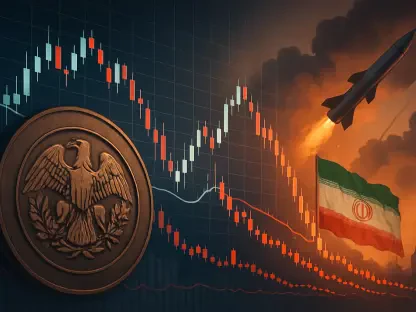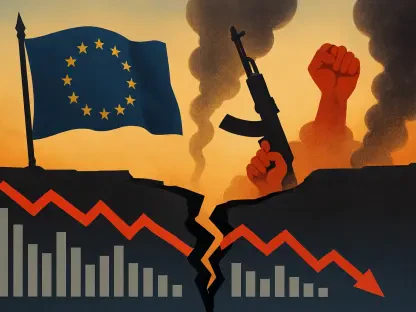

The sheer unpredictability of global geopolitics was on full display this Monday, March 9, as European equity markets defied a landscape of escalating military conflict to post surprising gains. While the shadow of an expanding war involving Iran, Israel, and the United States loomed over global headlines, major indices in Europe managed to decouple from a pervasive sense of regional economic dread. This resilience suggests a market that is no longer merely reacting to fear, but is instead recalibrating to find value in the very resources that the conflict threatens to disrupt.
Market Resilience Amidst Escalating Global Geopolitics
European equity markets demonstrated remarkable resilience on Monday, closing higher despite a volatile backdrop of intensifying conflict in the Middle East and deteriorating economic sentiment within the Eurozone. While global headlines were dominated by the expanding war, major European indices managed to decouple from negative regional data and a downward trend in Asia-Pacific markets. This shift illustrates how the energy and mining sectors acted as a vital buffer for investors, providing a necessary hedge against a global economy rapidly transitioning to a “war footing.”
The Genesis of the Current Crisis and Market Shift
The current market environment is defined by the rapid escalation of hostilities that began on February 28. Historically, European markets have been sensitive to energy shocks, but the current conflict has introduced a layer of complexity not seen in decades. The recent shift in the landscape is characterized by direct military involvement from major regional players and the potential for significant disruption to global oil supply chains. Previous industry shifts toward renewable energy have been momentarily overshadowed by the immediate necessity of energy security, forcing a revaluation of traditional commodity-linked equities.
Analyzing the Forces Driving European Equity Performance
The Commodity Hedge: Energy and Mining Lead the Rally
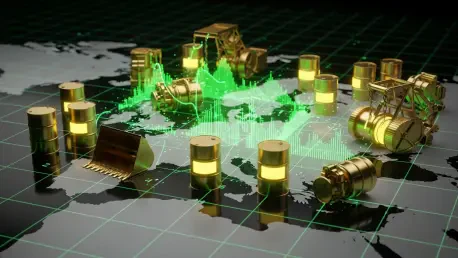
The primary driver behind the market upward movement was the surge in commodity prices, particularly as West Texas Intermediate crude futures climbed above $102 per barrel. The FTSE 100, which is heavily weighted toward energy and mining, outperformed its peers with a 1.6% gain, while the pan-European Stoxx 600 rose 0.8%. Investors increasingly viewed these sectors as a natural hedge against geopolitical instability. Data suggested that as long as the threat to oil hubs like Iran’s Kharg Island remained high, the risk-off sentiment usually seen during wartime was being mitigated by the massive profit potential of energy giants.
The Divergence: Sentiment vs. Market Reality
A critical point of concern was the widening gap between equity prices and the lived economic reality in the Eurozone. While stocks rose, the European Commission reported a sharp decline in its Economic Sentiment and Employment Expectations Indicators for March. Consumer confidence plummeted as the regional impact of the conflict—manifesting in higher living costs and inflation fears—began to take hold. This disconnect highlighted a bifurcated market where institutional investors focused on sector-specific gains while the broader population braced for a potential recession driven by decreased consumption and employment volatility.
Corporate Success Stories: Growth Amidst Sectoral Lag
Despite the overarching geopolitical gloom, specific corporate developments provided unexpected bright spots. For instance, the renewable energy firm Orsted saw its shares surge by 7% following a “buy” rating from Bank of America. This upgrade suggested that even with political opposition to offshore wind projects in the United States, the risk-reward profile for green energy remained attractive as Europe sought to diversify its energy sources. Conversely, sectors like technology and travel lagged, as they remained more vulnerable to discretionary spending cuts and the immediate logistical disruptions caused by the expanding theater of war.
Emerging Trends and the Future of Energy Security
Looking ahead, the market is likely to be shaped by the outcomes of emergency G7 meetings and the potential for further military escalation. A significant emerging trend is the accelerated move toward energy independence, which may paradoxically benefit both fossil fuel companies in the short term and renewable firms in the long term. Regulatory changes could soon prioritize domestic energy production and defense spending, fundamentally altering the composition of European benchmarks. If the conflict persists, the “war footing” economy will likely become the new baseline, with market volatility dictated more by military maneuvers than by traditional economic indicators.
Strategic Recommendations: Navigating High Volatility
For investors and professionals navigating this landscape, the primary strategy should involve a balanced exposure to commodity-linked equities while maintaining a defensive posture in consumer-discretionary sectors. Key takeaways from the current market behavior suggest that energy security has become the ultimate priority. Professionals should monitor G7 policy shifts closely, as coordinated global responses could introduce sudden liquidity or price caps. Diversifying into companies with strong balance sheets and “idiosyncratic” growth potential—those that can grow regardless of the macro environment—is recommended to mitigate the risks of plummeting consumer sentiment.
The Enduring Significance of Geopolitical Risk
In the final analysis, the market performance on March 9 underscored a fundamental shift in how risk was priced during periods of active conflict. Investors prioritized tangible assets and energy security over the abstract concerns of consumer sentiment indices. The ability of indices like the DAX and Stoxx 600 to finish in green territory indicated that capital was actively seeking refuge in sectors that benefited from supply constraints. Ultimately, the session proved that while geopolitical instability remained a threat, it also created a concentrated area of profitability for those positioned in the resource and defense sectors.