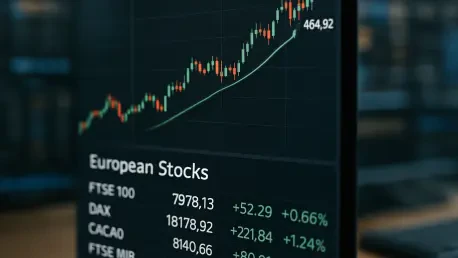

European markets demonstrated considerable resilience at the close of a turbulent week, with the pan-European Stoxx 600 index managing to reverse earlier losses and finish approximately 0.9% higher. This upward momentum, however, masked a deeply fragmented landscape where individual corporate fortunes dictated investor sentiment far more than broad economic trends. The session was a testament to the power of company-specific news, as a barrage of earnings reports painted a complex and often contradictory picture of corporate health across the continent. While some firms celebrated strong results that sent their shares soaring, others delivered disappointing news that triggered significant sell-offs. This divergence created a volatile trading environment where sector-wide performance became almost secondary to the triumphs and tribulations of individual companies, forcing investors to navigate a minefield of disparate financial outcomes rather than riding a cohesive market wave. The day’s activity underscored the nuanced reality of the current economic climate, where aggregate indices can obscure the intense pressures and opportunities at the micro level.
Sector Fortunes Diverge Amid Earnings Deluge
Nowhere was the market’s divided nature more apparent than in the dramatic contrast between the automotive and renewable energy sectors. The auto industry faced a significant downturn, starkly exemplified by a staggering 24% plunge in the Milan-listed shares of Stellantis. The carmaker’s announcement of a costly $26 billion business reset sent shockwaves through the market, creating a ripple effect that dragged down other major French automotive stocks. Renault, Valeo, and Forvia all experienced notable declines as investors grew wary of the capital-intensive challenges facing the industry. In the financial sector, French lender Societe Generale contributed to the negative sentiment, with its shares falling by about 2% after it published its fourth-quarter earnings. In sharp opposition to this trend, the renewable energy sector provided a beacon of positive performance. Danish wind developer Orsted saw its stock climb over 3%, a rally fueled by strong fourth-quarter results that revealed a nearly 10% increase in revenue, signaling robust health and investor confidence in the green energy transition.
Corporate Maneuvers and a Steady Macroeconomic Hand
Beyond the immediate impact of earnings, major corporate developments and a stable macroeconomic environment shaped the market’s final trajectory for the week. In a significant development within the natural resources sector, mining giants Rio Tinto and Glencore officially terminated merger discussions that would have created the world’s largest mining company. The collapse of the deal, attributed to a failure to agree on terms, saw Glencore publicly state that the proposal undervalued its contribution. Despite the initial uncertainty surrounding the failed talks, shares for both companies recovered from early losses to close higher on Friday, suggesting investors were content with the independent paths forward. This corporate drama unfolded against a backdrop of monetary policy stability, as both the Bank of England and the European Central Bank held their key interest rates steady. In the U.K., yields on government bonds remained largely unchanged, while the British pound strengthened by 0.6% against the U.S. dollar, even as Prime Minister Keir Starmer navigated ongoing political pressures. This combination of high-stakes corporate strategy and central bank patience provided a complex but ultimately positive close to the trading week.