
The Fed Hits Pause: Why the Central Bank’s Wait and See Approach Matters
The United States Federal Reserve has decisively shifted its monetary policy into a holding pattern, concluding a recent period of easing and signaling a more patient, data-dependent stance for the foreseeable future. Following its latest Federal Open Market Committee (FOMC) meeting, the central bank announced it would hold its benchmark interest rate steady, a move that was widely anticipated but nonetheless significant. This article explores the nuances of this decision, from the internal debate it revealed to the deliberately steady message from Chair Jerome Powell. By examining the economic outlook, market reactions, and expert interpretations, we can unpack why this pivot to a “long pause” is a pivotal moment for the economy, investors, and consumers alike.
From Easing to Equilibrium: The Road to the Rate Hike Standstill
The Federal Reserve’s decision to hold rates did not occur in a vacuum. It follows a noteworthy string of three consecutive rate cuts, a period of monetary easing designed to shield the U.S. economy from global headwinds and simmering trade tensions. Those earlier moves were preemptive “insurance” cuts aimed at sustaining the economic expansion. The recent shift to a neutral stance suggests that policymakers now believe the economy is on more solid footing and that the previous adjustments have had their intended effect. Understanding this transition from active intervention to cautious observation is crucial for interpreting the Fed’s current mindset and its likely course of action in the coming months.
A Deeper Look into the FOMC’s Decision
Decoding the Decision: A Split Vote Reveals Internal Debate
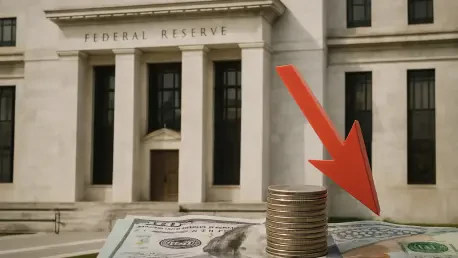
The central finding from the meeting was the FOMC’s decision to maintain the federal funds rate in its current range of 3.5% to 3.75%. While the outcome met broad expectations, the details revealed an ongoing internal debate about the appropriate path forward. The decision was not unanimous, with two committee members, Governors Stephen Miran and Christopher Waller, dissenting from the majority. Both advocated for an additional quarter-percentage-point cut, highlighting a persistent dovish wing within the Fed that believes more support is still needed. This split underscores the complexities of the current economic picture and signals that the consensus for a prolonged hold may be more fragile than it appears.
Powell’s Cautious Tone: Projecting Stability Amidst Uncertainty
In his press conference following the announcement, Federal Reserve Chair Jerome Powell delivered a masterclass in measured communication. His remarks were characterized as deliberately uneventful, as he skillfully deflected politically charged questions with variations of “I have nothing for you on that.” Powell’s core message was one of confidence in the economy, with the Fed’s official statement projecting solid growth, a strong labor market, and the view that a recent rise in inflation was a temporary, tariff-driven event that would soon subside. His advice for his eventual successor—to “stay out of elected politics”—further reinforced the central bank’s commitment to maintaining its independence and focusing strictly on its economic mandate.
Markets React with a Shrug, But Experts See a Hawkish Tilt
Financial markets greeted the Fed’s announcement with a collective yawn, as the decision to pause was already largely priced into stocks and bonds. Major indices saw little movement, confirming that Wall Street was in sync with the central bank’s thinking. However, expert analysis dug deeper. Many commentators affirmed that with economic conditions stabilizing, policy rates are now considered near a “neutral” level, making a “long pause” the most logical strategy. Despite this, one analyst described the Fed’s overall message as a “somewhat hawkish package,” suggesting the bar for any future rate cuts has been raised significantly. This interpretation contrasts with market-based predictions, where traders are still pricing in a roughly 60% probability of two more cuts later in the year.
What’s Next? Navigating the Fed’s Long Pause and Market Expectations
With the Federal Reserve now in a wait-and-see mode, the focus shifts to what comes next. The central bank has made it clear that a “material reassessment” of its economic outlook would be required to prompt any further policy changes, either up or down. This puts a heightened emphasis on incoming data related to employment, inflation, and consumer spending. The divergence between the Fed’s firm “on hold” signal and the lingering market expectations for future easing creates a delicate tension. Any significant economic surprises could challenge the Fed’s patient stance and force policymakers to re-evaluate their strategy sooner than anticipated, making the coming months a critical period of observation for a data-dependent Fed.
Key Takeaways for Investors, Businesses, and Consumers
The Fed’s pivot to a neutral policy stance carried several important takeaways. For investors, a stable interest rate environment reduced a key source of market volatility, though it also meant the tailwind of monetary easing was gone. Portfolios may need to be positioned for steady, rather than spectacular, growth. For businesses, the pause signaled that borrowing costs were likely to remain predictable in the near term, aiding in financial planning and investment decisions. For consumers, this stability translated to relatively steady rates for mortgages, auto loans, and credit cards, though savers will continue to see modest returns on their cash deposits. The overarching message was one of predictability, at least for now.
A New Chapter of Patient Policy: The Fed’s Balancing Act
In conclusion, the Federal Reserve’s decision to pause its rate-cutting cycle marked a definitive new chapter in its management of the U.S. economy. By signaling a prolonged hold, the central bank expressed confidence that its prior actions had successfully navigated economic risks. This newfound patience, however, will be tested by evolving economic data and persistent market expectations for further easing. The Fed’s ability to maintain its steady course while remaining insulated from political pressures will be paramount. Ultimately, this move represents a complex balancing act—one aimed at sustaining growth, managing inflation, and preserving stability in an ever-changing economic landscape.