
The global landscape has undergone a seismic shift as the pursuit of unbridled efficiency that defined the previous three decades gave way to a new era where national security and industrial sovereignty dictate the flow of trade and innovation. This transformation replaced the logic of cost-optimization with a rigorous focus on resilience, leading major economies to dismantle old dependencies in favor of localized production clusters. Governments no longer view cross-border supply chains as mere economic assets but as strategic vulnerabilities that must be guarded against geopolitical leverage. As friction between technological superpowers intensified, the concept of a borderless digital economy vanished, replaced by a segmented world where hardware, data, and energy are guarded like national treasures. These changes forced multinational corporations to abandon “just-in-time” delivery models for “just-in-case” strategies that prioritize stability over profit margins in this volatile age.
The Shift: Securing High-Tech Sovereignty And Labor Hubs
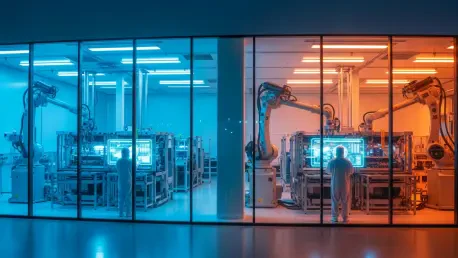
Semiconductor manufacturing stands at the forefront of this industrial pivot, serving as the most visible battleground for technological dominance in the current landscape from 2026 to 2028. Massive subsidies provided by legislative frameworks in the United States and the European Union incentivized the construction of fabrication plants on domestic soil. This move successfully reduced reliance on specific geographic chokepoints that previously threatened the stability of the automotive and consumer electronics sectors. High-end logic chips, once produced almost exclusively in a few concentrated hubs, are now being manufactured in a more distributed fashion across Phoenix, Dresden, and Tokyo. This decentralization was a calculated response to the realization that any disruption in the silicon supply chain could paralyze an entire nation’s economy. Consequently, industrial logic shifted from seeking low labor costs to securing the most reliable physical environments for production today.
Building on this foundation of hardware security, the concept of friend-shoring transformed how manufacturing hubs are selected, moving beyond simple proximity to favor political alignment. Large-scale assembly lines for complex machinery and telecommunications equipment migrated toward nations that share similar strategic interests, creating exclusive economic zones. This realignment effectively created a bifurcated global market where trade protocols are increasingly governed by security pacts rather than universal commerce rules. Mexico and Vietnam benefited significantly from this transition, absorbing much of the capacity that exited more volatile jurisdictions. However, this transition required immense investment in local infrastructure and workforce training to ensure that these new hubs could meet the high precision standards of modern industry. The result was a more fragmented but arguably more stable network of production that prioritized long-term continuity over short-term savings now.
Future Resilience: Managing Intelligence And Strategic Resources
Artificial intelligence emerged as the primary engine of this new industrial logic, necessitating a massive expansion of data center infrastructure and high-performance computing clusters. In the period spanning 2026 to 2029, the ability to train and deploy massive foundational models became a metric of national strength, comparable to nuclear capability or naval tonnage. This led to a race for energy-efficient hardware and the massive scaling of power grids to support the insatiable demand of AI processors. Cloud service providers shifted their expansion strategies to focus on sovereign clouds, ensuring that sensitive data and critical algorithms remained within specific jurisdictional boundaries. The competition for the most advanced graphical processing units and specialized AI accelerators created a secondary market of strategic stockpiles. This environment compelled technology firms to integrate vertically, designing their own silicon and securing energy contracts to protect vital development.
To navigate this restructured landscape, successful organizations adopted a strategy of extreme agility and political awareness that went beyond traditional market analysis. Decision-makers invested heavily in scenario planning and digital twin simulations to anticipate the impact of potential trade barriers or sanctions on their operations. They prioritized the diversification of their supplier bases, ensuring that no single country held a veto over their production capabilities. Leaders also cultivated deep relationships with government agencies, aligning their corporate roadmaps with national industrial policies to secure necessary support and funding. The emphasis on localized talent development ensured that the workforce remained capable of operating highly automated facilities. Furthermore, the integration of circular economy principles helped mitigate the risks associated with raw material shortages. These actions provided a blueprint for surviving in an era where the boundary between economics and geopolitics dissolved.