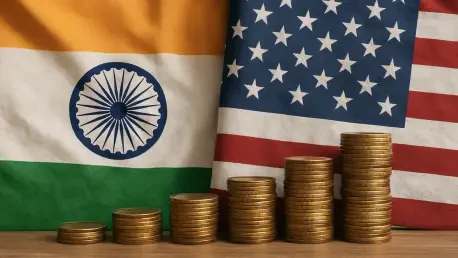

Imagine a nation defying the weight of global trade barriers, achieving a staggering 8.2% economic growth rate in a single quarter despite hefty tariffs from one of its largest trading partners. This is the reality for India in the September quarter, even as 50% U.S. tariffs loomed large since August. The unexpected surge, surpassing economists’ predictions of 7.3%, has sparked intense discussions among experts, policymakers, and analysts. This roundup dives into diverse perspectives on how India pulled off such resilience, gathering opinions and insights from various economic thought leaders to understand the drivers, challenges, and future implications of this remarkable performance.
Sectoral Strengths and Surprising Performances
Digging into the heart of India’s growth, many analysts point to the standout roles of manufacturing, construction, and financial services as key pillars. Financial services, in particular, clocked an impressive 10.2% growth rate, a figure that has caught the eye of industry observers for its robustness. This sectoral strength, as highlighted by several economic reports, acted as a buffer against external pressures like the U.S. tariffs, showcasing how internal momentum can counter global headwinds.
However, not all views are unanimously celebratory. Some experts caution against over-reliance on specific sectors, arguing that such concentration could expose the economy to risks if trade disruptions intensify. The diversity of opinions underscores a broader debate: while sectoral powerhouses are a boon now, there’s a pressing need to broaden the base of growth to ensure long-term stability.
Domestic Demand: A Shield Against Trade Barriers
Turning to domestic consumption, numerous market watchers credit this factor as a vital shield for India’s economy. Initially slow due to anticipated policy changes, consumer spending roared back post-September with GST cuts and income tax reductions boosting disposable income. Commentators frequently cite record automobile and gold sales in October as tangible proof of this revival, painting a picture of a populace ready to spend when supported by the right incentives.
Yet, there’s a flip side to this optimism. A segment of analysts warns of underlying risks, such as persistent trade deficits and sluggish exports, which could sap the momentum of consumption-driven growth. This divergence in thought reveals a critical tension: while domestic demand is a strength, its sustainability hinges on addressing structural trade imbalances, a point of contention among economic strategists.
Policy Moves to Counter Global Challenges
On the policy front, there’s a near-consensus among observers that strategic interventions like GST reductions played a pivotal role in cushioning the impact of U.S. tariffs. These measures, designed to stimulate internal demand, have been praised for their timeliness and effectiveness, especially as regional consumption trends show an uptick post-implementation. Such adaptive policymaking, many argue, demonstrates India’s agility in navigating choppy global waters.
Contrasting views emerge when looking at long-term projections. Some economic bodies, including international forecasting agencies, predict a moderation in growth to 6.2% by fiscal 2027, citing potential delays in trade agreements. Others, however, challenge this cautious outlook, suggesting that continued policy innovation could defy these estimates, keeping India on a steeper growth trajectory.
Trade Hurdles on the Path to a $5 Trillion Economy
When it comes to trade, the landscape is fraught with complexity, and opinions vary widely. Many experts highlight declining merchandise exports and a widening goods deficit, exacerbated by high gold imports, as significant hurdles. This perspective often aligns with forecasts predicting a 5.8% drop in exports by fiscal 2026, raising alarms about India’s external economic health.
On the other hand, a more optimistic faction points to nominal GDP stability and the ambitious target of becoming a $5 trillion economy by fiscal 2029 as counterweights to these challenges. They argue that future trade negotiations could shift the dynamics, urging a focus on diversified markets. This split in thought reflects the broader uncertainty: can India balance immediate trade woes with long-term economic aspirations?
Key Takeaways from Varied Perspectives
Synthesizing these diverse insights, it becomes clear that India’s 8.2% growth stemmed from a potent mix of sectoral vigor, bolstered domestic demand, and nimble policy responses. While some analysts emphasized the immediate strengths, others brought attention to latent risks like export declines and sectoral dependencies. This range of viewpoints offers a rounded understanding of an economy at a crossroads, resilient yet tested by global forces.
Reflecting on a Milestone Moment
Looking back, the discourse surrounding India’s economic surge revealed a fascinating interplay of optimism and caution among experts. The insights gathered painted a picture of a nation that leveraged internal strengths to weather external storms, yet faced persistent questions about sustainability. Moving forward, the actionable step for stakeholders is to prioritize diversified export strategies and sustain domestic incentives. Keeping an eye on evolving trade policies and sector-specific opportunities will be crucial, as will exploring further analyses on global economic trends to stay ahead of the curve.