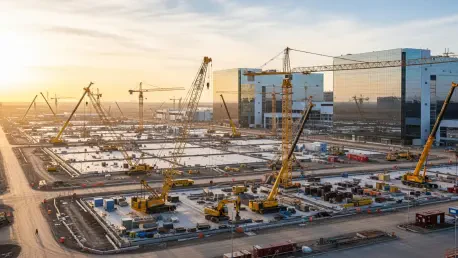

The transition of the Buckeye State from a struggling industrial relic to a global beacon of corporate excellence represents one of the most remarkable economic reversals in the modern history of the United States. While critics once dismissed this region as a permanent member of the Rust Belt, the current reality tells a far different story of resilience and strategic foresight. Today, the state stands at the pinnacle of national business rankings, a position secured through a disciplined multi-decade effort to modernize its economic foundation. This achievement is not merely the result of a single policy but the culmination of a systematic overhaul that has transformed the local landscape into a magnet for high-tech investment and global capital. Under the current leadership, the state has moved beyond the shadows of its manufacturing past to define the future of American industry, successfully outperforming traditional economic giants through a combination of speed, scale, and stability.
This ascent signals a fundamental shift in how state-level competitiveness is measured in the current era. It is no longer enough to offer low taxes or a warm climate; modern enterprises prioritize predictability, infrastructure, and an environment where projects can move from conception to construction at lightning speed. By securing the top spot in the most recent national business studies, the state has demonstrated that its model of “shovel-ready” development and aggressive incentives is the gold standard for growth. This success has sparked a national conversation about the viability of the Midwest as a primary engine for the next generation of American prosperity, proving that geographic centrality is a formidable asset when combined with modern policy frameworks.
The Buckeye State’s Strategic Transformation: From the Rust Belt to the Winner’s Circle
The journey to the top of the leaderboards began with a candid assessment of regional vulnerabilities that had persisted since the late twentieth century. Two decades ago, the state found itself ranked in the bottom half of national business lists, struggling with the legacy of a declining manufacturing sector and an aging infrastructure. However, a series of deliberate reforms initiated by successive administrations sought to rewrite this narrative by focusing on diversification and regulatory efficiency. The goal was to pivot toward sectors like aerospace, biotechnology, and advanced computing while retaining the traditional strengths of the manufacturing base. This strategic pivot allowed the state to weather global economic shifts more effectively than many of its peers, eventually leading to a record-breaking surge in new business arrivals and existing facility expansions.
By the time the current fiscal year began, the transformation was evident in every economic indicator, from venture capital inflow to the volume of new industrial square footage under development. The rebranding of the region has been so successful that it now attracts talent and investment that previously would have defaulted to coastal hubs. This change in perception was not accidental; it was earned through a consistent commitment to making the state the most accommodating environment for capital in the country. The result is an economy that is no longer reactive to national trends but is instead a primary driver of them, setting a pace that other states are now desperately trying to replicate.
Why Ohio’s Economic Milestone Serves as a Blueprint for National Competitiveness
The success of the Buckeye State provides a critical case study for other regions looking to revitalize their economic standing in a globalized market. Central to this blueprint is the idea of speed as a primary currency for business attraction. In an age where technological life cycles are measured in months rather than years, corporations cannot afford to wait through years of bureaucratic permitting and environmental reviews. The state government recognized this reality and developed a streamlined approach that minimizes friction for new arrivals, allowing major tech firms and defense contractors to break ground on massive projects in record time. This ability to move with the urgency of the private sector has become a defining characteristic of the local business climate, effectively creating a “fast lane” for economic development.
Moreover, the state’s victory over perennial leaders like North Carolina and Virginia highlights the importance of a balanced economic portfolio. While other states have focused heavily on specific niches, this region has cultivated a broad-based ecosystem that supports everything from heavy machinery production to advanced semiconductor research. This diversity provides a cushion against sector-specific downturns and ensures that the labor market remains robust across various skill levels. National observers have noted that the state’s model demonstrates how a traditional industrial powerhouse can modernize without losing its core identity, creating a template for regional renewal that is both inclusive and highly competitive.
Capitalizing on Geographic Superiority: Shovel-Ready Infrastructure
One of the most significant factors in the state’s rise is its unrivaled geographic positioning, which places over 140 million people within a single day’s drive of its borders. This proximity to major consumer markets and supply chain hubs is a natural advantage that the state has enhanced through massive public and private investment in logistics and transport networks. Recognizing that geography alone is insufficient, the state implemented the SiteOhio Authenticated program, a rigorous certification process that ensures industrial sites are ready for construction from the moment a deal is signed. This proactive approach eliminates the uncertainty that often plagues large-scale developments, as utilities, zoning, and environmental assessments are finalized long before an investor ever arrives on the scene.
The impact of this infrastructure strategy is best illustrated by the rapid expansion of high-growth firms that have chosen the region specifically for its readiness. For instance, defense technology companies have been able to transition from initial site visits to full-scale production within a single calendar year, a feat that is nearly impossible in states with more cumbersome regulatory environments. With nearly $200 million recently invested in site readiness alone, the state continues to outpace its neighbors in providing a turnkey solution for global manufacturers. This commitment to physical and digital infrastructure ensures that the region remains the logical choice for any enterprise requiring efficient distribution and a stable operational base.
The Data Center Revolution: Balancing High-Tech Innovation with Sustainability
As the demand for artificial intelligence and cloud computing continues to skyrocket, the state has emerged as a primary hub for the world’s most advanced data centers. With over 200 facilities already operational and billions of dollars in new investment flowing into projects like the massive SoftBank-AEP partnership in Pike County, the region is rapidly becoming a computing powerhouse. This influx of high-tech infrastructure brings with it substantial tax revenue and high-paying technical jobs, further cementing the state’s status as an innovation leader. However, the sheer scale of these projects has introduced new challenges regarding energy consumption and the long-term stability of the local power grid.
The state government is currently navigating a complex balancing act between encouraging this lucrative industry and addressing the concerns of local residents. Public debate has intensified over the impact of massive industrial energy use on residential utility rates, leading to calls for more stringent environmental and economic guardrails. In response, officials have recently paused some tax incentives to reassess how these developments can be integrated without placing an undue burden on the existing electrical infrastructure. The resolution of this tension will be a defining factor in the state’s continued growth, as it seeks to remain a leader in the digital economy while ensuring that its energy policies are sustainable and equitable for all citizens.
Driving Growth Through Aggressive Affordability: Business Incentives
At a time when inflation and rising costs are a primary concern for corporations, the state has leaned heavily into its reputation for affordability. It currently ranks as the most cost-effective place to do business in the nation, offering a combination of low real estate costs and highly aggressive incentive packages. Last year, the state provided over $1 billion in tax breaks and financial assistance to help businesses establish or expand their presence, a level of support that few other regions can match. This financial flexibility allows companies to reinvest more of their capital into research, development, and workforce expansion, creating a virtuous cycle of growth that benefits the entire regional economy.
Beyond corporate taxes, the state’s overall cost of living remains a significant draw for both employers and employees. Housing costs and daily expenses are notably lower than in coastal tech corridors, allowing workers to enjoy a higher quality of life for the same salary. While there has been some political debate regarding property tax levels as a primary source of school funding, the general consensus remains that the state offers an exceptional value proposition. By maintaining this competitive edge in affordability, the region has managed to attract a diverse range of companies that are looking to maximize their operational efficiency without sacrificing access to a high-quality labor pool or essential services.
Political Stability: Expert Perspectives on the Future of Growth
A core component of the state’s appeal to long-term investors is the perceived stability and predictability of its political environment. Leaders have worked to cultivate a business-friendly reputation that transcends partisan lines, focusing on pragmatism rather than ideological conflict. This consistency is highly valued by global corporations that plan their investments over decades, as it provides assurance that the rules of the game will not change overnight. Even as the state moves through a transition of leadership, the focus remains on maintaining the policies that led to the current top ranking, with candidates from across the spectrum acknowledging the importance of sustaining the current economic momentum.
Expert analysts suggest that this “predictability” is the secret weapon in the state’s arsenal, allowing it to win major projects even when competing against states with more aggressive marketing budgets. By fostering a collaborative relationship between government, industry, and academia, the state has created a unified front that presents a clear and compelling case to the global business community. This consensus-driven approach ensures that the state can tackle complex challenges—such as energy policy or education reform—with a long-term perspective that prioritizes the health of the economy above all else. As other states struggle with political volatility, the Buckeye State’s steady hand remains a primary reason for its continued dominance.
Cultivating the Workforce: Strategies to Mitigate Brain Drain and Skill Gaps
While the state has achieved top honors for its business climate, leaders realized that the victory remained fragile without a sustained commitment to human capital. Historically, the region faced a significant challenge in retaining its most talented graduates, who often sought opportunities in other tech-heavy states. To counter this trend, the administration implemented the Retention Scholarship program, offering substantial financial incentives to top-performing students who choose to attend local universities and remain in the state after graduation. These efforts successfully increased the retention rate of high-achievers, ensuring that the state’s growing tech and manufacturing sectors have access to a steady supply of local talent.
Furthermore, a multi-year investment plan aimed at training hundreds of thousands of workers for STEM roles became the cornerstone of the state’s workforce strategy. By bridging the gap between traditional classroom learning and the specialized needs of modern industries, policymakers ensured that the local population could transition into high-paying roles within the new economy. Public-private partnerships focused on experiential learning and vocational training, which allowed for a more agile response to the evolving demands of the semiconductor and aerospace sectors. These initiatives collectively addressed the skill gaps that previously hindered growth, transforming the labor market into a competitive asset. The state ultimately proved that the heart of its economic success lay not just in its physical infrastructure, but in the deliberate development of its people.