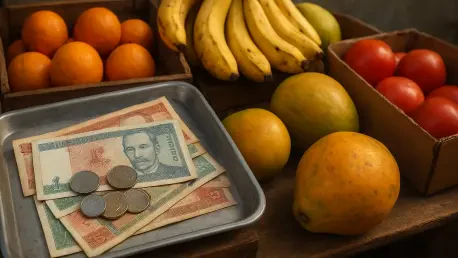

Chronic scarcity of hard cash has effectively allowed the informal market to dictate the price of nearly all goods and services available to the Cuban public. As 2026 draws to a close, the island’s financial ecosystem remains bifurcated into a formal sector that lacks necessary liquidity and an informal sector that serves as the lifeblood for millions. This parallel market, often fueled by transactions negotiated on digital platforms, provides the most accurate reflection of the currency’s actual purchasing power. For the average citizen, the fluctuations in this shadow economy are not just abstract numbers but represent a direct influence on their ability to secure basic nutritional needs and household goods. Consequently, the reliance on foreign assets has transformed from a survival tactic into a permanent structural feature of the domestic landscape. This environment of persistent inflation has forced a shift in consumer behavior, where the value of a paycheck is measured by its conversion rate into harder assets rather than its face value in pesos.
Analyzing the Informal Market Leaders
Stability and Volatility: The U.S. Dollar Trend
The U.S. Dollar has recently reached a point of relative stabilization within the informal sector, currently holding at a rate of 775 CUP, which represents a momentary psychological plateau for traders. While this specific figure suggests a cooling of the rapid depreciation seen in previous cycles, a closer inspection of recent data reveals that the underlying pressure on the peso remains acute. The currency experienced a minor decline of roughly 0.6 percent over the last week, but it remains nearly 90 pesos higher than its valuation just one month ago. This stabilization at such an elevated level indicates that while the rate of inflation has slowed, the cost of acquiring dollars remains prohibitively high for those earning state salaries. For small business owners and families who depend on imports, this price floor sets a challenging standard for the pricing of local goods. The persistence of these high rates proves that the demand for the dollar as a hedge against inflation is still outpacing the available supply.
High-Value Commerce: The Premium Status of the Euro
In contrast to the dollar, the Euro continues to maintain its status as the most expensive and sought-after currency in the informal market, closing the recent trading session at 872 CUP. This valuation reflects a daily increase and maintains a significant premium over other global assets, highlighting the Euro’s critical importance for international travel and high-value commerce. Even though the current rate is slightly lower than the peaks reached in earlier weeks, the consistent demand for European currency suggests it is viewed as a safer long-term store of value. Many individuals seeking to protect their savings from the ongoing depreciation of the peso prefer the Euro due to its stability in European-linked trade and the specific requirements of the informal import market. The 97-peso spread between the Euro and the dollar further underscores the distinct roles these currencies play, with the Euro functioning as a premium asset that remains largely inaccessible to a vast majority of the working-class population.
Virtual Valuations: The Role of the MLC
The Freely Convertible Currency, or MLC, represents a unique digital asset within the Cuban financial system, currently trading at an indicative value of 526 CUP per unit. As a digital credit primarily used in state-run retail environments, the MLC often exhibits different market behaviors than physical cash, reflecting the specific constraints of the dual-currency digital ecosystem. Recent technical fluctuations have seen the MLC’s value drop slightly, yet it remains significantly higher than its levels from just a few weeks prior. Because the MLC is tied to government-controlled stores for electronics and luxury goods, its demand is driven by specific consumer needs rather than general liquidity. This leads to a higher degree of volatility and inconsistency in its valuation compared to physical currencies. The fact that its exchange rate lags behind physical cash proves that citizens still place a higher value on tangible assets that can be used outside the state-regulated retail system for various essential services.
The Regulatory Breach: Official Rates Versus Reality
One of the most striking findings in recent financial assessments is the massive breach between state-regulated exchange rates and the reality of transactions on the street. The Central Bank of Cuba’s official rates for the dollar and euro remain significantly lower than the informal market equivalents, creating a gap of over 75 pesos per unit. This discrepancy confirms that the government’s flexible exchange mechanisms have yet to achieve their goal of capturing the primary flow of currency within the country. Instead, the population continues to favor the informal market for its accessibility and its ability to provide hard cash in an environment where banks are often depleted of reserves. This failure to align official and informal rates creates a distorted economic environment where businesses must navigate two entirely different sets of financial rules. As long as state institutions cannot bridge this gap, the informal market will continue to function as the de facto authority for price discovery.
Moving Forward: Navigating Future Monetary Transitions
Economic Resilience: Strategies for Financial Stability
The economic conditions observed at the close of 2026 illustrated a profound shift in the way financial value was perceived and managed across the island. The informal market solidified its role as the primary venue for currency exchange, while official state mechanisms struggled to provide the liquidity required for a modern economy. This period established that the domestic currency could no longer function in isolation from global benchmarks, as the reliance on foreign assets became deeply woven into the social fabric. To address these systemic challenges, stakeholders recognized the need for comprehensive structural reforms that went beyond simple currency adjustments. Moving forward, the focus shifted toward incentivizing domestic production and formalizing the parallel market to reduce volatility. Bridging the gap between official policy and street reality remained the most critical hurdle for ensuring long-term financial stability during this transformative year.
Strategic Insights: Next Steps for Market Integration
Moving forward, the focus for financial recovery must shift toward structural reforms that prioritize the integration of informal market dynamics into the formal banking system. Stakeholders should recognize that simply adjusting exchange rates without addressing the underlying scarcity of goods is insufficient for long-term stability. Practical recommendations include the formalization of private exchange houses to bring transparency to the parallel market and the creation of more robust incentives for foreign investment. By reducing the reliance on imported essentials through increased domestic output, the island can potentially ease the demand for foreign currency and stabilize the value of the peso. These insights suggest that prosperity depends on a more pragmatic approach to monetary policy that acknowledges the limitations of state control. Ultimately, the integration of these mechanisms into a unified economic framework provides a viable path toward reducing volatility and restoring public confidence.