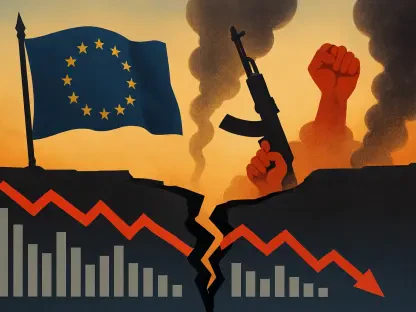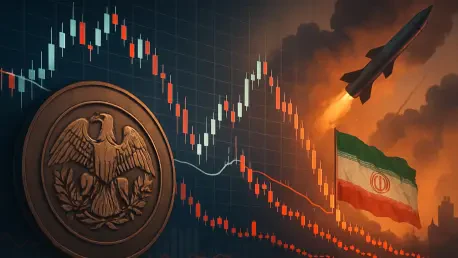

The global financial landscape is currently at a critical juncture, caught between the Federal Reserve’s evolving interest rate path and the volatile shadow of Middle Eastern conflict. On March 25, a significant recalibration occurred as U.S. Treasury yields retreated from recent highs, signaling a profound shift in investor sentiment that caught many by surprise. This article explores how the convergence of “well-anchored” inflation expectations and the specter of energy disruptions in Iran is reshaping market dynamics. By examining the interplay between central bank rhetoric and geopolitical brinkmanship, the goal is to provide a comprehensive look at the forces dictating the next era of global economic stability.
The Foundation of Current Market Volatility and Rate Expectations
To understand the current climate, one must look at the preceding months of aggressive monetary tightening and the fragile recovery. Historically, the benchmark 10-year Treasury yield has served as a barometer for economic health and inflation fears; its recent drop to 4.348% marks a departure from the “higher for longer” narrative that dominated the early part of the decade. This shift is rooted in the market’s reaction to persistent inflationary pressures, which have been exacerbated by supply chain vulnerabilities and fluctuating energy costs. Understanding these historical precedents is vital, as they provide the context for why current Fed signaling carries such immense weight in stabilizing a jittery bond market.
The Convergence of Fed Strategy and Global Security
Jerome Powell’s Pivot: The Anchoring of Inflation Expectations
A critical driver of the recent market shift was Fed Chair Jerome Powell’s assertion that long-term inflation expectations remain “well-anchored.” This nuanced communication provided immediate relief to the fixed-income market, leading to a decline in yields across the 2-year and 30-year curves. By suggesting that the Fed may not need to be as aggressive as previously feared, Powell effectively lowered the “risk premium” associated with future hikes. However, this optimism is tempered by the reality that the Fed’s path is increasingly dependent on external shocks, making the central bank’s job a delicate balancing act between price stability and economic growth.
The Iran Conflict: The Fragility of Global Energy Supplies
Building upon the monetary shift is the looming threat of significant energy disruptions originating from the U.S.-Iran conflict. Oil prices have become the primary transmission mechanism through which geopolitical tension hits the average consumer and, by extension, the Fed’s policy. The market is currently grappling with extreme signaling: on one hand, the possibility of diplomacy with a “more reasonable” regime, and on the other, the catastrophic threat of strikes against Kharg Island’s energy infrastructure. This volatility makes it nearly impossible for traders to accurately price in energy-led inflation, creating a “wait-and-see” atmosphere that complicates long-term investment strategies.
Regional Disruptions: The Strategic Importance of the Strait of Hormuz
Beyond the immediate price of crude, the situation in the Strait of Hormuz represents a systemic risk to global trade. Any closure of this maritime chokepoint would bypass traditional market logic, potentially causing a decoupled economic shock where inflation spikes while growth stalls—a classic stagflationary scenario. While the U.S. has increased domestic production, the global nature of oil pricing means no economy is truly insulated. Misunderstandings about energy independence often lead investors to underestimate the ripple effects that a regional conflict can have on domestic component costs and manufacturing margins.
Forecasting the Economic Landscape Amidst Uncertainty
The future of the markets will likely be defined by the upcoming “data gauntlet,” which includes the JOLTS job openings, ADP Employment Survey, and the nonfarm payrolls report. These indicators will reveal whether the labor market is cooling enough to support the Fed’s softer stance or if wage growth remains a persistent inflationary threat. Furthermore, the ISM Manufacturing report will serve as an early warning system for how rising energy costs are trickling down into industrial output. Speculative insights suggest that if geopolitical tensions ease, we could see a robust “risk-on” rally; however, any escalation in the Middle East will likely force a swift return to defensive market positioning.
Strategic Realignment for Investors and Businesses
The primary takeaway for market participants is the necessity of flexibility. For businesses, this means hedging against energy price volatility and preparing for a potentially fluctuating interest rate environment. Investors should consider diversified portfolios that can withstand both the deflationary pressure of a slowing economy and the inflationary shocks of geopolitical conflict. Applying this information requires a focus on “quality” assets—companies with strong pricing power and low debt-to-equity ratios—which historically outperform during periods of high macro uncertainty and shifting central bank priorities.
Synthesizing Policy and Geopolitics for the Long Term
The interplay between the Federal Reserve’s monetary recalibration and the volatile situation in Iran created a high-stakes environment for the global economy. While Jerome Powell’s steadying words provided temporary relief for the bond market, the specter of energy infrastructure destruction remained a potent wild card. This topic stayed significant as the world transitioned toward a new economic reality where geopolitical stability was no longer a given. Moving forward, the most successful market actors focused on building resilient supply chains and monitoring real-time logistics data to anticipate the next wave of volatility.