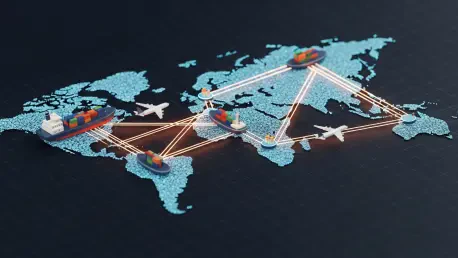

Global economic systems have demonstrated a remarkable ability to absorb significant shocks over the past several months, yet recent data indicates that this period of relative stability is rapidly coming to an end. While strategic reserves and a temporary dip in industrial demand previously shielded markets from the most severe consequences of geopolitical friction, the latest analysis from HSBC suggests that a transition toward a global commodity super-squeeze has already begun. This shift represents a move from mere psychological concern over potential disruptions to the harsh reality of actual physical shortages in essential resources. As localized conflicts in the Middle East and Eastern Europe continue to escalate without resolution, the logistical mechanisms that once ensured the smooth flow of goods are starting to fracture. Analysts observe that the global economy is entering a new phase defined by genuine scarcity and heightened volatility, fundamentally challenging the long-standing assumptions regarding the resilience of trade networks.
The Triple Threat: Maritime Chokepoints and Dwindling Reserves
The current crisis is significantly exacerbated by the simultaneous tightening of three critical maritime corridors: the Strait of Hormuz, the Bab el-Mandeb Strait, and the Black Sea. Unlike previous instances where disruptions were localized and manageable, these synchronized bottlenecks are creating a compounding effect on global logistics that effectively removes the necessary flexibility from the supply chain. When these vital passages are obstructed or significantly slowed, shipping costs do not merely rise incrementally; they surge as the actual volume of physical goods reaching their destinations begins to decline. This phenomenon is particularly dangerous because it bypasses the traditional financial hedging mechanisms that companies use to manage price risk, as no amount of financial protection can compensate for a total lack of physical delivery. The resulting delays are forcing manufacturers to re-evaluate their just-in-time inventory models in favor of more robust but costly alternatives.
Compounding this logistical nightmare is the dangerous depletion of global safety buffers and commercial inventory levels that have historically served as the world’s primary defense against supply shocks. Throughout the current year, the market has relied heavily on the release of strategic petroleum reserves and the systematic drawdown of commercial stocks to keep prices within a tolerable range, but these defenses are ultimately finite. As global inventories reach what industry experts describe as tank bottom, the market loses its inherent ability to absorb unexpected shocks, leading to sudden and sharp price spikes rather than gradual increases. In this environment, buyers are forced into intense competition for a shrinking pool of available supply, which further drives up costs and creates a feedback loop of volatility. The exhaustion of these buffers means that any future disruption will likely have a disproportionate impact on global energy security and industrial output.
Systematic Price Pressures: The Fragmentation of Global Markets
The commodity squeeze is rapidly expanding far beyond the energy sector, casting a long shadow over agriculture, industrial chemicals, and transportation fuels. Rising costs for diesel and nitrogen-based fertilizers are creating a wave of cost-push inflation that is notoriously difficult for central banks to manage using traditional tools like interest rate hikes. Because these inputs are fundamental to the production and delivery of nearly every consumer good, the inflationary pressure is structural rather than transitory. Financial institutions are already revising their long-term price forecasts upward, warning of a potential stagflationary environment where economic growth remains stagnant while the basic cost of living continues to climb. This scenario poses a significant risk to social stability and consumer spending, as the price of necessities like food outpaces wage growth, forcing households to make difficult choices and reducing the overall capital available for discretionary investments.
Furthermore, the increasing fragmentation of global markets means that localized shortages are causing prices to diverge based on regional availability rather than following traditional global benchmarks. In the past, a surplus in one region could easily offset a deficit in another, but current logistical constraints have rendered this balancing act nearly impossible. Consequently, some regions may experience extreme price peaks while others remain relatively stable, creating a disjointed economic landscape that complicates international trade agreements. For global corporations, this shift necessitates a move away from centralized procurement strategies toward more localized and redundant supply chains. The era of predictable, synchronized global trade has been replaced by a period of persistent supply constraints and regionalized pricing, requiring a much more proactive and sophisticated approach to risk management. Businesses must now prioritize supply security over cost optimization to ensure they can continue operating in a fractured marketplace.
Strategic Adaptations: Navigating a Scarcity-Driven Economy
In this new reality, the focus for investors and corporate leaders is shifting toward companies that possess significant pricing power and secure, independent supply chains. Organizations that control their own raw material sources or have secured long-term, direct-delivery contracts are significantly better positioned to weather the super-squeeze than those reliant on the spot market. This strategic shift is driving a wave of vertical integration as companies seek to insulate themselves from the volatility of external suppliers and maritime bottlenecks. Moreover, the value of technological solutions that provide real-time visibility into supply chain logistics has never been higher, as early detection of disruptions becomes a competitive advantage. Investors are increasingly penalizing firms that lack a clear strategy for resource security, while rewarding those that demonstrate resilience through diversification and domestic sourcing. This trend is likely to redefine the corporate landscape, as the ability to navigate scarcity becomes a primary metric for success.
Effective navigation of this super-squeeze required a fundamental reassessment of how resources were valued and managed across the entire global economy. Stakeholders prioritized the development of alternative energy infrastructures and more efficient recycling programs to reduce their dependence on increasingly volatile primary commodity markets. The transition toward circular economic models provided a necessary hedge against the physical scarcity of raw materials, while advancements in synthetic fuels offered a partial reprieve for the transportation sector. Decision-makers also implemented more rigorous stress-testing of supply chains, ensuring that contingency plans were robust enough to handle simultaneous failures in multiple maritime corridors. Ultimately, the most successful entities were those that recognized the permanent nature of these shifts and moved quickly to establish localized production capabilities. By focusing on resource autonomy and technological innovation, proactive organizations managed to secure their operational future despite the systemic pressures of the market.