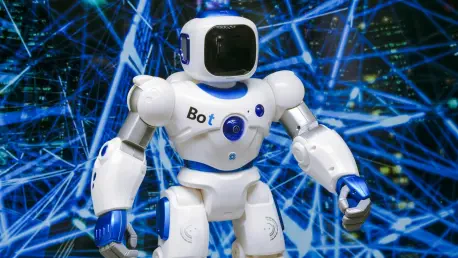

The rapid disappearance of the manual labor force is no longer a localized economic friction but a systemic global crisis that traditional automation has failed to solve. While fixed robotic arms have dominated factory floors for decades, they remain trapped by their own lack of versatility, unable to navigate the chaotic, unscripted environments designed for the human form. This limitation has birthed a new generation of general-purpose machines that do not require us to rebuild the world; instead, they are engineered to fit into it. By mimicking human morphology, these systems are transitioning from experimental university prototypes to $5 billion industrial assets, signaling a shift where labor itself becomes a scalable technology platform.
The Genesis of General-Purpose Humanoid Machines
The emergence of humanoid robotics is rooted in the realization that the global infrastructure—from warehouse aisles to the height of staircases—was built exclusively for bipedal organisms with opposable thumbs. Early robotics focused on task-specific efficiency, which resulted in machines that were excellent at one thing but useless at everything else. The humanoid approach flips this script by prioritizing a universal form factor. These machines are built on the core principle of adaptability, utilizing complex skeletal structures and sensor arrays that allow them to operate in the same spaces as humans without requiring multi-million dollar facility retrofits.
This technological evolution has been accelerated by the “hard-tech” philosophy, which treats the robot as a holistic labor solution rather than a peripheral tool. Companies like Apptronik have moved beyond the speculative phase, demonstrating that a robot capable of walking, reaching, and lifting can address the core cost structure of the global economy. As birth rates decline and the “unfilled job” metric climbs, the relevance of these machines has shifted from a luxury of the elite to a structural necessity for the survival of the logistics and manufacturing sectors.
Core Pillars of Humanoid Engineering and Intelligence
Advanced Actuation and Physical Hardware Systems
The physical performance of a humanoid robot depends entirely on the sophistication of its actuation—the motors and gears that serve as its muscles. Unlike standard industrial motors, humanoid actuators must balance high torque with delicate force control to prevent damage when interacting with fragile objects or human coworkers. Modern systems utilize proprietary liquid-cooled or high-torque density electric motors that allow for a fluid range of motion. This hardware is not merely about raw power; it is about the “compliance” of the limb, which enables the robot to absorb impacts and adjust its grip in real-time.
Furthermore, the engineering of the chassis has moved toward lightweight, high-strength composites that maximize battery life while maintaining structural integrity. The performance metrics of these hardware systems are measured in their ability to maintain balance on uneven surfaces and their duty cycles—the amount of time they can work before requiring a charge or maintenance. This physical foundation is the “ruthless” side of robotics; if the joints fail or the center of gravity shifts incorrectly, no amount of software can save the machine from a catastrophic fall.
The Integration of Artificial Intelligence and Neural Networks
If actuation is the body, then the recent integration of advanced neural networks serves as the long-awaited brain. For years, the hardware was ready, but it lacked the cognitive ability to understand a “messy” environment. Today, large-scale behavioral models and vision-language systems allow robots to perceive their surroundings with semantic understanding. This means a robot no longer just sees a “cylindrical object”; it understands it is looking at a “glass bottle” that requires a specific pressure to lift without shattering.
The partnership between hardware firms and AI giants like Google DeepMind has transformed these machines into self-learning entities. Through reinforcement learning, robots can now practice tasks in digital simulations millions of times before ever attempting them in the physical world. This drastically reduces the time required to deploy a robot to a new factory. Instead of months of manual programming, the machine observes a human performing a task and translates those visual cues into motor commands, making the transition from “dumb” automation to “intelligent” labor nearly seamless.
Current Market Trends and Strategic Innovations
The current landscape is defined by a shift from research-driven milestones to aggressive commercial scaling. Venture capital is no longer flowing toward robots that can simply dance or do backflips; the market now demands “boring” utility—the ability to move boxes for eight hours straight without an error. This has led to the rise of the “Robotics-as-a-Service” (RaaS) model, where companies can lease humanoid fleets rather than purchasing them outright. This trend lowers the barrier to entry for mid-sized enterprises that cannot afford the massive upfront capital expenditure usually associated with deep-tech.
Moreover, there is a growing trend toward “founder durability” and technical authenticity. Investors are increasingly wary of “slideware”—startups that promise high-level AI without a background in the punishing physics of hardware. The winners in the current cycle are those who have spent years in university labs refining the mechanics of balance and power distribution. We are also seeing a consolidation of the supply chain, as major players move toward vertical integration to control the production of specialized sensors and rare-earth magnets, ensuring they are not sidelined by global trade volatility.
Real-World Implementations in Industry and Logistics
In the sprawling distribution centers of the modern economy, humanoid robots are finally graduating from pilot programs to full-scale deployment. In logistics, these machines are being used for “end-of-line” tasks—picking up heavy totes and palletizing them for shipment. This is a grueling, repetitive job that sees high turnover among human staff. Humanoids excel here because they can navigate the tight spaces of a trailer or a crowded mezzanine where traditional forklifts or wheeled robots simply cannot fit.
Beyond simple carrying, specialized implementations are emerging in manufacturing assembly lines. In automotive plants, humanoids are being tested for tasks that require human-like reach, such as installing interior components or inspecting hard-to-reach wiring harnesses. These use cases are unique because they involve a “collaborative” environment where the robot must be aware of human presence. The successful deployment of these machines in such high-stakes environments proves that the technology is ready to move beyond the safety of the lab and into the high-pressure world of industrial production.
Critical Barriers to Mass Adoption
Despite the momentum, several hurdles remain before we see a humanoid in every warehouse. The primary technical barrier is “power density”—the ability of a robot to work a full shift on a single charge while carrying heavy loads. Current battery technology often forces a trade-off between the robot’s weight and its operational window. Additionally, the high cost of components like high-resolution LiDAR and specialized sensors keeps the unit price of these machines out of reach for many smaller industries.
Regulatory and safety standards also present a significant obstacle. Current laws regarding “cobots” (collaborative robots) were written for stationary arms, not mobile, 150-pound bipedal machines. Establishing a framework for how these robots should behave in public or semi-public spaces is an ongoing challenge. Furthermore, the global supply chain for high-performance actuators is still in its infancy, leading to long lead times that can stifle a company’s ability to scale quickly. Efforts to standardize parts and utilize 3D-printed metal components are underway to mitigate these bottlenecks.
Future Outlook and the Era of Robot-Driven Labor
Looking ahead, the trajectory of humanoid robotics points toward a fundamental decoupling of economic growth from human population trends. As these machines become more affordable and their AI “brains” more generalized, they will likely move from structured industrial sites into more complex environments like construction or even healthcare assistance. The potential for a “multimodal” robot—one that can switch from welding a seam to organizing a shelf with only a software update—represents the holy grail of industrial engineering.
The long-term impact on society will be a total redefinition of the “cost of labor.” When physical effort can be commoditized and scaled through manufacturing, the global productivity ceiling will rise significantly. We are entering an era where the hardware is no longer the bottleneck; the only limit will be our ability to integrate these machines into the social and legal fabric of our cities. This evolution suggests a future where human workers move into supervisory and creative roles, leaving the “dull, dirty, and dangerous” tasks to a tireless digital workforce.
Conclusion: Assessment of the Humanoid Robotics Landscape
The evolution of humanoid robotics has reached a definitive tipping point where physical engineering and digital intelligence have finally merged into a viable industrial product. While the journey from university spin-offs to multi-billion dollar enterprises was fraught with hardware failures and skepticism, the current generation of machines proves that the bipedal form is the most efficient way to automate a world built for humans. The integration of neural networks has solved the “logic” gap, turning expensive metal statues into adaptive, learning workers capable of tackling the labor shortage head-on.
Moving forward, the industry should prioritize the standardization of safety protocols and the diversification of power sources to ensure these machines can operate autonomously for extended periods. Organizations looking to maintain a competitive edge must begin preparing their infrastructure for robotic integration today, rather than waiting for the technology to become ubiquitous. The verdict is clear: the humanoid robot is no longer a futuristic curiosity but a foundational pillar of the next industrial age, and its successful implementation will distinguish the economic leaders of the next decade.