
Priya Jaiswal is a titan in the world of international finance and energy economics, known for her sharp analytical mind and deep understanding of how geopolitical tremors shift global wealth. As the Middle East faces an era of profound instability, her insights into the “major, major threat” posed by the current conflict provide a roadmap for navigating these treacherous waters. This conversation delves into the staggering loss of 11 million barrels of daily oil production, the disruption of critical gas supplies nearly double the scale of previous European shortages, and the delicate diplomatic dance required to reopen the Strait of Hormuz before global inflation spirals out of control.
The current loss of 11 million barrels of oil per day exceeds the combined impact of the 1970s oil shocks. How does this volume of disruption specifically destabilize global trade, and what immediate fiscal measures should nations prioritize to mitigate the risk of a worldwide recession?
We are witnessing a contraction that dwarfs the historic crises of 1973 and 1979, where the world lost roughly 10 million barrels combined. Today, that 11-million-barrel deficit acts like a chokehold on the global engine, causing freight costs to skyrocket and making every physical good more expensive to move. Governments must immediately pivot toward targeted energy subsidies and fiscal cushions to prevent the “inflationary rip” from tearing through the domestic fabric of their economies. If these measures aren’t prioritized, we risk a feedback loop of high prices and low growth that mirrors the worst periods of stagnation in modern history. There is a palpable sense of urgency as nations realize that no economy is truly immune to a shock of this magnitude.
With 140 billion cubic meters of gas lost and energy assets across nine countries damaged, the infrastructure crisis is unprecedented. What are the primary logistical challenges of repairing these vital assets, and how does the loss of secondary exports like fertilizers and helium impact global industrial supply chains?
The sheer geography of the destruction is staggering, with 40 major energy assets across nine countries currently reporting severe damage. Repairing these facilities isn’t just a matter of mechanics; it’s a logistical nightmare involving specialized labor and parts in an active war zone where safety cannot be guaranteed. Beyond the 140 billion cubic meters of gas lost—twice the amount seen during the Russia-Ukraine crisis—we are seeing the “vital arteries” of industry being severed. The interruption of helium and fertilizer trade means we aren’t just looking at cold homes; we are looking at potential crop failures and a total freeze in high-tech manufacturing. It is a domino effect that turns a regional infrastructure crisis into a global industrial paralysis.
Closing the Strait of Hormuz has triggered threats of strikes against power plants and regional infrastructure. Beyond releasing strategic stockpiles, what diplomatic or logistical protocols are essential to reopen this corridor, and how can nations prevent the conflict from escalating into a total regional energy blackout?
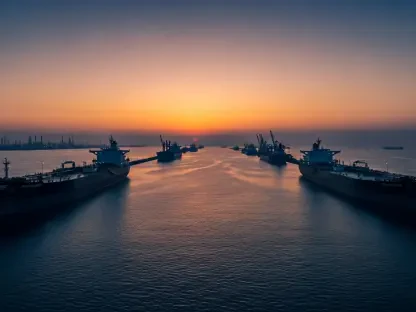
Reopening the Strait of Hormuz is the single most critical solution to this crisis, as it remains the primary gateway for global energy flows. Diplomatic protocols must move beyond rhetoric and focus on establishing de-escalation zones to protect power plants and desalination units from the threatened “obliteration” mentioned by world leaders. If we don’t secure a 48-hour window for cooling tensions, the risk of a total regional blackout becomes a terrifying reality for millions. Logistically, we need a multinational maritime framework to ensure the safe passage of tankers despite the shadow of war. Without these coordinated efforts, the fear of long-term production outages will continue to drive oil prices to unsustainable heights.
The release of 400 million barrels of oil is a historic intervention intended to stabilize volatile markets. Under what specific market conditions would a second release be triggered, and how do you evaluate the long-term sustainability of relying on emergency reserves if the conflict remains unresolved?
Releasing 400 million barrels was a historic and necessary move to “comfort the markets” during their most frantic hour. A second release would likely be triggered if we see sustained daily oil prices that threaten to stall global GDP or if the Strait remains closed beyond the immediate 48-hour warning period. However, we must be honest about the fact that strategic reserves are a bridge, not a permanent solution for a sustained war. Relying on these stockpiles is a high-stakes gamble; if the conflict drags on, we will eventually run out of the very safety nets designed to prevent a total economic collapse. We are currently consulting with leaders in North America, Asia, and Europe to assess how much more “comfort” the reserves can actually provide.
As oil prices soar, there is a growing fear that inflation will ripple through the global economy and devastate consumer markets. How should central banks adjust their strategies to account for these supply-side shocks, and what practical steps can be taken to protect the most vulnerable emerging economies?
Central banks are in an incredibly difficult position because traditional interest rate hikes do little to solve supply-side shortages of fuel and gas. They must balance the need to curb “ripping” inflation with the reality that soaring energy costs are already acting as a massive tax on consumers. For emerging economies, the situation is even more dire; they need immediate liquidity support and perhaps debt relief to manage the rising cost of essential imports. We are seeing a historic level of pressure on stock markets, which usually bounce back, but the sheer duration of these high energy prices is testing that resilience. Practical steps must include international cooperation to ensure that the most vulnerable nations aren’t left in the dark as energy costs skyrocket.
What is your forecast for the global energy market?
My forecast depends entirely on the speed of diplomatic resolution regarding the Strait of Hormuz and the physical restoration of the 40 damaged energy assets. If the corridor remains blocked, we are looking at a permanent upward shift in energy costs that will redefine global trade and force a painful, accelerated pivot toward alternative energy sources. However, if diplomacy prevails within the coming days, we may see a slow stabilization, though the psychological scars and the 140 billion cubic meter gas deficit will linger for years. The global economy is currently standing on a precipice, and the direction we take in the next 48 hours will determine if we face a decade of stagnation or a managed recovery. We must remain vigilant, as the “major, major threat” identified today is unlike anything we have managed in modern economic history.