
The modern American workforce currently resembles a high-performance engine that has suddenly transitioned into a low-vibration idle, leaving analysts to wonder if the machine is resting or about to stall completely. As the Bureau of Labor Statistics prepares to release its March jobs report, the financial world is bracing for a consensus projection of just 59,000 new positions. While such a figure would have historically signaled an immediate economic emergency, it is now being framed as an “above-trend” success in a cooling environment. This shift marks a fundamental recalibration of what constitutes a healthy economy, forcing a deeper look into whether this newfound stability is a genuine safeguard or merely a deceptive mask for deeper systemic vulnerabilities.
The Illusion of Stability in a Cooling Economy
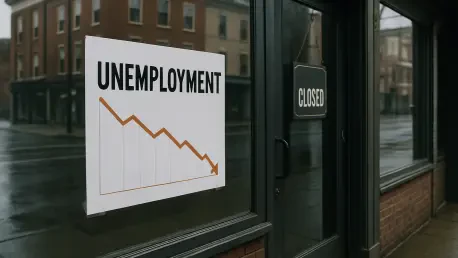
The upcoming data reflects a labor market that is increasingly difficult to categorize using traditional metrics. With unemployment hovering near 4.4%, the headline numbers suggest a surface-level resilience that keeps panic at bay. However, this stability is emerging during a period where the pace of hiring has decelerated significantly compared to the frantic post-pandemic recovery. The current environment is characterized by a “static” quality that defies historical precedents, leading to a situation where the absence of growth is no longer viewed as an automatic failure.
Understanding this shift requires acknowledging that the American labor market is no longer chasing the explosive gains of the past decade. Instead, it is settling into a phase where maintaining the status quo is the primary objective. By looking beyond the primary unemployment rate, one can observe how the economy is attempting to balance a cooling demand for labor with a shrinking supply of workers. This delicate equilibrium is the central focus of current market analysis, as observers try to determine if this “static” nature is a sign of a soft landing or the final breath before a downturn.
From Rapid Recovery to the Frozen Labor Market
To grasp the current state of employment, one must recognize how the landscape has evolved from the era of “The Great Resignation” into what is now widely termed a “frozen” market. In previous cycles, the U.S. economy required hundreds of thousands of new jobs each month to avoid stagnation. Today, that requirement has been fundamentally altered by aging demographics and shifting immigration patterns. These structural changes mean that the economy can now function on much lower payroll growth without immediate spikes in unemployment, creating a new “normal” that can be easily misinterpreted.
This context is vital because it explains why low payroll growth no longer triggers the same immediate alarms it once did. The hiring rate has hit its lowest point since the post-2011 recovery, yet the mass layoffs typically associated with such a trend have not materialized. This has created a unique psychological state among both employers and employees, where the market is neither expanding nor contracting in a traditional sense. The result is a workforce that is staying put, leading to a significant drop in turnover and a lack of the dynamism that usually drives wage growth and innovation.
Decoding the Mechanics of a Static Workforce
The Shrinking Breakeven Point for Job Growth
A critical aspect of this modern labor market is the dramatic reduction in the “breakeven” point—the specific number of jobs needed to keep the unemployment rate steady. Data suggests that because of a shrinking pool of available workers, the economy now only needs to add between 15,000 and 87,000 jobs per month to maintain full employment. While this low threshold keeps the official unemployment rate at a respectable level, it also fosters a sense of pervasive stagnation. This environment is defined by “labor hoarding,” where companies hold onto existing staff at all costs because they fear the difficulty of rehiring in a restricted labor pool.
The Precarious Reliance on the Health Care Sector
Building on the theme of stagnation, the underlying data reveals a concerning lack of diversity in modern job creation. Over the past year, the U.S. economy has become dangerously dependent on the health care sector to keep the numbers in positive territory. Expert analysis indicates that without these specific gains, the nation would have likely seen a net loss of over half a million jobs. Furthermore, many of these roles are concentrated in low-paying home health care positions. These jobs often lack the high wages and comprehensive benefits necessary to fuel broader consumer spending, suggesting that the foundation of the current market is narrower than it appears.
Diverging Perspectives on Recession Risks and Realities
The complexity of the current market has led to a significant split in opinion regarding the likelihood of a broader economic contraction. On one side, the absence of mass layoffs suggests a “soft landing” remains the most likely outcome. Conversely, major financial institutions have raised their recession odds, citing external pressures such as rising energy costs and geopolitical instability. Some analysts have placed the odds of a recession as high as 40%, pointing toward a period of strategic workforce resizing. These conflicting views highlight the difficulty of navigating a market where traditional indicators may no longer be reliable predictors of future health.
Emerging Trends and the Future of Work
Looking ahead, the American labor market is likely to be shaped by a trend of “compressed” growth. The era of aggressive corporate expansion is being replaced by a focus on internal efficiency and the integration of automation. Technological disruptions, particularly in the realm of artificial intelligence, may further reduce the need for high-volume hiring in the coming years. This shift could keep the labor market in its current “static” state for an extended period, as businesses prioritize productivity over headcount.
Furthermore, regulatory changes and shifts in global trade policy are expected to impact the few sectors that are currently driving the economy. As companies move toward leaner operations, the concept of “labor hoarding” will be tested against the reality of slowing consumer demand. This suggests that the evolution of the workforce will be defined by a cautious, defensive posture rather than the bold optimism seen in previous cycles. Professionals and businesses alike will need to adapt to a landscape where upward mobility is more difficult to achieve and internal stability is valued above all else.
Navigating a Low-Growth Environment
The current analysis suggests that while headline numbers remain stable, the margin for error is shrinking rapidly. For businesses, the primary takeaway is the urgent need for strategic workforce management that focuses on retention and maximizing the output of existing staff. In a frozen market, the cost of losing a key employee outweighs the benefits of a lean payroll. Professionals should also recognize that external job hopping may no longer yield the same wage premiums it once did, making internal transitions and skill diversification more viable paths for career longevity.
Investors and consumers should maintain a high level of caution, as the heavy reliance on low-wage health care jobs suggests the economic engine is underperforming. Monitoring sector-specific data, rather than aggregate unemployment figures, will provide a more accurate picture of the risks ahead. The focus should shift toward identifying which industries possess the pricing power to sustain wages in an environment where the overall volume of job creation is expected to remain historically low.
Assessing the Long-Term Significance of the March Report
The March report confirmed that the labor market entered a more fragile phase, where the appearance of stability hid a significant loss of momentum. It was clear that the shift from high-growth dynamism to a sector-dependent state represented a fundamental change in economic vitality. To prepare for the future, organizations moved toward diversifying their recruitment strategies beyond a few key sectors to avoid systemic vulnerability. Policymakers and business leaders began focusing on reskilling initiatives to address the stagnation in wage growth and the lack of upward mobility. This period proved that traditional economic planning required a more nuanced approach, emphasizing that the era of easy growth had been replaced by a necessity for precision and long-term resilience.