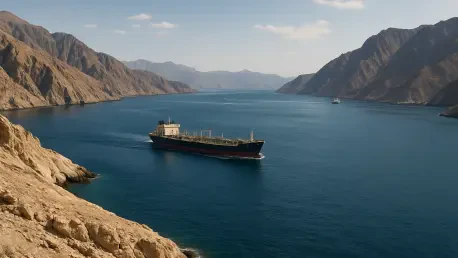

The global energy market has long viewed the Strait of Hormuz as a binary switch that is either fully open or completely shut, but recent ground-level evidence suggests a far more complex reality. This vital maritime corridor remains the most critical chokepoint for the international oil trade, connecting Persian Gulf producers to the rest of the world. While political rhetoric often suggests a total closure, active monitoring from the Musandam Peninsula reveals that energy flows have not ceased but have instead transformed into a more opaque, controlled system of transit.
Regional oversight in this narrow waterway depends heavily on the geographic advantage of the peninsula, which allows for direct observation of passing tankers. The current landscape is defined by a delicate balance between Iranian naval policy and the threat of international intervention. Traditional tracking methods, which rely heavily on remote sensing, are increasingly insufficient as the trading community shifts toward localized intelligence to gauge true transit volumes.
The Vital Role of the Strait of Hormuz in Global Energy Security
The strategic significance of this chokepoint cannot be overstated, as it handles a massive portion of the world’s daily oil consumption. Recent tensions have forced a re-evaluation of how maritime security is maintained in these restricted waters. The oversight provided by local coastal points remains essential for understanding the physical movement of goods that satellite data might miss or misinterpret during periods of high regional friction.
The influence of Iranian naval strategy, alongside the posture of Western security forces, creates a high-stakes environment for the global oil trading community. Market players are now forced to look beyond official naval communiques to understand the underlying mechanics of supply. This evolution has led to a greater reliance on ground-level observations to bypass the noise of geopolitical posturing.
Emerging Realities of Maritime Transit and Market Implications
The Rise of Dark Shipping and Selective Transit Tactics
A functional checkpoint model has replaced the traditional concept of an open sea lane, challenging the narrative of a total blockade. Under this system, vessels are not necessarily stopped but must navigate a complex series of unofficial approvals to ensure safe passage. This selective transit allows for continued movement while maintaining a level of regional control that creates friction for international logistics.
The widespread deactivation of AIS transponders has rendered official shipping data increasingly unreliable. This dark shipping tactic obscures the true volume of traffic, leading to market transparency issues and price volatility. However, reports from regional sources, including local fishermen who operate daily in these waters, confirm that vessel movement remains active despite the lack of a digital footprint.
Statistical Deviations and Projections for Future Throughput
Discrepancies between official transit figures and on-the-ground observations indicate that approximately fifteen vessels continue to pass through the strait every day. This throughput suggests that the corridor is far from the total standstill often depicted in media reports. While these numbers are lower than historical averages, they point to a resilient supply chain that adapts to regional pressures.
Projections for future traffic suggest a gradual recovery, with estimates pointing to a return to fifty percent of pre-conflict levels within the next forty-five days. However, the integration of a permanent geopolitical risk premium into oil pricing appears inevitable. This long-term volatility reflects a market that has adjusted to the reality of a semi-restricted corridor as a standard operational constraint.
Strategic Obstacles in Monitoring and Navigating Contested Waters
Remote sensing technology faces significant limitations when trying to monitor shipping zones where electronic masking is prevalent. Satellite imagery alone cannot distinguish between a truly idle lane and one filled with vessels that have turned off their tracking systems. This technological gap has created a vacuum of information that can lead to misinformed trading decisions and sudden price spikes.
Traders must now employ diversified intelligence gathering strategies to mitigate the risks of misinformation. Maintaining energy flow under a selective approval system requires deep logistical knowledge and an understanding of unofficial regional protocols. Successfully navigating these contested waters involves more than just following international law; it requires a nuanced grasp of the local security environment.
The Evolving Regulatory and Security Landscape of the Persian Gulf
Iranian maritime enforcement has created a new set of hurdles for international shipping law, forcing tankers to adapt to shadow regulations. These unofficial checkpoints require compliance that often sits outside the traditional framework of maritime commerce. As a result, the regulatory environment in the Persian Gulf has become a patchwork of official mandates and localized enforcement.
International security coalitions play a vital role in monitoring these non-transparent activities, yet they cannot always prevent the delays caused by selective inspections. Tanker operators are find themselves caught between conflicting requirements, leading to increased insurance costs and operational delays. This shifting landscape demands a constant reassessment of compliance strategies to avoid legal and physical risks.
Future Outlook: Transitioning to a New Normal in Global Oil Trade
The global energy market is moving toward a new normal where short-term volatility is replaced by long-term structural shifts in oil trade. Pricing models are increasingly incorporating the possibility of semi-blocked corridors as a baseline assumption rather than an outlier event. This transition is forcing a rethink of supply chain resilience and the strategic value of alternative routes.
Technological disruption will likely define the future of maritime tracking as electronic warfare and stealth transit become more common. The viability of long-dated futures contracts, such as December WTI, depends on the ability of the market to price in these enduring risks. Investors are increasingly looking at long-term hedges to protect against a corridor that may never return to its former state of total openness.
Reassessing Energy Security Through Ground-Level Intelligence
The investigation into the actual state of the Strait of Hormuz revealed a significant divergence between the binary market narrative and the functional reality of the waterway. Analysts determined that the corridor remained partially operational through a system of selective transit and dark shipping. This nuance was essential for understanding why global oil supplies did not collapse as predicted by more alarmist reports.
Investors were advised to move beyond short-term volatility plays and instead focus on enduring geopolitical risk strategies. The research highlighted that field-based validation was the only way to ensure the integrity of supply chain data in an era of electronic masking. These findings established that ground-level intelligence was an indispensable tool for navigating the complexities of modern energy security.