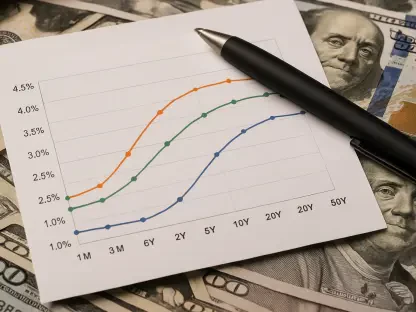

A sudden and unexpected cooling in the November inflation report sent shockwaves through the U.S. bond market, causing a sharp tumble in government Treasury yields. This swift drop, most notably in the benchmark 10-year note, signals a significant recalibration of investor expectations concerning the Federal Reserve’s ongoing battle against rising prices. The analysis that follows explores the specifics of this surprising inflation data, examines the market’s reaction, and considers the wider implications for monetary policy and the economic outlook. It moves beyond the immediate market shifts to address the critical nuances and expert cautions suggesting a more complex reality than the headlines imply.
The Intricate Dance of Inflation, Fed Policy, and Bond Markets
To fully appreciate the market’s sharp pivot, it is crucial to understand the fundamental mechanics linking inflation, Federal Reserve actions, and Treasury yields. For the past two years, elevated inflation has been the central focus of economic policy, forcing the Fed into a campaign of aggressive interest rate hikes. The goal of these hikes is to temper economic demand and steer inflation back toward the 2% target. In such an environment, Treasury yields, which are the returns investors earn on government debt, typically climb. This rise reflects both the higher policy rates and the need to compensate investors for the erosion of their purchasing power. Consequently, any data indicating that inflation is moderating more quickly than anticipated can trigger a rapid reversal, as markets begin to anticipate an earlier end to rate hikes or even future rate cuts.
Dissecting the November CPI Report and its Market Impact
A Closer Look at the Unexpectedly Low Inflation Figures
The catalyst for the market’s recent volatility was the delayed release of the November Consumer Price Index (CPI), which indicated a rapid deceleration in price pressures. The report revealed a mere 2.7% annualized increase in headline CPI, a figure well below the 3.1% consensus forecast among economists. The data on core CPI, which excludes volatile food and energy costs and serves as a better gauge of underlying trends, was even more encouraging. Core CPI rose just 2.6%, significantly under the projected 3%. In direct response, the bond market repriced its outlook, sending the benchmark 10-year Treasury yield down over three basis points to 4.118%, with yields on the 2-year and 30-year Treasuries following suit.
Behind the Numbers: Methodological Quirks Raise Questions
Despite the market’s enthusiastic reception, a growing consensus among analysts urges caution. The reliability of this single, surprisingly positive report has come under scrutiny due to a significant methodological issue. The Bureau of Labor Statistics (BLS) canceled its standard October survey, compelling it to use alternative data sources to compile the November index. This departure from normal procedure introduces a risk of statistical noise and potential distortions. Therefore, it is difficult to conclude with certainty that inflation is on a sustained downward trajectory. Experts warn that this single data point, while positive on its surface, may not provide the clear signal the Federal Reserve requires to alter its policy course.
How Surprise Data Puts the Federal Reserve in the Spotlight
The unexpectedly low inflation figures, despite their underlying uncertainties, create a challenging situation for the Federal Reserve. The central bank has consistently projected a hawkish stance, reaffirming its dedication to curbing inflation. However, this report pressures officials to carefully consider the risk of overtightening monetary policy, particularly if other economic indicators begin to show weakness. While recent data indicated a drop in weekly initial jobless claims, suggesting a resilient labor market, a consistent trend of cooler inflation would make it increasingly difficult for the Fed to justify maintaining high interest rates for an extended period. This dynamic is further complicated by political considerations, as the Trump administration is reportedly evaluating a successor to Fed Chair Jerome Powell, with Governor Christopher Waller being a prominent name mentioned.
Navigating an Uncertain Path: What to Watch for Next
Looking forward, investors and policymakers will be closely monitoring subsequent economic data to either confirm or dispute the trend suggested by the November CPI report. Future inflation readings will be of paramount importance as the market seeks a consistent pattern of disinflation. The Federal Reserve’s upcoming meetings and the public commentary from its officials will be intensely scrutinized for any shifts in tone or forward guidance. This period of heightened uncertainty is expected to fuel continued market volatility, as traders and investors work to balance the encouraging inflation news against the methodological caveats and other conflicting economic signals, such as the strength of the labor market.
Key Insights and Strategic Considerations for Investors
The primary takeaway from this recent event is that the current economic climate makes markets exceptionally sensitive to inflation data. For investors, this highlights the importance of maintaining a well-diversified portfolio that can withstand sharp, data-driven fluctuations in bond yields. It is essential to look beyond the headlines and understand the nuances behind the numbers, such as the BLS’s data collection issues, before making significant changes to asset allocation. Furthermore, this episode serves as a reminder that the path toward a stable, post-inflation economy will not be a straight line. Prudent investors should prepare for ongoing uncertainty and avoid positioning their portfolios based on a single, potentially flawed, data point.
A Market at a Crossroads: Balancing Optimism with Prudence
In conclusion, the precipitous drop in Treasury yields after the surprise November inflation report illustrated a market eager for indications that the fight against inflation was succeeding. The data provided a potent, if possibly fleeting, wave of optimism. This optimism was, however, tempered by valid questions surrounding the report’s reliability and the Federal Reserve’s unwavering public commitment to its mandate. The fundamental tension between encouraging inflation data and the need for statistical certainty left the market at a critical juncture. As investors and policymakers navigated the weeks that followed, the key was to balance hope for a soft landing with the prudence required in an economic environment where clarity remained a scarce commodity.