
A seemingly triumphant financial report can sometimes conceal deep-seated operational fissures, a reality that Intel and its investors confronted with jarring force following its fourth-quarter 2025 earnings announcement. While the headline numbers suggested a company on the right track, the market’s severe backlash revealed a deeper narrative about the immense pressures and complexities of modern semiconductor manufacturing. This event serves as a critical case study, highlighting the delicate balance between technological ambition and the unforgiving reality of production at the atomic scale. The following analysis will explore the financial data that created this paradox, delve into executive commentary on the underlying production issues, examine the future challenges facing the company, and consider the industry-wide implications of this high-stakes struggle.
The Paradox of Performance: Intel’s Q4 2025 Report
Strong Results Masking a Weak Outlook
On the surface, Intel’s fourth-quarter 2025 performance appeared robust. The company posted adjusted earnings of 15 cents per share on revenue of $13.7 billion, comfortably surpassing Wall Street estimates. This positive result, however, was immediately overshadowed by a deeply concerning forecast for the first quarter of 2026.
In stark contrast to its recent success, Intel projected revenue between $11.7 billion and $12.7 billion, with adjusted earnings per share expected to only break even. This guidance fell significantly short of the analyst consensus, creating a chasm between the company’s reported past and its anticipated future. Underscoring the operational strain, the company’s net loss widened to $600 million for the quarter, a substantial increase from the prior year, signaling that profitability remains a significant hurdle despite revenue beats.
A Market Reality Check
The market’s response to the weak guidance was swift and decisive. Intel’s stock plummeted by as much as 13% in after-hours trading, erasing a significant portion of its recent gains. This sharp decline provided a stark reality check, demonstrating that investor sentiment in the capital-intensive semiconductor industry is overwhelmingly forward-looking.
This negative reaction must be viewed against the backdrop of extremely high expectations. Over the past year, Intel’s stock had rallied an astounding 147%, largely fueled by investor optimism surrounding its burgeoning foundry business and the promise of its advanced 18A manufacturing technology. The performance across its business units also painted a mixed picture; while the Data Center and AI division grew a healthy 9%, its core Client Computing Group saw sales decline by 7%, indicating unevenness in its recovery.
Voices from the Top: Executive Insights on Production Hurdles
The reasons for the disappointing forecast were not left to speculation. Company leadership pointed directly to ongoing manufacturing and supply chain constraints. Finance Chief David Zinsner attributed the soft guidance to a fundamental lack of necessary supply to meet seasonal demand, a critical failure in operational execution for a company of Intel’s scale.
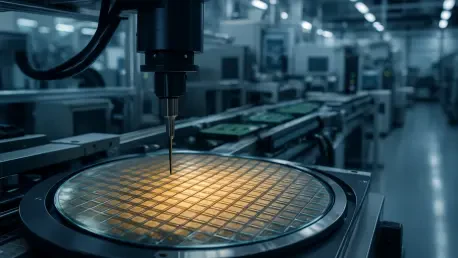
CEO Lip-Bu Tan provided further nuance, acknowledging that manufacturing yields, while aligned with internal plans, are “still below what I want them to be.” This admission highlights the persistent struggle to achieve the efficiency required for profitable mass production of leading-edge chips. In a statement that captured the core tension at the company, Tan also expressed optimism about the advanced 18A process, which he stated had “over-delivered” on its technical milestones. This juxtaposition of future promise against current production pain defines Intel’s present challenge.
The Road Ahead: Intel’s Manufacturing Gauntlet
Looking forward, Intel faces a gauntlet of manufacturing challenges. The most urgent priority is improving production yields and scaling operations to satisfy demand from both its internal product divisions and its external foundry customers. Failure to do so not only impacts short-term revenue but also undermines the credibility of its long-term strategy.
Success, however, presents a monumental opportunity. If Intel can master its 18A process at scale, it could establish its foundry business as a formidable competitor to industry leader TSMC. This would not only be a massive win for Intel but also a crucial development in diversifying the global semiconductor supply chain, a goal of significant geopolitical importance. The path to leadership in this sector demands immense capital investment and unparalleled technical expertise, and the industry is watching to see if Intel can execute.
Conclusion: Balancing Ambition with Execution
Intel’s paradoxical fourth-quarter report underscored a crucial lesson for the semiconductor industry: strong quarterly performance can be rendered almost irrelevant by underlying operational challenges that cast doubt on future growth. The narrative showed that in this high-stakes field, the ability to consistently execute on manufacturing and supply chain commitments is paramount. Ultimately, Intel’s journey highlighted the critical need to bridge the gap between its ambitious technological roadmap and its current production capabilities. Restoring long-term investor confidence hinges not on future promises, but on demonstrating a tangible mastery of today’s manufacturing realities.