
A single social media post from a former American president in October 2025 was all it took to erase billions of dollars from the global stock market, starkly illustrating a new era where economic policy is forged in the crucible of public rhetoric. This incident highlights a growing and disruptive trend: trade disputes are increasingly fought through unilateral public declarations rather than through the careful, deliberate processes of traditional diplomatic channels. The 2025 U.S.-South Korea tariff dispute serves as a critical case study, and by dissecting its immediate financial fallout, the underlying political dynamics, and the broader consequences, one can better understand the precarious state of modern global trade.
The Anatomy of a Modern Trade Shock
The speed at which political statements translate into economic consequences has accelerated dramatically. The events of late 2025 demonstrate that financial markets now react in real time to pronouncements made on unofficial platforms, creating a new and unpredictable layer of risk for international businesses and investors who must navigate a landscape shaped by both formal policy and political theater.
The Market’s Knee-Jerk Reaction
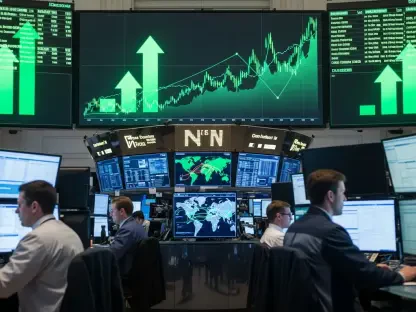
Data from October 2025 revealed an immediate and severe downturn in the value of South Korean automotive stocks, triggered directly by former President Donald Trump’s tariff announcement on the Truth Social platform. In the hours following the post, shares of Hyundai Motor, a major vehicle importer to the U.S., plunged by as much as 4.77%. The shockwave quickly spread to affiliated companies, with Kia’s shares dropping nearly 3.5% and the auto parts supplier Hyundai Mobis experiencing a 5% fall.
This episode is not an isolated event but rather a clear example of a larger trend where market volatility has become directly and instantaneously linked to political statements. The fact that the declaration was made on an unofficial social media channel, rather than through official government communication, underscores the shifting nature of geopolitical influence. Markets no longer wait for policy to become law; the mere suggestion of action from a prominent political figure is enough to trigger significant financial repositioning.
A Case Study: The U.S. Tariff Declaration on South Korea
In his public post, former President Trump declared his intention to raise tariffs on South Korean automobiles, pharmaceuticals, and lumber from 15% to an aggressive 25%. This move was framed as a response to an alleged failure by South Korea’s legislature to ratify a bilateral trade agreement that had reportedly been settled between the two nations’ leaders in July 2025.
The situation was further complicated by the official response from Seoul. South Korea’s presidential Blue House quickly confirmed that it had received no formal notification of any tariff change from the U.S. government. This stark disconnect between a public proclamation and the formal diplomatic process highlighted a breakdown in conventional state-to-state communication, leaving a key economic ally to formulate a response based on a social media post rather than an official policy directive.
Expert Perspectives on Policy and Precedent
The incident has intensified a critical legal debate simmering within the U.S. judiciary regarding the scope of presidential power. Coincidentally, the Supreme Court is deliberating a landmark case challenging the legality of a president unilaterally imposing tariffs without explicit Congressional approval. This real-world event provides a powerful, contemporary example of the very issue under judicial review, adding urgency and tangible consequences to the theoretical legal arguments.
Diplomatic analysts observe that this approach of policymaking-by-proclamation circumvents long-established international protocols. It replaces confidential negotiations and formal agreements with public pressure tactics, creating immense uncertainty. This forces foreign governments into a reactive posture, compelling them to respond to public statements that may or may not translate into actual policy, thereby destabilizing international relations.
Moreover, economic experts stress the significant financial stakes involved. The broken trade deal reportedly included a commitment from South Korea to invest an enormous $350 billion in the United States. The incident demonstrates the intricate and often fragile link between trade tariffs, which can be used as a punitive measure, and foreign investment, which is frequently a negotiated benefit. The potential loss of such a substantial investment showcases the profound economic repercussions that can arise from abrupt shifts in trade policy.
The Future of Global Commerce in an Unpredictable Climate
The 2025 tariff dispute signals a potential future where trade policy is wielded less as a tool for long-term economic strategy and more as a lever for immediate political gain. This creates a highly unpredictable and volatile environment for multinational corporations, which rely on stable, rules-based trade systems to manage their global supply chains and make long-term investment decisions.
Consequently, a primary challenge for global industries is the development of strategies to mitigate risks associated with sudden, politically motivated disruptions. Companies are now forced to factor in the potential for overnight tariff impositions and supply chain interruptions that stem not from market forces but from political maneuvering. This new variable complicates risk assessment and strategic planning for any business with international operations.
The potential long-term implications of this trend are significant. Businesses may be driven to strategically diversify their manufacturing bases to reduce dependence on any single country, a costly and complex undertaking. Furthermore, this climate of unpredictability could lead to a broad re-evaluation of the reliability of international trade agreements and potentially trigger an escalation of protectionist policies worldwide as nations seek to shield their economies from such shocks.
Conclusion: Adapting to the New Rules of Trade
The U.S.-South Korea tariff episode of 2025 was a stark reminder that geopolitical tensions, amplified and accelerated by social media, have become a primary driver of market instability. It demonstrated with startling clarity how quickly a single statement could inflict tangible financial damage across borders.
This incident also exposed the profound fragility of international agreements in an era of performative politics. The significant financial consequences of such unilateral trade actions revealed how vulnerable interconnected economies are to the whims of political rhetoric, bypassing established diplomatic and legislative norms.
Ultimately, the events of 2025 showed that businesses and governments must now develop new, more resilient strategies. Navigating this landscape requires an adaptation to a reality where diplomatic conventions are frequently challenged and where economic stability can be threatened in the time it takes to write and post a message online.