
The rapid transformation of global logistics has forced New Delhi to reconsider its historical reliance on traditional maritime routes as regional instabilities redefine the boundaries of international commerce. As India ascends as a global economic powerhouse, its traditional stance of strategic autonomy faces a trial by fire. The escalating conflict in the Middle East is no longer just a regional security concern; it has become the primary catalyst reshaping trade connectivity with Europe. This analysis examines the strategic pivot from the International North–South Transport Corridor (INSTC) toward the India–Middle East–Europe Economic Corridor (IMEC), exploring how geopolitical necessity is overriding historical infrastructure ambitions to safeguard the export future of the nation.
Structural Shifts in India’s Connectivity Landscape
Statistical Growth and Economic Imperatives
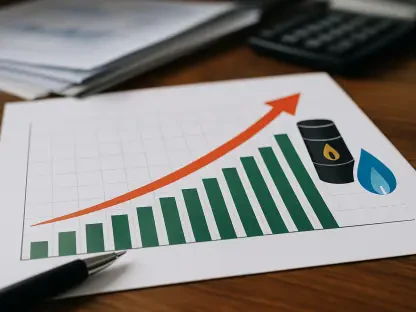
Recent data highlights a critical urgency for alternative trade routes as the global supply chain remains vulnerable to sudden shocks. The disruption of the Suez Canal has forced shipping companies to divert vessels around the Cape of Good Hope, adding ten to twenty days to transit times and inflating freight rates by nearly fifty percent. In response, the IMEC has emerged not merely as a choice but as an essential economic lifeline for maintaining market share in the West. Projections from the Ministry of Commerce suggest that once fully operational, this corridor could slash logistical costs by thirty percent and reduce total transportation time by forty percent. These metrics are vital for maintaining a competitive edge in European markets amidst rising global inflation and shifting consumer demands.
The economic pressure to find shorter routes is exacerbated by the increasing volume of high-value exports that require tighter delivery windows. Traditional maritime paths are becoming less reliable due to piracy and regional skirmishes, leading to a surge in insurance premiums for cargo passing through the Red Sea. By diversifying its transit options, the government aims to insulate the domestic manufacturing sector from the volatility of single-route dependencies. This move is not just about speed; it is about building a resilient architecture that can withstand the unpredictable nature of modern geopolitics while fostering deeper trade ties with the Mediterranean region.
Comparative Application: INSTC vs. IMEC
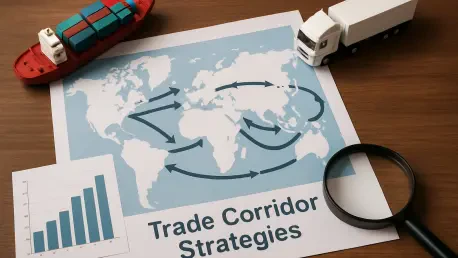
The real-world application of these corridors reveals a stark divergence in viability and political feasibility. The INSTC, intended to link the subcontinent to Russia via Iran’s Chabahar Port, is currently hitting a metaphorical dead end due to the tightening grip of international sanctions and regional volatility. Conversely, the IMEC is gaining significant traction as a transformative multi-modal project. Supported by the United States and the G20, it leverages the Abraham Accords framework to link the region to Europe via the UAE, Saudi Arabia, and Israel’s Haifa Port. While the INSTC struggles with stalled rail links and expiring sanctions waivers, the IMEC is being integrated into broader trade agreements that have been recently secured with Middle Eastern partners.
Furthermore, the technological integration planned for the IMEC far surpasses the legacy infrastructure of the northern route. The western-backed corridor is designed to be a “green” pathway, incorporating rail networks that reduce the carbon footprint of transcontinental trade. This alignment with global sustainability goals makes it more attractive to international investors and multilateral development banks. In contrast, the INSTC remains burdened by the political baggage of its primary transit partners, making it nearly impossible for global financial institutions to provide the necessary capital for its completion. This shift represents a pragmatic move away from ideologically driven projects toward those backed by the world’s most liquid capital markets.
Expert Perspectives on Geopolitical Realignment
Industry leaders and geopolitical analysts offer a sobering look at the challenges ahead for these massive infrastructure undertakings. Rafiq Dossani of the RAND Corporation noted that the utility of Iran as a transit hub is severely compromised regardless of conflict outcomes in the region. If sanctions remain in place, the route is effectively paralyzed for any company with global exposure, and if the political landscape shifts too drastically, the existing infrastructure may no longer serve the specific interests of the Indian state. This assessment underscores the risk of over-reliance on a partner that remains isolated from the global financial system.
Furthermore, Harsh Pant of the Observer Research Foundation emphasized a crucial irony regarding the current state of affairs. While the Middle East conflict makes the IMEC a strategic necessity, the same violence threatens the regional stability required to physically construct the link. Experts generally agreed that the administration is being forced to double down on Western-backed routes as the Iranian northern route becomes politically toxic and logistically high-risk. This realignment suggests that the era of non-alignment is being replaced by a more transactional and interest-based approach to foreign policy, where economic viability dictates political partnerships.
The Future Path of Global Trade Integration
Long-term Implications and Evolution
The future of this trade strategy will likely see a permanent shift toward Western-aligned corridors that offer more than just the movement of physical goods. As the IMEC evolves, it is expected to become a high-tech, high-efficiency artery that facilitates digital and energy connectivity, such as green hydrogen pipelines and undersea data cables. This multi-layered approach ensures that the corridor remains relevant even if traditional shipping patterns change. However, the path is fraught with hurdles that go beyond simple construction. The primary challenge remains the normalization of ties between Israel and its Arab neighbors, which serves as a prerequisite for the physical completion of the corridor’s rail segments.
Beyond the hardware of tracks and ports, the evolution of these routes will depend on the “software” of trade—customs harmonization, digital tracking, and unified regulatory standards. Developing a seamless transit zone across multiple borders requires a level of diplomatic coordination that has rarely been seen in the region. If achieved, this integration would create a powerful economic bloc capable of rivaling other global trade initiatives. The success of this endeavor would not only benefit the immediate participants but would also provide a template for how middle-tier powers can lead large-scale infrastructure projects in a multipolar world.
Potential Outcomes and Global Impact
If successful, the IMEC could redefine the role of the subcontinent in the global supply chain, positioning it as a central hub between the Indo-Pacific and the Atlantic. On the negative side, a failure to stabilize the Middle East could leave export ambitions stranded, forcing a reliance on the lengthy and expensive Cape of Good Hope route indefinitely. This evolution marked a departure from a “non-aligned” past toward a pragmatic, interest-based partnership with Western and Middle Eastern economies. The stakes involve more than just shipping containers; they involve the ability of a rising power to secure its energy needs and export its manufacturing surplus to the world’s wealthiest markets.
The broader impact on global trade could involve a permanent decoupling from routes that pass through high-risk zones. As Western corporations seek to “de-risk” their supply chains, corridors that offer political stability and legal transparency will become the gold standard. This trend favors the IMEC over the INSTC, as the former is built on a foundation of international law and consensus. The long-term result may be a more bifurcated global trade map, where different corridors serve different geopolitical blocs, further complicating the task of global trade governance but rewarding those who invested in the most resilient paths.
The transition in trade corridor strategies reflected a broader maturation of foreign policy during a period of intense global friction. The collapse of the INSTC under the weight of regional instability and sanctions elevated the IMEC from a strategic option to an absolute necessity for economic survival. Decisions made during this crisis focused on securing long-term maritime security and diversifying transit points to avoid the bottlenecks of the past. Stakeholders moved to prioritize partnerships with stable, capital-rich nations in the Gulf, ensuring that the necessary funding for multi-modal infrastructure remained available despite global economic headwinds. Future considerations now revolve around the implementation of advanced digital customs systems and the expansion of the corridor to include renewable energy transfers. By moving westward, the nation’s integration into the global trade fabric became inextricably linked to the success of the IMEC and the stabilization of its new Mediterranean partners. This proactive stance provided a blueprint for other emerging economies looking to navigate the complexities of a fragmented global order.