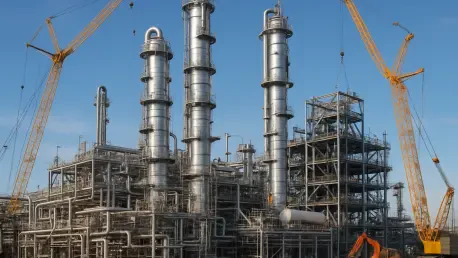

The United States energy landscape is undergoing a monumental shift with the announcement of a massive three-hundred-billion-dollar investment aimed at establishing the first major domestic oil refinery constructed in more than five decades. This historic initiative, situated at the strategic Port of Brownsville in Texas, represents a collaborative effort between America First Refining and the Indian industrial giant Reliance Industries. By focusing on the processing of one hundred percent American light shale oil, the project directly addresses a long-standing structural deficiency in the nation’s infrastructure. For years, the domestic market has struggled with a paradox: possessing a vast surplus of shale oil while lacking the specialized facilities required to refine it into usable fuel. This new development marks a departure from traditional energy models by aligning domestic production capabilities with specialized refining technology. The investment from billionaire Mukesh Ambani’s conglomerate highlights a growing trend of international private-sector cooperation intended to secure robust energy supply chains within American borders.
Strengthening National Security: The Strategic Energy Corridor
Characterized as the most significant energy deal in the nation’s history, the agreement includes a comprehensive twenty-year commitment to purchase, process, and distribute energy produced entirely within the United States. This strategic move arrives at a time when global markets are experiencing unprecedented instability, with crude oil prices recently climbing toward one hundred twenty dollars per barrel amid escalating tensions involving the United States, Israel, and Iran. The facility is designed to process approximately one point two billion barrels of shale oil, which is projected to generate an estimated one hundred seventy-five billion dollars in refined products. By localizing the entire lifecycle of energy production—from extraction to refining on the Gulf Coast—the project aims to insulate the domestic economy from volatile price swings dictated by foreign conflicts. This focus on internal resource management serves as a critical pillar for national security, ensuring that fuel supplies remain stable regardless of geopolitical disruptions elsewhere.
The finalization of this agreement established a new benchmark for environmental standards within the industrial sector, as the facility was designed to operate as the cleanest refinery currently in existence. Leaders prioritized high-efficiency technology to minimize carbon output while maximizing the economic footprint across the Texas coastline, effectively turning a logistical necessity into a multi-billion dollar economic engine. Stakeholders recognized that long-term stability required more than just increased production; it demanded an evolution in how raw materials were converted into consumer goods. Moving forward, policymakers should look toward these private-public partnerships as blueprints for revitalizing other aging infrastructure sectors, such as electrical grids and transport hubs. The emphasis shifted toward a proactive stance on energy independence, suggesting that future developments must integrate advanced filtration and capture technologies from the onset. By securing this massive investment, the industry demonstrated that modernizing domestic manufacturing remains the most effective path toward decoupling the national economy from unpredictable international market forces.