
A Landmark Announcement Shakes Up Global Trade
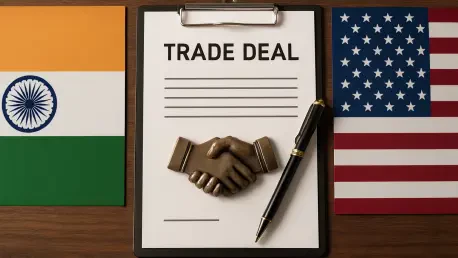
Former President Donald Trump has made a stunning announcement of a major new trade deal between the United States and India, a development he claims will be implemented immediately. Revealed through a post on Truth Social following a conversation with Indian Prime Minister Narendra Modi, the proposed agreement promises significant tariff reductions and massive purchasing commitments, potentially reordering key economic and geopolitical alliances. This article will dissect the core components of the proclaimed deal, explore the complex history of US-India trade negotiations, and analyze the profound uncertainty and skepticism surrounding its official status and legal authority.
A History of Stalled Talks and Shifting Alliances
The announcement arrives against a backdrop of long-stalled trade negotiations between the world’s two largest democracies. Previous attempts to forge a comprehensive bilateral agreement were frequently hampered by disagreements over market access, intellectual property rights, and, more recently, geopolitical alignments. A significant point of friction was India’s continued purchase of Russian oil, which prompted the Trump administration to previously impose a 25% “reciprocal” tariff on Indian goods. The recent finalization of a major free trade agreement between India and the European Union was seen by some analysts as a potential catalyst, possibly spurring the U.S. to re-engage more aggressively to secure its own economic interests with the burgeoning South Asian powerhouse.
Dissecting the Landmark Agreement: Promises and Questions
The Economics of the Deal: Tariff Reductions and Massive Purchase Pledges
At the heart of the agreement are substantial economic concessions. According to Trump, the U.S. will immediately lower its tariff on Indian products from 25% to 18%. In exchange, India has reportedly committed to a long-term goal of reducing its own tariffs and non-tariff barriers on American goods to zero. The deal’s most ambitious component is a massive purchasing commitment, with Prime Minister Modi allegedly agreeing to “BUY AMERICAN” to the tune of over $500 billion, targeting U.S. energy, technology, agricultural, and coal products. Prime Minister Modi has since corroborated a key part of the announcement, publicly thanking Trump on the social media platform X for the tariff reduction to 18%, lending some credence to the high-level discussions.
Geopolitical Shockwaves: Shifting Energy Alliances from Russia to the West
Beyond the purely economic terms, the deal carries profound geopolitical implications. A crucial element highlighted by Trump is India’s alleged pledge to cease its purchases of Russian oil, a move that would represent a major shift in its foreign policy. In its place, India would reportedly increase its energy imports from the United States and potentially Venezuela. Trump asserted that this redirection of India’s energy sourcing would be a decisive factor in helping to end the war in Ukraine, directly linking the trade pact to one of the world’s most pressing security crises and positioning the U.S. as India’s primary energy partner.
The Question of Legitimacy: A Deal in Name Only?
Despite the bold claims from both leaders, a pervasive cloud of uncertainty hangs over the deal’s official standing. Crucially, the full text of the agreement has not been released, and it remains unclear if any formal documents have been signed. The White House and the Office of the U.S. Trade Representative have yet to issue a confirmation or provide clarifying details. This ambiguity has fueled significant skepticism among legal experts and Democratic lawmakers, who question whether a former president possesses the constitutional authority to unilaterally finalize a binding international trade agreement without congressional approval. Industry professionals remain cautious, with one customs broker noting that such announcements are considered unofficial until a formal notice is published in the Federal Register.
The Future Landscape: From Announcement to Implementation
The path forward for this announced deal is fraught with challenges and unanswered questions. The primary emerging trend to watch is the official response from the current U.S. administration, which will determine whether the executive branch recognizes or pursues the terms laid out by Trump. Regulatory and legislative hurdles are significant, as major trade agreements typically require a rigorous review and approval process by Congress. The evolution of this deal will serve as a test case for the authority of presidential-level handshake agreements in an era of polarized politics and will be closely monitored by global markets and diplomatic partners alike.
Key Takeaways and Strategic Implications
The analysis of Trump’s announcement reveals three major takeaways: the potential for a significant economic realignment between the U.S. and India, a proposed geopolitical shift away from Russian energy, and a profound lack of procedural clarity that undermines the deal’s credibility. For businesses, the key recommendation is to adopt a “wait and see” approach. While the prospect of lower tariffs is enticing, any strategic decisions based on this announcement would be premature. Professionals in logistics and trade compliance should monitor official government channels, particularly the Federal Register, for any formal documentation before altering their operations.
A Bold Proclamation Awaiting Validation
In conclusion, Donald Trump’s announcement of a major US-India trade deal represents a potentially transformative moment in international relations, promising unprecedented economic integration and a significant geopolitical realignment. However, the bold promises of tariff cuts and energy pacts are currently overshadowed by fundamental questions of legal authority and official validation. Until the White House provides confirmation and a formal text is released, the agreement remains more of a powerful statement of intent than a binding reality. This episode underscores the critical importance of distinguishing between high-level political declarations and the formal, legally-grounded processes that govern international trade.