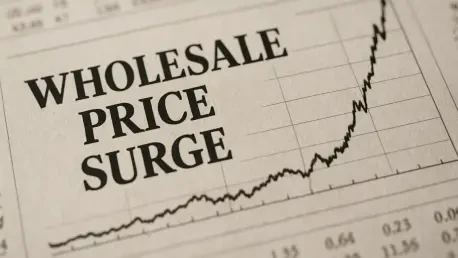

The recent and unexpected acceleration of wholesale prices across the American economy has effectively shattered the prevailing narrative that domestic inflationary pressures were finally receding into a manageable range. In January, the U.S. Bureau of Labor Statistics reported a significant jump in the core producer price index, which excludes the typically volatile sectors of food and energy, by 0.8 percent. This figure notably bypassed the anticipated 0.3 percent forecast and outperformed the growth seen in December, signaling that price stability remains elusive. On an annual basis, core wholesale inflation reached 3.6 percent, while the headline index rose to 2.9 percent. These metrics persist well above the Federal Reserve’s established 2 percent target, indicating that structural price pressures are becoming more deeply embedded within the current economic landscape. This surge suggests a pipeline of costs that will eventually reach consumers, complicating the central bank’s efforts to pivot toward a more accommodative monetary policy in the near term.
Sectoral Shifts and Pipeline Pressures
The primary catalyst for this inflationary spike was located within the services sector, which experienced its most aggressive monthly increase since mid-2025, climbing by 0.8 percent. Specifically, margins associated with professional and commercial equipment wholesaling and a substantial 2.5 percent surge in trade services prices acted as heavy contributors to the overall index. While goods prices experienced a marginal decline of 0.3 percent, this downward movement was largely offset by a nearly 5 percent rise in metal prices and escalating costs for intermediate components. These rising expenses for raw materials and business-to-business services create a ripple effect throughout the supply chain, often referred to as pipeline pressure. Such pressure typically forces manufacturers and service providers to eventually pass these costs down to the retail level. Furthermore, the persistent strength in the labor market within these sectors suggests that wage growth may also be sustaining these higher price levels, making the task of cooling the economy even more difficult for federal regulators.
Navigating Policy Friction and Market Strategy
This data highlighted a growing tension between administrative goals and the mandates of the Federal Reserve. While executive rhetoric suggested that inflation was under control to advocate for lower interest rates, these producer price index figures demonstrated that the central bank had to remain cautious. Market analysts consequently shifted their expectations, forecasting that the central bank would maintain current interest rates until at least the summer. There was also early evidence that specific tariff policies contributed to higher costs for apparel and intermediate goods, creating a challenging environment for businesses reliant on global supply chains. To mitigate these risks, organizations prioritized the diversification of suppliers and invested in automation to offset rising service costs. Financial leaders examined hedging strategies for industrial metals and looked toward long-term contracts to stabilize procurement expenses. The persistent structural reality of rising wholesale costs required a pivot toward operational efficiency and more conservative fiscal planning to withstand the ongoing volatility.