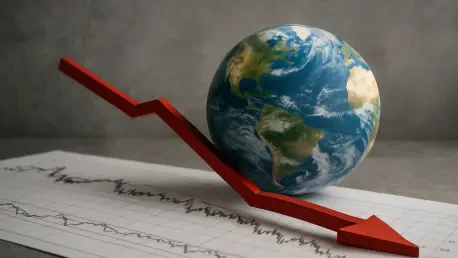

A comprehensive report from the United Nations on the world economic situation paints a picture of moderated momentum, projecting that global economic growth will decelerate to 2.7 percent this year before a marginal recovery to 2.9 percent in 2027. This overarching trend signals that the pace of expansion will remain stubbornly below the pre-pandemic average of 3.2 percent, suggesting a prolonged period of subdued economic activity. At the heart of this forecast lies the significant impact of heightened trade tensions, particularly a sharp increase in tariffs initiated by the United States. However, the analysis also highlights an unexpected degree of resilience within the global economy. The absence of a full-blown, wider trade war has been instrumental in limiting disruptions, allowing key economic drivers to partially offset the negative pressures. This complex dynamic, where headwinds from protectionist policies are met with surprising fortitude in consumer and government sectors, defines the current global economic landscape and sets the stage for a period of careful navigation by policymakers worldwide.
Resilience Amidst Trade Tensions
Despite widespread fears, the global economy has adeptly navigated the turbulent waters of increased U.S. tariffs without succumbing to a more profound downturn. A key element in this resilience was the strategic response of businesses and consumers, coupled with supportive governmental policies. Many companies engaged in front-loading shipments and accumulating inventories to preempt the full impact of the tariffs, creating a temporary buffer against supply chain disruptions. Simultaneously, solid consumer spending in major economies provided a crucial pillar of support, bolstered by widespread monetary easing and remarkably stable labor markets that sustained household incomes and confidence. Furthermore, the continued application of macroeconomic policy support from governments played a vital role in cushioning the blow. This combination of proactive commercial strategies, unwavering consumer demand, and strategic policy intervention demonstrated a collective capacity to absorb significant economic shocks, preventing the tariff-related pressures from spiraling into a wider, more damaging global trade conflict.
A Divergent Path for Major Economies
The global slowdown ultimately manifested differently across major economic blocs, reflecting unique domestic policies and varying levels of exposure to geopolitical headwinds. In the United States, growth slowed but was ultimately supported by expansionary fiscal and monetary measures, culminating in a 2.0% expansion for 2026, though inflation persisted as a challenge by remaining above the central bank’s 2% target. China’s economy navigated the period with relative strength, achieving a 4.6% growth rate that was significantly aided by a temporary de-escalation of trade disputes and robust domestic policy initiatives designed to sustain internal demand. In contrast, the European Union experienced a more constrained environment, with higher U.S. tariffs and ongoing geopolitical uncertainty limiting its expansion to a modest 1.3%, driven primarily by consumer spending. Meanwhile, South Asia, spearheaded by India, showcased remarkable fortitude. The region’s growth moderated to a still-strong 5.6%, with India’s economy expanding by an impressive 6.6%, largely offsetting the tariff impacts through sustained public investment and resilient private consumption.