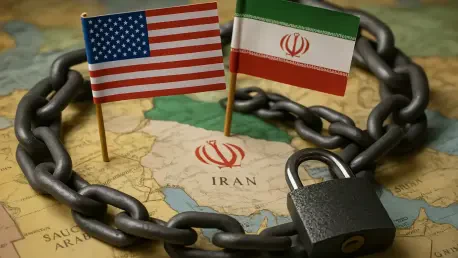

The price of beef in Iran has skyrocketed by over 150 percent since the onset of the war, reflecting the devastating impact of hyper-inflation on the country’s essential food staples. This economic erosion serves as the backdrop for a massive strategic pivot by the United States, transitioning from active military engagement to a sophisticated financial offensive known as Operation Economic Outcast. After six months of conventional warfare that strained domestic resources and failed to produce a definitive resolution, the Trump administration has elevated the Treasury Department over the Pentagon. This maneuver aims to leverage the global dominance of the U.S. dollar to achieve what kinetic strikes could not: the total isolation of the Iranian regime. By weaponizing the international financial architecture, Washington seeks to dismantle the funding mechanisms for Tehran’s nuclear and missile programs without further boots on the ground. The current objective focuses on exhausting the regime’s resources until it can no longer sustain its military operations or maintain internal order.
Financial Blockades: Dismantling the Iranian Revenue Stream
The core of this strategy involves an “economic D-Day” designed to dismantle the financial infrastructure that supports Iran’s military expansion. Rather than relying on immediate “scorched earth” policies that could alienate neutral nations, the U.S. is implementing a “level-setting” approach. This provides international trade partners with a final, temporary window to sever ties with Tehran before they face total exclusion from the American financial system. This maneuver utilizes the credible threat of secondary sanctions to force a binary choice between the Iranian market and the vast opportunities provided by U.S.-led global trade. By making the Iranian rial a toxic asset in the eyes of international bankers, the Treasury Department is effectively locking the country out of the Swift network and other critical payment gateways. This systemic exclusion is intended to freeze assets that the Islamic Revolutionary Guard Corps uses to fund regional proxies, ensuring that the regime’s reach is curtailed by its own lack of liquid capital.
The effectiveness of this economic blockade heavily relies on the cooperation of regional powers and global trade hubs that historically facilitated Iranian commerce. Recent diplomatic pressure has already yielded substantial results, notably with the United Arab Emirates suspending all maritime trade with Iran following a series of provocative missile attacks. By targeting the entire ecosystem that converts Iranian crude oil into liquid revenue, the U.S. Treasury is tightening the noose around the primary source of regime funding. This strategy extends beyond simple oil bans; it encompasses the insurance, shipping, and refueling industries that allow Iranian tankers to traverse international waters. As regional neighbors begin to prioritize their relationship with the American financial core, the Iranian regime finds itself increasingly adrift, unable to secure the foreign currency required to maintain its basic infrastructure and social services. This coordinated effort creates a strategic vacuum where Iran’s traditional smuggling routes are becoming too costly and risky to maintain effectively.
Diplomatic High Stakes: Managing the Chinese Connection
However, the most delicate aspect of this offensive remains the involvement of China, which continues to be Iran’s largest commercial partner and a primary buyer of its energy exports. The United States has begun a calibrated campaign of sanctioning specific Chinese and Hong Kong-based entities that facilitate the procurement of sensitive dual-use technology for Tehran. This strategy is a sophisticated high-wire act, as Washington seeks to maximize pressure on the Iranian leadership while simultaneously avoiding a total breakdown of the fragile trade truce with Beijing. By focusing on shell companies and individual financial institutions rather than the Chinese state itself, the Treasury Department maintains a level of plausible deniability that prevents immediate escalation into a broader trade war. These surgical strikes are intended to disrupt the supply chains for drone components and ballistic missile guidance systems. The aim is to make the cost of supporting Iran higher than the benefit of the trade, forcing a recalibration of Beijing’s foreign policy priorities.
Looking ahead, the success of these measures depends on high-level diplomatic summits where the U.S. intends to present evidence of Iranian non-compliance with international norms. The goal is to convince Beijing that the long-term stability of global energy markets is more valuable than its short-term trade relationship with a destabilized Tehran. This outreach involves complex negotiations regarding rare earth minerals and semiconductor export controls, which are being used as leverage to gain Chinese cooperation on the Iranian front. While China has historically resisted American unilateral sanctions, the current economic climate in the Asia-Pacific region has made the cost of non-compliance significantly higher. As the U.S. continues to refine its list of sanctioned entities, it creates a “chilled effect” where even unsanctioned firms become hesitant to engage in business with Iran, fearing future inclusion on the blacklist. This psychological pressure is just as vital as the legal restrictions, as it effectively starves the Iranian military-industrial complex of the essential components it needs to function.
Internal Ruin: The Reality of Hyperinflation in Tehran
Inside Iran, the consequences of Operation Economic Outcast have been swift and devastating, pushing the national economy into a state of freefall that threatens the regime’s internal control. The Iranian rial has plummeted to historic lows, reaching a market rate of over two million to the U.S. dollar, which has rendered the official central bank rates entirely irrelevant for the average citizen. This currency collapse has triggered a desperate rush among the populace to liquidate their remaining life savings and purchase hard currency or gold as a hedge against total financial ruin. The psychological impact of seeing the national currency lose half its value in a single month has eroded public confidence in the government’s ability to manage the crisis. In major urban centers, queues for basic food supplies have become a daily reality, highlighting the disconnect between the leadership’s regional ambitions and the domestic reality. The government has attempted to impose price controls, but these measures have largely failed as black markets continue to thrive across the country.
The human cost of this economic warfare is reflected in the skyrocketing prices of basic necessities and a sharp contraction in the national Gross Domestic Product. With the cost of staples like rice and cooking oil rising by triple-digit percentages, the Iranian public is facing a level of hardship that fuels internal dissent and widespread despair. The International Monetary Fund now projects a significant and prolonged recession for the country, suggesting that the “maximum pressure” campaign is successfully hollowing out the regime’s domestic stability. Unlike previous rounds of sanctions, the current blockade is designed to be airtight, preventing the “back-door” trade that previously allowed the economy to limp along. As the middle class disappears and poverty levels surge, the social contract that has sustained the Islamic Republic for decades is being tested to its breaking point, creating a volatile environment for political change. This internal pressure is designed to force the leadership to choose between their survival and their pursuit of regional dominance.
Strategic Countermeasures: The Battle for the Strait
Despite its internal fragility, Tehran continues to exert counter-pressure by threatening the Strait of Hormuz, a vital maritime artery through which 20% of the world’s oil flows. By leveraging its geographic position to disrupt global energy markets, Iran hopes to influence American domestic politics and create a chokehold on the global economy that would force a relaxation of the sanctions. Efforts to monetize passage through the waterway, often in coordination with neighboring Oman, serve as a desperate attempt to circumvent the blockade and maintain some semblance of revenue. This includes the implementation of “security fees” for commercial vessels and the occasional seizure of tankers under the guise of environmental violations. These actions are a high-stakes gamble intended to drive up global oil prices, thereby punishing the energy-dependent economies of the West and their allies while demonstrating that Iran still possesses regional teeth. This maritime brinkmanship remains the most significant risk factor that could lead to a sudden return to conventional military escalation.
While the U.S. maintained its aggressive posture, diplomatic back-channels remained active throughout the crisis, with Pakistan emerging as a key mediator in the deepening conflict. High-level delegations from Islamabad attempted to revive previous ceasefire frameworks to prevent the situation from escalating back into full-scale war. These negotiations represented a parallel track to the economic offensive, seeking a middle ground that might eventually bring both nations back to the bargaining table. The focus moved toward a “compliance for relief” model, where verifiable steps toward nuclear de-escalation were met with the unfreezing of specific humanitarian assets. For future stability, observers suggested that the establishment of a permanent regional security forum would be necessary to address the root causes of the friction. By shifting the focus to long-term economic integration rather than isolation, the international community aimed to create a roadmap for a sustainable peace. This multi-layered approach was intended to provide a face-saving exit for all parties involved while ensuring global security.