
A Tense Stand-Off: Caracas’s Diplomatic Gambit Amid Political Upheaval
The fictional capture of Venezuelan President Nicolás Maduro by the United States has sent profound shockwaves through global energy markets and diplomatic circles, creating a high-stakes geopolitical drama centered on the nation’s immense oil reserves. In the immediate aftermath, Venezuela’s interim government has launched a concerted effort to reassure its primary economic lifeline, China, that its substantial investments are secure. This article explores the intricate power struggle unfolding, analyzing Caracas’s assurances to Beijing, Washington’s multi-pronged strategy to reshape the Venezuelan energy sector, and China’s calculated response to protect its strategic interests. At its core, this crisis represents a critical juncture for foreign investment, national sovereignty, and the future control of one of the world’s most significant oil producers.
The Oil-Fueled Alliance: A History of Sino-Venezuelan Economic Interdependence
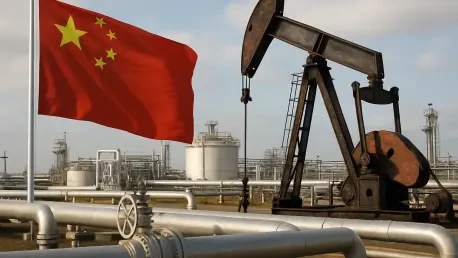
To understand the current crisis, one must look at the deep-seated economic relationship forged between Caracas and Beijing over the past two decades. As successive U.S. administrations tightened sanctions against Venezuela, China stepped into the void, becoming a crucial partner through massive loans-for-oil agreements and direct investments in energy infrastructure. State-owned giants like China National Petroleum Corporation (CNPC) and private firms such as China Concord Resources Corp. poured billions into Venezuela, securing a vital source of crude oil for China’s booming economy. This symbiotic relationship provided a financial lifeline to the Maduro regime, allowing it to weather economic isolation, while cementing China’s strategic foothold in Latin America. This history of interdependence is precisely why the U.S. intervention is viewed in Beijing not just as a political move, but as a direct threat to its long-term energy security and financial assets.
The Core Conflict: Sovereignty, Strategy, and Security
Defiance in Diplomacy: Venezuela’s Ironclad Guarantees to Beijing
In a clear act of diplomatic defiance, Venezuela has moved swiftly to calm Beijing’s fears. At a tense press briefing, Venezuelan ambassador to China, Remigio Ceballos, adamantly refuted reports that Washington would dictate the terms of its oil sales. He conveyed that Venezuela would make its own decisions based on international market prices, not on arrangements made by the U.S., directly challenging Washington’s perceived attempt to seize control of the nation’s economic sovereignty. While acknowledging Maduro’s capture as a grave warning to the world, Ceballos was emphatic that the trusted partnership between the two nations would not be broken. He assured that all bilateral cooperation, including major oil projects, would proceed uninterrupted, signaling to Beijing that Caracas intends to honor its commitments, regardless of U.S. pressure.
A Bid for Control: The U.S. Playbook for Venezuela’s Oil Industry
The U.S. administration’s actions reveal a complex strategy aimed at fundamentally reshaping Venezuela’s energy sector to align with American interests. Washington’s plan reportedly includes forcing crude prices as low as $50 per barrel and spearheading industry reforms to revive the state-run PDVSA’s flagging production. Secretary of State Marco Rubio has framed this intervention as a short-term stabilization measure designed to ultimately benefit the Venezuelan people and American consumers. In a gesture of goodwill, the U.S. has returned $500 million from an initial oil sale to Caracas and is considering a general license to ease sanctions. However, this outreach is clouded by conflicting signals; after initially demanding that Venezuela sever ties with China, Russia, Iran, and Cuba, President Trump later suggested Chinese and Indian investment would be welcome, creating deep uncertainty about Washington’s ultimate intentions.
Strategic Patience: China’s Diplomatic Countermove in Latin America
China’s response has been firm but measured, blending condemnation with broader strategic diplomacy. Beijing immediately denounced the U.S. military action, called for Maduro’s release, and voiced deep concern over the security of its vast investments. Beyond direct statements, Chinese President Xi Jinping engaged in regional diplomacy, meeting with Uruguayan President Yamandu Orsi to reaffirm China’s unwavering support for the sovereignty of Latin American nations. This meeting was a platform to champion the creation of an equal and orderly multipolar world—a thinly veiled critique of U.S. unilateralism. By framing its position within a larger geopolitical context, China is not only defending its specific assets in Venezuela but also positioning itself as a reliable partner for Latin American countries wary of U.S. intervention.
Navigating Uncertainty: The Future of Venezuelan Oil in a Multipolar World
The future of Venezuela’s oil industry is now precariously balanced on a geopolitical knife-edge. The emerging trend is a direct tug-of-war for influence, with the U.S. attempting to reassert its dominance in the Western Hemisphere and China determined to protect its global economic reach. The key question is whether the U.S. can successfully overhaul PDVSA and install a friendly regime that still respects international investments, or if its contradictory policies will alienate potential partners. The potential issuance of a general license to ease sanctions could be a game-changer, but its conditions will be scrutinized by Beijing and other global players. Ultimately, the stability of Venezuela’s energy sector hinges on its ability to maintain operational independence and the confidence of its largest creditor.
A Strategic Reckoning for Global Energy Players
The major takeaway from this unfolding crisis is that Venezuela’s oil is now a central battleground in the broader strategic competition between the United States and China. For energy companies and international investors, the key lesson is the immense political risk inherent in operating in geopolitically sensitive regions. Navigating this landscape requires a sophisticated understanding of not only market dynamics but also the shifting allegiances of global superpowers. The immediate recommendation for stakeholders is to closely monitor the diplomatic signaling from Washington, Caracas, and Beijing, as any policy shift could dramatically alter the risk-reward calculus of engaging with Venezuela’s energy sector.
The Unfolding Chapter in a Global Power Struggle
In conclusion, Venezuela’s vow to protect China’s oil stakes is more than a diplomatic statement; it is a declaration of intent in a much larger global power struggle. The events following Maduro’s capture have laid bare the deep entanglement of energy, finance, and geopolitics, reinforcing the long-term significance of Venezuela as a pivotal state in the U.S.-China rivalry. As the world watches, the core question remains: will Venezuela be able to forge an independent path that balances the competing interests of global giants, or will its vast oil wealth become a casualty of a new era of great-power competition? The answer will have lasting implications for Latin America and the future of the global energy order.