
The Unsettled Consensus: Navigating a Fractured Federal Reserve
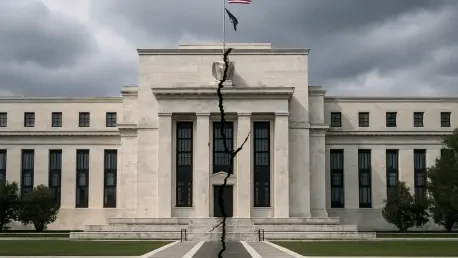
The Federal Reserve, an institution prized for its consensus-driven approach to monetary policy, is showing significant cracks in its foundation following a recent decision to lower interest rates that triggered the most public internal disagreement in over six years. This division has injected a new layer of uncertainty into financial markets, leaving investors and economists to grapple with a critical question: what does a fractured Fed mean for the future of rate cuts? This article will dissect the anatomy of this dissent, explore the conflicting expert interpretations of its significance, and analyze the potential path forward for U.S. monetary policy in an era of waning unanimity.
A House Divided: The Anatomy of the Fed’s Recent Dissent
Historically, the Federal Reserve’s Federal Open Market Committee (FOMC) strives for a united front to project stability and confidence. While dissent is not uncommon, the scale of the recent disagreement is a clear departure from the norm. The latest rate cut decision was met with three “hard dissents” from voting members, a level of opposition not seen since September 2019. This split was not a simple hawk-versus-dove scenario; it was a three-way fracture, further amplified by four “soft dissents” from non-voting participants who favored higher rates. This backdrop is crucial because it signals that the debate within the central bank is not just about the timing of policy changes but about the fundamental direction of the economy and the appropriate response.
Decoding the Discord: Three Perspectives on a Divided Fed
The Hawks vs. the Doves: Unpacking the Three-Way Split
The recent vote laid bare the ideological camps within the FOMC. On one side, two voting members dissented against the rate reduction, arguing for holding rates steady amid persistent inflationary pressures. Their hawkish stance was countered by another voting member who dissented for a third consecutive meeting, this time in favor of a more aggressive half-point cut to stimulate the economy. This rare three-way split among voting members highlights a deep-seated conflict over how to interpret current economic data and which risks—inflation or recession—are more pressing for the U.S. economy.
A High Bar for Easing: Is a Hawkish Bloc Steering Policy?
One interpretation of this division is that it reveals the growing influence of a powerful “hawkish bloc” within the Fed. According to this view, the dissents were not merely symbolic; they represent a faction that successfully tempered the final policy statement. This perspective suggests the Fed’s cautious forward-looking language was a direct concession to this group, effectively establishing a very high bar for any future rate cuts. This implies that unless there is a significant and undeniable weakening in the labor market, the path to further monetary easing will be fraught with internal resistance.
Winds of Change: Why Today’s Dissents May Not Predict Tomorrow’s Cuts
In sharp contrast, an alternative analysis argues that the current dissent may be a poor predictor of future policy. This view posits that external factors could soon override today’s internal squabbles. With the appointment of a new Fed Chair slated for 2026 and other potential leadership changes, the committee’s composition—and its prevailing ideology—could shift dramatically. This outlook suggests that more rate cuts are likely next year, potentially driven by a political agenda to bolster an economy strained by global factors like import tariff uncertainty.
Navigating the Fog: Key Signposts for the Fed’s Future Path
With experts offering conflicting roadmaps, the Fed’s future trajectory will likely be determined by a handful of key signposts. Foremost among them will be incoming economic data; the persistent tension between inflation figures and labor market indicators will either validate the hawks’ caution or vindicate the doves’ push for stimulus. Furthermore, the political landscape cannot be ignored. The lead-up to the 2026 leadership change could introduce new pressures, potentially tilting the balance of power within the FOMC and shaping the course of monetary policy.
What the Fed’s Division Means for Your Portfolio
For investors, the Fed’s internal discord translates directly into heightened market uncertainty and the potential for increased volatility. The primary takeaway is that the era of predictable, telegraphed monetary policy may be over for now. This environment calls for a strategic, not reactive, approach. Actionable strategies include ensuring portfolios are well-diversified to withstand unexpected policy shifts and paying closer attention to the full spectrum of Fed communications, including the individual speeches of both voting and non-voting members.
The End of Unanimity and the New Era of Uncertainty
The schism within the Federal Reserve marks a pivotal moment for the U.S. economy. The core theme is clear: the central bank’s unified voice has fractured, creating an unpredictable policy environment where every decision is contested. This internal battle between data-dependent hawks and forward-looking doves will define the course of monetary policy for the foreseeable future. The key takeaway is that navigating the road ahead requires acknowledging that the nation’s economic stewards disagree on the destination, forcing markets to brace for a journey filled with detours.