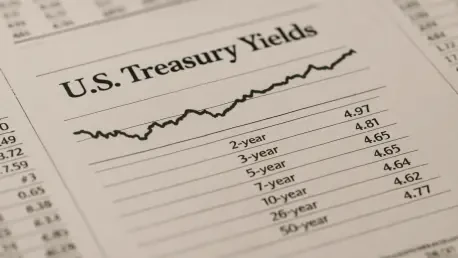

A Shifting Landscape: Why All Eyes Are on Treasury Yields
The U.S. Treasury market, a cornerstone of global finance, is sending ripples across the economy as yields continue their upward march. These rates, which influence everything from mortgage loans and corporate debt to the valuation of stocks, are a critical barometer of economic health and investor sentiment. The recent surge has left many wondering about the underlying causes. This article delves into the complex interplay of factors driving this trend, exploring how a surprisingly robust economy is clashing with shifting monetary policy expectations and a landscape clouded by geopolitical and domestic uncertainty. We will dissect the primary economic data, analyze external risks, and examine the political pressures that are collectively reshaping the bond market.
The Bedrock of Global Finance: Understanding the Bond Market’s Pulse
To grasp the current situation, it is essential to understand the fundamental mechanics of the Treasury market. Bond yields have an inverse relationship with bond prices: when investors sell bonds, prices fall, and yields rise. For months, the prevailing market narrative anticipated a cooling economy that would prompt the Federal Reserve to begin cutting interest rates. This expectation kept a lid on yields. However, the market’s sensitivity to economic data means that any information challenging this narrative can trigger a rapid repricing. The current rise in yields is not happening in a vacuum; it is a direct reaction to fresh evidence suggesting that the assumptions about an imminent economic slowdown, and therefore a dovish Fed, may have been premature.
The Trifecta of Influence: Dissecting the Key Market Movers
A Resilient Economy Rewrites the Federal Reserve’s Script
The most significant and immediate driver behind rising yields is the remarkable strength of the U.S. labor market. Recent data revealed that weekly initial jobless claims fell to 198,000, significantly below economists’ forecasts of 215,000. This figure indicates a tight and resilient job market, challenging the idea that the economy requires urgent stimulus from the central bank. In response, investors have been forced to dial back their expectations for near-term interest rate cuts. The probability of the Federal Reserve lowering rates as early as April plummeted to just 30.2% following the news. This recalibration was reflected directly in the bond market, with the benchmark 10-year Treasury yield climbing 3 basis points to 4.173% and the policy-sensitive 2-year yield jumping 5 basis points to 3.568%.
Geopolitical Tremors: How Global Tensions Add a Risk Premium
Beyond domestic economic data, a complex global risk environment is contributing to investor unease and pushing yields higher. Heightened geopolitical uncertainty often leads investors to demand greater compensation for holding long-term government debt, a concept known as a “risk premium.” Currently, several flashpoints are on the market’s radar. Diplomatic friction between the United States and Denmark over the U.S. administration’s interest in Greenland, coupled with persistent tensions involving Iran, adds layers of instability. These external pressures create an unpredictable backdrop, compelling bond investors to factor in a wider range of potential negative outcomes and, in turn, demand higher yields for the risk they are undertaking.
Uncharted Territory: Domestic Politics and Central Bank Independence
Adding a highly unusual and potent element of uncertainty is the ongoing criminal investigation into Federal Reserve Chairman Jerome Powell. The independence of a central bank is paramount for market stability, as it assures investors that monetary policy will be guided by economic data, not political agendas. Any development that threatens to undermine this independence can severely damage confidence. The current situation introduces a novel risk, raising questions about leadership stability at the Fed and the potential for political influence to seep into policy decisions. This worry injects a distinct domestic risk premium into U.S. Treasuries, as markets grapple with a scenario that falls far outside the typical playbook of economic analysis.
Navigating the Path Forward: What to Expect for Yields in the Coming Months
Looking ahead, the trajectory of U.S. Treasury yields will be dictated by the continued interplay of these powerful forces. Market participants will be intensely focused on upcoming inflation and employment reports to either confirm or contradict the narrative of a robust economy. Should data continue to point toward sustained economic strength, yields could remain elevated or even push higher as the market fully prices out the possibility of early rate cuts. Conversely, any signs of a significant slowdown could quickly reverse the trend.Fixed version:
A Shifting Landscape: Why All Eyes Are on Treasury Yields
The U.S. Treasury market, a cornerstone of global finance, is sending ripples across the economy as yields continue their upward march. These rates, which influence everything from mortgage loans and corporate debt to the valuation of stocks, are a critical barometer of economic health and investor sentiment. The recent surge has left many wondering about the underlying causes. This article delves into the complex interplay of factors driving this trend, exploring how a surprisingly robust economy is clashing with shifting monetary policy expectations and a landscape clouded by geopolitical and domestic uncertainty. We will dissect the primary economic data, analyze external risks, and examine the political pressures that are collectively reshaping the bond market.
The Bedrock of Global Finance: Understanding the Bond Market’s Pulse
To grasp the current situation, it is essential to understand the fundamental mechanics of the Treasury market. Bond yields have an inverse relationship with bond prices: when investors sell bonds, prices fall, and yields rise. For months, the prevailing market narrative anticipated a cooling economy that would prompt the Federal Reserve to begin cutting interest rates. This expectation kept a lid on yields. However, the market’s sensitivity to economic data means that any information challenging this narrative can trigger a rapid repricing. The current rise in yields is not happening in a vacuum; it is a direct reaction to fresh evidence suggesting that the assumptions about an imminent economic slowdown, and therefore a dovish Fed, may have been premature.
The Trifecta of Influence: Dissecting the Key Market Movers
A Resilient Economy Rewrites the Federal Reserve’s Script
The most significant and immediate driver behind rising yields is the remarkable strength of the U.S. labor market. Recent data revealed that weekly initial jobless claims fell to 198,000, significantly below economists’ forecasts of 215,000. This figure indicates a tight and resilient job market, challenging the idea that the economy requires urgent stimulus from the central bank. In response, investors have been forced to dial back their expectations for near-term interest rate cuts. The probability of the Federal Reserve lowering rates as early as April plummeted to just 30.2% following the news. This recalibration was reflected directly in the bond market, with the benchmark 10-year Treasury yield climbing 3 basis points to 4.173% and the policy-sensitive 2-year yield jumping 5 basis points to 3.568%.
Geopolitical Tremors: How Global Tensions Add a Risk Premium
Beyond domestic economic data, a complex global risk environment is contributing to investor unease and pushing yields higher. Heightened geopolitical uncertainty often leads investors to demand greater compensation for holding long-term government debt, a concept known as a “risk premium.” Currently, several flashpoints are on the market’s radar. Diplomatic friction between the United States and Denmark over the U.S. administration’s interest in Greenland, coupled with persistent tensions involving Iran, adds layers of instability. These external pressures create an unpredictable backdrop, compelling bond investors to factor in a wider range of potential negative outcomes and, in turn, demand higher yields for the risk they are undertaking.
Uncharted Territory: Domestic Politics and Central Bank Independence
Adding a highly unusual and potent element of uncertainty is the ongoing criminal investigation into Federal Reserve Chairman Jerome Powell. The independence of a central bank is paramount for market stability, as it assures investors that monetary policy will be guided by economic data, not political agendas. Any development that threatens to undermine this independence can severely damage confidence. The current situation introduces a novel risk, raising questions about leadership stability at the Fed and the potential for political influence to seep into policy decisions. This worry injects a distinct domestic risk premium into U.S. Treasuries, as markets grapple with a scenario that falls far outside the typical playbook of economic analysis.
Navigating the Path Forward: What to Expect for Yields in the Coming Months
Looking ahead, the trajectory of U.S. Treasury yields will be dictated by the continued interplay of these powerful forces. Market participants will be intensely focused on upcoming inflation and employment reports to either confirm or contradict the narrative of a robust economy. Should data continue to point toward sustained economic strength, yields could remain elevated or even push higher as the market fully prices out the possibility of early rate cuts. Conversely, any signs of a significant slowdown could quickly reverse the trend. The resolution or escalation of the geopolitical and domestic political situations will also be a major source of potential volatility, capable of causing sharp, unexpected movements in the bond market.
Key Implications for Investors and the Broader Economy
The rise in Treasury yields has tangible consequences for businesses, consumers, and investors. For consumers, it translates directly into higher borrowing costs for mortgages, auto loans, and credit cards. For corporations, it makes financing new projects and refinancing existing debt more expensive, potentially dampening investment and hiring. For equity investors, higher yields on “risk-free” government bonds make stocks a relatively less attractive investment, which can put downward pressure on stock prices. The key takeaway for all stakeholders is the need to prepare for a period of sustained higher interest rates. This environment calls for a re-evaluation of debt strategies, a disciplined approach to investment, and a heightened awareness of the macroeconomic landscape.
A New Paradigm for Interest Rates
In conclusion, the recent surge in U.S. Treasury yields was not the result of a single factor but a confluence of a surprisingly strong economy, escalating global tensions, and unique domestic political pressures. The robust labor market fundamentally altered expectations for Federal Reserve policy, forming the primary catalyst for the market’s repricing. This core driver was amplified by a risk-averse environment where investors demanded more compensation for uncertainty. As long as these conditions persisted, the era of rock-bottom interest rates appeared to be firmly in the rearview mirror. Navigating this new paradigm required careful attention to incoming data and a clear understanding of the multifaceted risks shaping the global financial landscape.