
European financial markets presented a complex and seemingly contradictory picture as the week began, with major indexes closing in positive territory despite substantial sell-offs in critical sectors like defense and pharmaceuticals. This divergence underscores a pervasive sense of investor caution, as the market holds its breath ahead of a week packed with high-stakes macroeconomic decisions and pivotal geopolitical developments. The upward tick in broad market indicators masks a deep-seated uncertainty, with traders navigating a landscape where corporate fortunes are being swayed by everything from central bank rhetoric to distant diplomatic overtures. The prevailing sentiment is one of tense anticipation, as the outcomes of the next few days could set the tone for the market’s direction for months to come, forcing investors to look beyond the headline numbers to understand the true health of the European economy and its constituent industries. This environment creates a challenging puzzle where surface-level gains may be a poor indicator of the underlying risks bubbling just beneath.
Central Banks and Geopolitical Tensions Take Center Stage
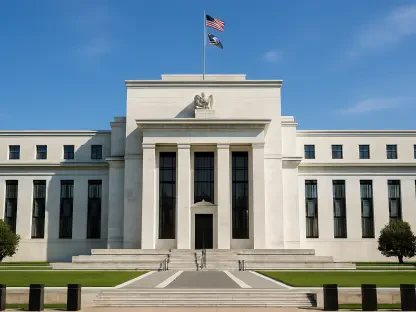
Investor focus is sharply trained on the final monetary policy meetings of 2025 for several of the world’s most influential central banks, creating a significant source of market apprehension. The European Central Bank (ECB) is widely expected to maintain its benchmark interest rate at 2%, a decision that is already largely priced into the market. However, comments from President Christine Lagarde will be scrutinized for any subtle shifts in tone, particularly as she has hinted at a potential upward revision of the eurozone’s growth forecasts. Across the channel, the Bank of England faces a much more precarious decision, with market participants divided on whether it will finally move to trim its own interest rates. This decision hangs in the balance, heavily dependent on critical inflation data due from both the eurozone and the United Kingdom. These forthcoming reports are seen as the final, crucial pieces of the puzzle that will either validate the central banks’ current stances or force an unexpected policy pivot, injecting a significant dose of potential volatility into currency and equity markets alike.
The geopolitical landscape is proving to be just as influential on market dynamics, with diplomatic discussions in Brussels having a direct and immediate impact on specific sectors. European leaders are convening to deliberate on continued financial support for Ukraine, a topic that includes a contentious proposal to leverage billions in frozen Russian assets to secure a massive 210-billion-euro loan for Kyiv. While these high-level talks set the backdrop, a surprising policy suggestion from Ukrainian President Volodymyr Zelenskyy sent shockwaves through the defense industry. His offer to potentially drop the nation’s long-term ambition of joining NATO was interpreted as a significant de-escalation signal, immediately cooling investor appetite for defense-related equities. This news triggered a notable downturn in the sector, with shares of prominent German defense contractor Rheinmetall falling by 2.6% and transmission systems manufacturer Renk seeing a 0.9% decline, illustrating the market’s extreme sensitivity to shifts in the conflict’s long-term trajectory.
Sector-Specific Fortunes Diverge Sharply
The pharmaceutical and biotech sectors experienced a particularly turbulent session, weighed down by a cascade of negative corporate updates that soured investor sentiment. Dutch biopharma firm Argenx became a notable casualty, with its stock tumbling 3.9% after the company announced it was halting a late-stage clinical trial for a promising treatment targeting a chronic eye disease. The negative news flow was compounded by French healthcare giant Sanofi, whose shares slid 3.3% following a double dose of disappointing developments. The company revealed that its multiple sclerosis drug had failed to meet its primary endpoint in a critical trial, a significant research setback. Simultaneously, it was announced that the U.S. Food and Drug Administration (FDA) had delayed its decision on another one of Sanofi’s experimental medicines. Adding to the sector’s woes, Hikma Pharmaceuticals registered a 0.9% drop on the unexpected news of its CEO’s departure. In a rare positive counterpoint, GSK’s stock managed a modest 0.5% gain after a European regulatory agency recommended its severe asthma drug for approval.
In a stark contrast to the widespread struggles in other areas, the day’s trading activity revealed isolated pockets of significant strength, underscoring the market’s fragmented nature. The Magnum Ice Cream Company, a recent spin-off from the consumer goods titan Unilever, emerged as a standout performer, with its shares soaring 6.6% by the closing bell. This powerful debut reflected strong investor confidence in the brand’s standalone potential. This isolated success, however, occurred against a backdrop of generalized caution in global markets. U.S. stocks traded mostly flat as investors awaited their own key economic data releases later in the week, while Asia-Pacific markets had already closed the day lower. The mixed session in Europe ultimately highlighted a market grappling with conflicting signals; while headline indexes suggested stability, the sharp downturns in major sectors and the outsized success of a few individual names painted a more complex picture of a marketplace defined by uncertainty and selective conviction.