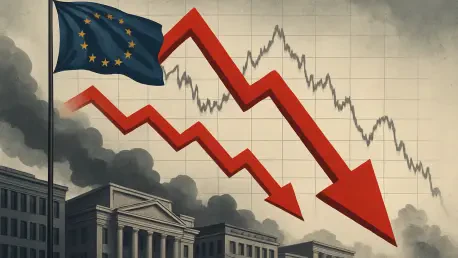

The European financial landscape has just endured a staggering transformation, as the pan-European Stoxx 600 index collapsed by nearly 8% in a single month, erasing gains that investors spent the better part of the year accumulating. This sudden descent represents the most taxing period for the continent’s bourses in several years, characterized by a sharp departure from the cautious optimism that defined previous quarters. While a marginal recovery of 0.43% occurred toward the end of the period, it did little to mask the underlying anxiety that has gripped the trading floors from London to Frankfurt. This article explores the intersection of shifting central bank policies, energy insecurity, and massive corporate transformations that have collectively rattled investor confidence.
From Recovery to Retreat: The Path Leading to the Current Slump
To comprehend the depth of this market malaise, one must examine the fragile equilibrium that preceded the current volatility. In the wake of previous energy shocks, European markets had attempted to build a foundation of stability by diversifying supply chains and banking on the cooling of inflationary pressures. However, these foundational risks were never fully eradicated; they remained dormant, waiting for a catalyst to reignite economic uncertainty. Historically, European equities have shown a heightened sensitivity to global trade disruptions, and the recent reversal serves as a stark reminder of the region’s inherent vulnerability to external shocks.
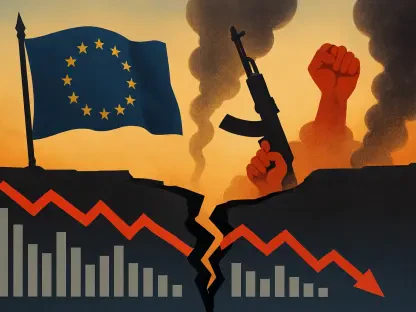
This period of retreat highlights a significant shift in the narrative of European economic resilience. While the European Central Bank had previously made strides in curbing price hikes, the underlying structural dependence on global energy markets continues to be a primary driver of instability. The current slump is not merely a statistical anomaly but a reflection of a market that is struggling to adjust to a world where cheap energy and predictable trade routes are no longer guaranteed. As geopolitical tensions flared, the perceived safety of European assets evaporated, leading to a massive repricing of risk across all major sectors.
The Convergence of Geopolitical Strain and Economic Pressure
The Inflationary Spike and Central Bank Targets
The most immediate headwind currently battering the European markets is a resurgence of inflation that has surged well beyond the European Central Bank’s 2% comfort zone. Preliminary data indicates that euro-zone inflation jumped to 2.5% this March, a significant leap from the 1.9% recorded just a month prior. This spike, fueled predominantly by escalating global energy costs, has effectively dismantled the hope that interest rate cuts were on the horizon. When price stability is compromised, the central bank is forced into a defensive posture, prioritizing the containment of inflation over the stimulation of a slowing economy.
Furthermore, this inflationary pressure is squeezing consumer purchasing power and increasing the cost of borrowing for businesses. The market’s reaction suggests a growing realization that the era of easy monetary policy is not returning anytime soon. Investors are now forced to recalibrate their portfolios, moving away from growth-oriented assets and toward more defensive positions. This climate of caution is reinforced by the fact that energy prices remain the most volatile component of the consumer price index, leaving the entire region at the mercy of global supply dynamics that are increasingly out of their control.
Geopolitical Conflict and the Energy Infrastructure Risk
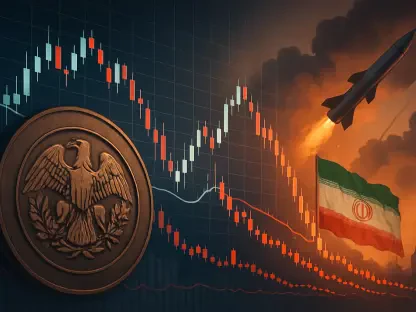
Geopolitical developments have transitioned from background noise to the primary engine of market behavior, specifically regarding the ongoing conflict involving Iran. The potential for a temporary closure of the Strait of Hormuz—a vital maritime chokepoint—has introduced a level of uncertainty that the energy markets have not seen in years. Reports suggesting that the U.S. administration might tolerate a brief disruption to accelerate the end of hostilities have sent shockwaves through the oil market. Although military objectives are reportedly moving ahead of schedule, the lingering threat of attacks on civilian energy infrastructure keeps prices in a state of constant flux.
This instability in the Middle East has a direct and immediate impact on European energy security. With the possibility of a “six-week window” for military operations, the market is currently priced for a best-case scenario of a short conflict, yet the risk of escalation remains high. Should the conflict drag on, or should energy infrastructure sustain long-term damage, the resulting supply crunch would likely trigger a deeper recessionary spiral. For European investors, the focus has shifted from corporate earnings to daily updates on maritime safety and missile defense, reflecting a high-stakes environment where geopolitical strategy dictates economic reality.
Corporate Shifts and Defensive Market Maneuvers
Beyond the macroeconomic indicators, individual corporate performance has contributed to the market’s heavy tone through aggressive and often risky strategic pivots. Unilever, for instance, saw its share price tumble by 7% following the announcement of a massive $15.7 billion merger talk involving its food division and McCormick. Such moves indicate that even consumer staples giants are feeling the pressure to restructure in order to protect their margins. Meanwhile, the pharmaceutical sector is witnessing an intense price war, with Novo Nordisk launching subscription models for its weight-loss treatments to defend market share against rising competition from Eli Lilly.
These corporate maneuvers represent a broader trend of defensive positioning. Companies are no longer focusing solely on expansion; instead, they are prioritizing the retention of a cash-strapped customer base through innovative pricing and massive consolidation. The shift toward subscription-based medicine and multi-billion dollar divestitures suggests that the corporate world is bracing for a period of prolonged stagnation. This internal restructuring, while perhaps necessary for long-term survival, adds another layer of complexity for investors who must now evaluate the success of these radical business model changes amidst a global downturn.
Navigating the Road Ahead: Innovations and Economic Shifts
The future of the European market will likely be defined by a shift toward energy independence and more rigid regulatory frameworks. We are entering a phase where corporations must prioritize liquidity and cost-management over aggressive growth. The emergence of subscription models in high-demand sectors like healthcare may provide a template for other industries looking to stabilize revenue in a volatile environment. Additionally, the drive to decouple European economies from volatile energy-exporting regions is expected to accelerate, leading to a surge in domestic energy infrastructure investments. If military tensions subside as projected, a relief rally may occur, but the underlying trend points toward a more value-oriented, defensive investment landscape.
Strategic Takeaways for Navigating Market Instability
Navigating this instability requires a fundamental rethink of traditional investment strategies. Diversification is no longer a luxury but a necessity, particularly when geopolitical “black swan” events can disrupt specific sectors overnight. Leaders must remain agile, as the pharmaceutical sector’s move toward subscription models proves that traditional pricing strategies may fail in high-inflation environments. Closely monitoring energy benchmarks and central bank rhetoric is now essential for every professional. For consumers and business owners, the priority should be maintaining high levels of liquidity and optimizing operational costs to prepare for a period of economic adjustment that may last longer than the current news cycle suggests.
Conclusion: Understanding the Resilience of European Markets
The dramatic downturn witnessed throughout this period served as a rigorous stress test for the entire European financial ecosystem. It was clear that the “perfect storm” of high inflation and geopolitical strife forced a fundamental repricing of risk that affected every corner of the market. Institutions and corporations were required to demonstrate unprecedented strategic flexibility to maintain their standing. Ultimately, the lessons learned from this volatility provided a roadmap for building more resilient portfolios that are less dependent on traditional global supply chains. Those who prioritized cost-management and energy security were better positioned to survive the upheaval. Moving forward, the focus shifted toward sustainable domestic growth as the primary defense against future external shocks.