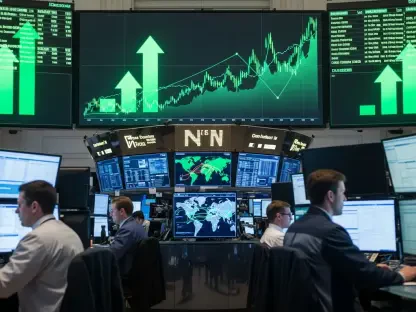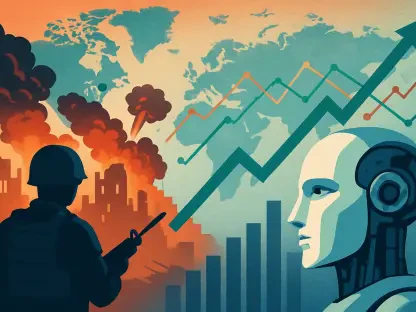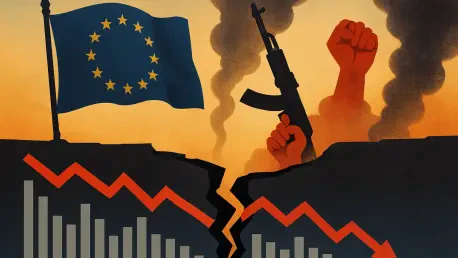

The sight of major European indices tumbling in unison often signals that the delicate balance between diplomacy and commerce has been disrupted by forces far beyond the trading floor. As of March 2026, the intersection of military tension and high-stakes posturing has created a climate of profound risk aversion, leaving global investors searching for stability. This article explores why specific geopolitical rifts—centered on the Middle East and fractured international alliances—are causing such significant tremors across the continent. By examining the recent fluctuations in the Stoxx 600, the DAX, and the CAC 40, we aim to uncover the underlying mechanics of how political uncertainty translates into market corrections.
The Historical Context of Energy Security and Global Trade
To understand the current market jitters, one must look at the foundational role that energy security plays in European economic stability. For decades, the flow of oil through the Strait of Hormuz has been a vital artery for global commerce, and any perceived threat to this passage historically triggers immediate inflationary fears. These background factors matter because Europe remains highly sensitive to energy price shocks, and the latest diplomatic maneuvers regarding Iran’s infrastructure have reignited long-standing anxieties about supply chain resilience.
The Fragile State of Modern Diplomacy
The U.S.-Iran Standoff: A 10-Day Ultimatum
A primary driver of the recent market downturn is the strategic ambiguity surrounding the decision to extend a hiatus on military strikes against Iran’s energy infrastructure. While the 10-day extension to April 6 was intended to provide a window for peace talks, the markets reacted with skepticism rather than relief. The 0.9% drop in the Stoxx 600 reflects a “wait-and-see” attitude that has turned into active selling. Without verified progress or official confirmation from Tehran, investors view the extension as a ticking clock that prolongs maximum uncertainty.
Fissures Within the G7: International Alliances
The rift is not limited to the Middle East; it has bled into the core of Western diplomatic institutions. During the G7 foreign ministers’ meeting in France, the reported exclusion of South Africa has highlighted deepening divisions regarding the management of global conflicts. This diplomatic friction suggests a lack of a unified Western front, which historically provides a sense of geopolitical insurance for markets. When major powers disagree on the rules of engagement, it creates a fragmented environment that makes long-term capital investment increasingly difficult.
Corporate Resilience: Divergence From Macroeconomic Gloom
Despite the overarching negative sentiment, the market is witnessing a unique divergence where specific corporate successes struggle to offset broader systemic risks. For instance, the potential merger between Pernod Ricard and Brown-Forman, which saw Pernod’s shares jump 8%, illustrates a consolidation trend in the spirits industry. Similarly, AstraZeneca’s gains following successful clinical trials show that innovation continues. However, these isolated wins are often overshadowed by the fact that nearly all sectors closed in the red, proving that strong fundamentals can be neutralized by volatility.
Predicting the Path of Market Recovery and Risk
Looking ahead, the evolution of European markets will likely be dictated by the outcome of the April 6 deadline and the shifting dynamics of international trade blocs. If negotiations fail, a pivot toward more defensive investment strategies and a potential spike in energy-related commodities is expected. Furthermore, the rising influence of unilateral decision-making over multilateral diplomacy suggests that regulatory environments may become more unpredictable. Technological shifts in energy production may eventually decouple European growth from Middle Eastern tensions, but the transition remains incomplete.
Navigating Uncertainty in a Volatile Investment Climate
Geopolitical risk is no longer a secondary consideration; it is a primary driver of equity valuations. For businesses and investors, the best practice is to prioritize liquidity and diversification across geographic regions that are less exposed to the U.S.-Iran friction. Professionals should closely monitor diplomatic cables and official government communications rather than relying solely on speculative reports. Applying this information requires a tactical approach, balancing opportunistic gains in healthcare and industry consolidation with a robust hedge against systemic risks.
The Enduring Impact of Geopolitical Rifts on Global Finance
The recent rattling of European markets served as a reminder of how deeply interconnected global politics and finance had become. The declines in the DAX and CAC 40 represented a collective loss of confidence in the stability of international trade routes. Strategic actors began prioritizing localized supply chains and energy independence to mitigate future shocks. Ultimately, the ability of world leaders to move toward clear, verifiable agreements remained the only factor capable of restoring long-term order to the world’s financial centers.