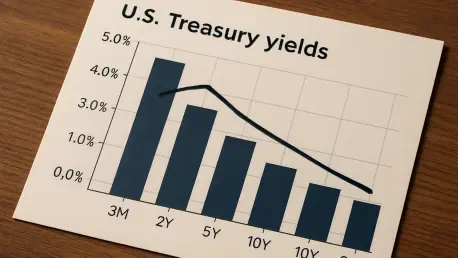

The recent and sudden escalation in U.S. Treasury yields has sent shockwaves through global financial markets as the benchmark ten-year note reached its highest level since the middle of February. This sharp movement upward, specifically pushing the ten-year yield toward the 4.134% threshold, signaled a significant shift in investor sentiment regarding the stability of the fixed-income landscape. As yields move inversely to bond prices, this sell-off reflected a deep-seated concern that the dual pressures of international conflict and domestic growth might force interest rates to remain elevated for longer than previously anticipated. Both short-term two-year yields and long-term thirty-year bonds mirrored this trend, indicating that the volatility was not confined to a single segment of the curve. Market participants found themselves navigating a complex environment where traditional safe-haven assets were being re-evaluated against a backdrop of rising inflationary risks and a rapidly evolving geopolitical narrative that challenged established economic forecasts.
Geopolitical Friction and Energy Market Volatility
A significant catalyst for this bond market turmoil was the intensifying friction involving the United States and Iran, which raised the specter of severe energy supply disruptions. Following reports of a recent tanker attack and increasingly hostile rhetoric from Iranian officials concerning ceasefire negotiations, West Texas Intermediate crude prices surged past eighty dollars per barrel. Investors focused heavily on the Strait of Hormuz, a narrow waterway responsible for the passage of one-fifth of the global oil supply, fearing that any closure would trigger a massive inflationary spike. In response to these threats, the Trump administration coordinated plans to provide naval escorts and risk insurance for commercial tankers traversing the region. Meanwhile, Treasury Secretary Scott Bessent moved to support Gulf oil trade while signaling a new fifteen percent global tariff policy. This combination of heightened military posture and trade measures fueled the rise in yields as the market braced for the costs of regional instability.
Economic Resilience and the Path of Monetary Policy
Beyond the geopolitical sphere, robust domestic economic indicators played a critical role in driving yields higher by challenging the necessity of near-term rate cuts. Weekly jobless claims fell below expectations, illustrating a labor market that remained surprisingly resilient despite broader global uncertainties. Furthermore, fourth-quarter productivity and unit labor costs rose more than economists had forecasted, suggesting that wage-related inflation remained a persistent threat to price stability. These factors forced the Federal Reserve to reconsider its trajectory, as the “tug of war” between safe-haven demand and inflationary pressure favored higher rates. Financial analysts shifted their focus toward upcoming nonfarm payroll reports to gauge the true health of the economy. Investors who prepared for a volatile environment by diversifying into inflation-protected securities or shorter-duration assets were better positioned. Proactive monitoring of energy prices remained a primary strategy for navigating these shifts.