
Navigating a Geopolitical Shift at the Panama Canal
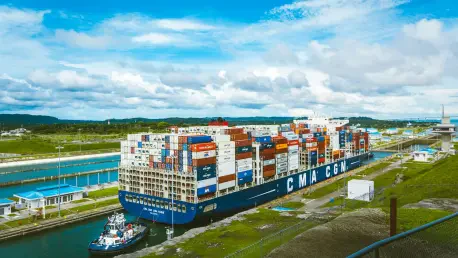
The strategic value of the Panama Canal as a linchpin for global trade and a vital maritime corridor cannot be overstated, yet it has recently become the center of an intense geopolitical firestorm. This critical waterway faced a massive shift when the Panamanian government officially terminated the port concessions held by a subsidiary of CK Hutchison, a Hong Kong-based conglomerate. This decision effectively ended decades of Chinese-linked management at the Balboa and Cristobal terminals, which sit at the Pacific and Atlantic entrances to the canal. Understanding the timeline of this seizure is essential for grasping how local legal rulings, international pressure, and superpower rivalries intersect to reshape the future of global logistics.
A Timeline of Shifting Sovereignty and Strategic Realignment
1997: The Dawn of CK Hutchison Management
Following the privatization of Panama’s port system, the Hong Kong-based firm CK Hutchison secured long-term concessions to operate the Balboa and Cristobal ports. This move was initially seen as a purely commercial expansion, but it quickly drew scrutiny from Western observers. These analysts feared that a Chinese-linked entity controlling both ends of the canal could eventually leverage its position for strategic or political purposes, potentially compromising the neutrality of the waterway during a global conflict.
2023: Legal Challenges and Constitutional Rulings
The long-standing dominance of CK Hutchison faced a definitive legal challenge when Panama’s Supreme Court reviewed the original contracts. In a landmark ruling, the court declared the extension of these concessions unconstitutional, citing procedural flaws and a lack of transparency. This judicial decision provided the Panamanian government with the necessary legal framework to move toward terminating the existing agreements and reclaiming the infrastructure under the banner of national law.
Early 2024: Failed Divestment and Beijing’s Intervention
Recognizing the mounting political pressure and legal risks, CK Hutchison attempted to sell its non-Chinese port assets in a multi-billion-dollar deal to distance itself from the controversy. However, the Chinese government intervened to block the sale. Beijing officials reportedly accused the company of capitulating to American pressure, signaling that the ports were no longer just commercial assets but were now viewed as essential components of China’s broader strategic influence in the Western Hemisphere.
Mid-2024: Official Termination and Government Seizure
Following the exhaustion of legal appeals, the Panamanian government officially seized control of the port infrastructure. To prevent a total collapse of logistics and maintain the flow of global goods, the state immediately appointed Danish giant A.P. Moller-Maersk and Swiss-based Mediterranean Shipping Co. (MSC) to manage the terminals. These firms were granted an 18-month interim mandate to stabilize operations while the country prepares for a permanent bidding process.
Late 2024: Arbitration and Diplomatic Retaliation
Immediately following the seizure, CK Hutchison condemned the move as unlawful and halted all operations, initiating international arbitration proceedings against Panama. Simultaneously, the Chinese government issued stern warnings of political and economic consequences. Reports began to surface of Beijing halting new investment projects in Panama and suggesting that Chinese-linked shipping lines might bypass the canal’s ports entirely in retaliation, which could significantly impact the local economy.
Assessing Turning Points and Structural Impacts
The most significant turning point in this timeline was the Panamanian Supreme Court’s decision to invalidate the contracts, which transformed a geopolitical tension into a domestic legal mandate. This shift allowed Panama to frame the seizure as a matter of rule of law rather than a simple surrender to foreign pressure. An overarching theme throughout this process has been the erosion of the “neutrality” of commercial infrastructure in the face of the U.S.-China rivalry. The transition from Chinese-linked management to European firms marks a clear pivot toward Western-aligned interests, highlighting a broader pattern where maritime security and logistics are increasingly weaponized in great-power competition.
Nuance, Risks, and the Future of Canal Logistics
Beyond the immediate headlines, the seizure of these ports introduces complex regional and competitive factors. While the United States viewed this as a strategic victory for maritime security, the potential for economic fallout remained high. Experts pointed out that if China successfully diverted shipping traffic away from Panama, the canal could have seen a measurable dip in revenue. Furthermore, a common misconception was that the seizure immediately resolved security concerns; however, the ongoing legal battles and the threat of arbitration deterred some future investors who feared political instability. As Panama moved toward a new competitive bidding process, global observers focused on whether permanent concessions could balance the needs of global trade with the intense pressures of international diplomacy. To understand the long-term impact, analysts suggested monitoring the upcoming 2025 arbitration hearings and the cargo volume shifts from major Chinese state-owned carriers.