
An Unprecedented Proposal Shakes European Investor Confidence
The intricate relationship between global politics and financial stability is constant, but rarely has a proposal as unconventional as purchasing a sovereign territory sent such immediate and potent shockwaves through European markets. U.S. President Donald Trump’s potential bid to purchase Greenland was initially met with disbelief, which quickly turned to alarm when backed by a potent threat: escalating tariffs against eight key European allies if they failed to facilitate a deal. This article dissects why this extraordinary maneuver roiled EU markets, exploring the immediate financial fallout, the sectors most vulnerable to the threat, and the broader implications for transatlantic trade relations. The market’s sharp, negative reaction underscores a new reality where political gambits, no matter how unorthodox, can have severe and tangible economic consequences.
A Pattern of Economic Coercion: The Context Behind the Tariff Threat
While the idea of purchasing Greenland is historically unusual, the strategic use of tariffs as a tool of political leverage is a hallmark of the Trump administration. This latest threat is not an isolated incident but rather the continuation of an “America First” trade policy that has repeatedly weaponized economic pressure to achieve geopolitical goals. Previous trade disputes with China and ongoing tensions with the EU over automotive and digital services taxes have conditioned markets to take such threats seriously. This history is crucial for understanding the current market turmoil. Investors are not reacting to the implausibility of the Greenland sale itself but to the very real and demonstrated willingness of the U.S. administration to disrupt global trade flows and impose punitive economic measures on its closest allies, creating a climate of profound uncertainty.
Dissecting the Market Sell-Off: A Sector-by-Sector Breakdown
Export-Heavy Industries Bear the Brunt of the Turmoil
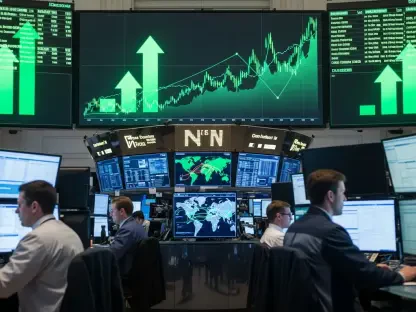
The market’s reaction was swift and unforgiving, with the pan-European Stoxx 600 index falling 1.23%. The pain, however, was not distributed evenly. The sectors most directly in the line of fire were those heavily reliant on exports, particularly to the U.S. market. The European automotive sector, a cornerstone of the continent’s industrial base, was hit particularly hard, with the Stoxx Europe 600 Automobiles & Parts Index plummeting 2.22%. Major German automakers saw their shares slump, including BMW (-3.74%), Volkswagen (-2.82%), and Porsche (-2.68%). Similarly, Europe’s globally renowned luxury goods sector suffered steep losses. The Stoxx Europe Luxury 10 index dropped 3.15% as fears of U.S. tariffs rattled investors in brands like LVMH, Kering, and Hermes, all of which saw their stock values fall by over 3.9%.
Defensive Plays and Tech Resilience: The Market’s Contrarian Winners
Amid the widespread sell-off, a few sectors bucked the negative trend, revealing a nuanced realignment of investor capital. European defense companies, including Rheinmetall and Thales, saw their shares climb as the escalating geopolitical tensions signaled the potential for increased defense spending and international demand. This reflects a classic market rotation into sectors that thrive on instability. The technology sector, meanwhile, showed a more mixed but ultimately resilient performance. Dutch chipmaker ASM International, for example, closed higher after reporting better-than-expected preliminary bookings. This performance was driven not by transatlantic politics but by a strong rebound in Chinese orders, illustrating that some industries operate on global cycles that can, at times, insulate them from specific regional disputes.
A Flight to Safety: Gold Surges as Geopolitical Risk Spikes
The anxiety sparked by the tariff threat extended far beyond the equity markets, triggering a classic “flight to safety.” This phenomenon occurs when investors, spooked by uncertainty, pull their money out of riskier assets like stocks and pour it into traditional safe havens. The most telling indicator of this trend was the behavior of the precious metals market. U.S. gold futures surged 1.7%, hitting a 52-week high as investors sought refuge in an asset historically seen as a store of value during times of political and economic turmoil. This broader market move demonstrates that the concerns were not merely about corporate profits in a few European sectors but about the fundamental stability of the global economic order.
All Eyes on Davos: What the Future Holds for Transatlantic Trade
With markets on edge, the financial world is now looking ahead to the upcoming World Economic Forum in Davos, where President Trump is scheduled to deliver a speech. His remarks will be scrutinized for any indication of whether the Greenland-linked tariff threat is a serious policy initiative or a temporary negotiating tactic designed to extract other concessions. The outcome will set the tone for transatlantic relations for the foreseeable future. A doubling down on the threat could trigger a tit-for-tat escalation, plunging the U.S. and EU into a full-blown trade war. Conversely, a more conciliatory tone could soothe market fears, but the underlying damage to trust and predictability in global trade may already be done.
Key Takeaways and Strategic Implications for Investors
The primary takeaway from this episode was the heightened sensitivity of modern markets to geopolitical risk, even from seemingly far-fetched proposals. The analysis showed that export-dependent sectors like automotive and luxury goods were acutely vulnerable, while defense and safe-haven assets like gold could benefit from the resulting instability. For investors, this underscored the critical need for portfolio diversification and a robust strategy to hedge against political volatility. For business leaders, especially those reliant on international supply chains, it served as a stark reminder to build resilience and contingency plans to navigate an increasingly unpredictable trade landscape.
The New Geopolitical Reality: A Concluding Thought
Ultimately, the market turmoil over Trump’s Greenland bid was a powerful illustration of a new and volatile geopolitical reality. It reinforced that the post-war consensus on free and stable trade could no longer be taken for granted. The incident showed how quickly political rhetoric could be translated into credible economic threats that wipe billions from company valuations. In the long term, this event was significant because it forced markets to price a higher degree of political risk into their models. The market’s potent reaction was more than just a momentary tremor; it was a clear message to global leaders that economic stability and diplomatic predictability are inextricably linked.Fixed version:
An Unprecedented Proposal Shakes European Investor Confidence
The intricate relationship between global politics and financial stability is constant, but rarely has a proposal as unconventional as purchasing a sovereign territory sent such immediate and potent shockwaves through European markets. U.S. President Donald Trump’s potential bid to purchase Greenland was initially met with disbelief, which quickly turned to alarm when backed by a potent threat: escalating tariffs against eight key European allies if they failed to facilitate a deal. This article dissects why this extraordinary maneuver roiled EU markets, exploring the immediate financial fallout, the sectors most vulnerable to the threat, and the broader implications for transatlantic trade relations. The market’s sharp, negative reaction underscores a new reality where political gambits, no matter how unorthodox, can have severe and tangible economic consequences.
A Pattern of Economic Coercion: The Context Behind the Tariff Threat
While the idea of purchasing Greenland is historically unusual, the strategic use of tariffs as a tool of political leverage is a hallmark of the Trump administration. This latest threat is not an isolated incident but rather the continuation of an “America First” trade policy that has repeatedly weaponized economic pressure to achieve geopolitical goals. Previous trade disputes with China and ongoing tensions with the EU over automotive and digital services taxes have conditioned markets to take such threats seriously. This history is crucial for understanding the current market turmoil. Investors are not reacting to the implausibility of the Greenland sale itself but to the very real and demonstrated willingness of the U.S. administration to disrupt global trade flows and impose punitive economic measures on its closest allies, creating a climate of profound uncertainty.
Dissecting the Market Sell-Off: A Sector-by-Sector Breakdown
Export-Heavy Industries Bear the Brunt of the Turmoil
The market’s reaction was swift and unforgiving, with the pan-European Stoxx 600 index falling 1.23%. The pain, however, was not distributed evenly. The sectors most directly in the line of fire were those heavily reliant on exports, particularly to the U.S. market. The European automotive sector, a cornerstone of the continent’s industrial base, was hit particularly hard, with the Stoxx Europe 600 Automobiles & Parts Index plummeting 2.22%. Major German automakers saw their shares slump, including BMW (-3.74%), Volkswagen (-2.82%), and Porsche (-2.68%). Similarly, Europe’s globally renowned luxury goods sector suffered steep losses. The Stoxx Europe Luxury 10 index dropped 3.15% as fears of U.S. tariffs rattled investors in brands like LVMH, Kering, and Hermes, all of which saw their stock values fall by over 3.9%.
Defensive Plays and Tech Resilience: The Market’s Contrarian Winners
Amid the widespread sell-off, a few sectors bucked the negative trend, revealing a nuanced realignment of investor capital. European defense companies, including Rheinmetall and Thales, saw their shares climb as the escalating geopolitical tensions signaled the potential for increased defense spending and international demand. This reflects a classic market rotation into sectors that thrive on instability. The technology sector, meanwhile, showed a more mixed but ultimately resilient performance. Dutch chipmaker ASM International, for example, closed higher after reporting better-than-expected preliminary bookings. This performance was driven not by transatlantic politics but by a strong rebound in Chinese orders, illustrating that some industries operate on global cycles that can, at times, insulate them from specific regional disputes.
A Flight to Safety: Gold Surges as Geopolitical Risk Spikes
The anxiety sparked by the tariff threat extended far beyond the equity markets, triggering a classic “flight to safety.” This phenomenon occurs when investors, spooked by uncertainty, pull their money out of riskier assets like stocks and pour it into traditional safe havens. The most telling indicator of this trend was the behavior of the precious metals market. U.S. gold futures surged 1.7%, hitting a 52-week high as investors sought refuge in an asset historically seen as a store of value during times of political and economic turmoil. This broader market move demonstrates that the concerns were not merely about corporate profits in a few European sectors but about the fundamental stability of the global economic order.
All Eyes on Davos: What the Future Holds for Transatlantic Trade
With markets on edge, the financial world is now looking ahead to the upcoming World Economic Forum in Davos, where President Trump is scheduled to deliver a speech. His remarks will be scrutinized for any indication of whether the Greenland-linked tariff threat is a serious policy initiative or a temporary negotiating tactic designed to extract other concessions. The outcome will set the tone for transatlantic relations for the foreseeable future. A doubling down on the threat could trigger a tit-for-tat escalation, plunging the U.S. and EU into a full-blown trade war. Conversely, a more conciliatory tone could soothe market fears, but the underlying damage to trust and predictability in global trade may already be done.
Key Takeaways and Strategic Implications for Investors
The primary takeaway from this episode was the heightened sensitivity of modern markets to geopolitical risk, even from seemingly far-fetched proposals. The analysis showed that export-dependent sectors like automotive and luxury goods were acutely vulnerable, while defense and safe-haven assets like gold could benefit from the resulting instability. For investors, this underscored the critical need for portfolio diversification and a robust strategy to hedge against political volatility. For business leaders, especially those reliant on international supply chains, it served as a stark reminder to build resilience and contingency plans to navigate an increasingly unpredictable trade landscape.
The New Geopolitical Reality: A Concluding Thought
Ultimately, the market turmoil over Trump’s Greenland bid was a powerful illustration of a new and volatile geopolitical reality. It reinforced that the post-war consensus on free and stable trade could no longer be taken for granted. The incident showed how quickly political rhetoric could be translated into credible economic threats that wipe billions from company valuations. In the long term, this event was significant because it forced markets to price a higher degree of political risk into their models. The market’s potent reaction was more than just a momentary tremor; it was a clear message to global leaders that economic stability and diplomatic predictability are inextricably linked.