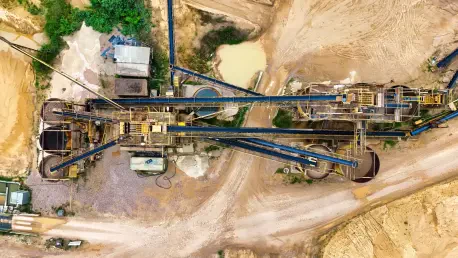

The exclusion of mineral exploration from specific tax incentive programs has effectively redirected vital venture capital toward international technology and biotechnology startups. This shift has created a precarious environment for domestic resource investors who traditionally relied on a supportive regulatory framework to offset the high-risk nature of exploration. In 2026, the global commodity landscape is defined by a sharp divergence in regional market performance, forcing a reassessment of the “home bias” that has long characterized retail portfolios. While some domestic indices have struggled under the weight of restrictive tax structures and a lack of competitive incentives, international counterparts have thrived by offering more attractive terms for venture capital. This disparity is not merely a reflection of varying mineral prices but rather a consequence of how individual jurisdictions treat their junior explorers. To remain competitive, investors are now compelled to look beyond their own borders to find environments where the risk-reward ratio is balanced by favorable government policy.
Navigating the Shift in Jurisdictional Risk and Policy
The Evolution of Risk: From Nationalization to Regulation
Historically, jurisdictional risk was synonymous with the threat of assets being seized by unstable regimes in developing nations, but the reality of 2026 presents a far more nuanced challenge for the modern investor. Today, the most significant threats to junior mining valuations often stem from the regulatory corridors of developed economies, where sudden shifts in fiscal policy can render a project unfeasible overnight. This new breed of risk manifests as a slow erosion of capital through unfavorable capital gains adjustments and the removal of exploration credits that once underpinned the industry’s growth.
When a jurisdiction increases the cost of entry for exploration companies, it effectively forces capital to seek refuge in regions that maintain a stable and predictable legislative environment. Consequently, the definition of a “safe” mining jurisdiction has shifted from one with a low threat of physical violence to one with a high degree of fiscal consistency. Investors must evaluate these administrative hurdles with the same level of scrutiny they apply to geological assays to protect their capital from localized legislative volatility.
Bridging the Support Gap: Mining as Industrial Research
The current discrepancy in government support highlights a fundamental misunderstanding of the junior mining sector’s role as the primary research and development arm of the global supply chain. While technology and biotechnology firms are frequently granted extensive tax shields to encourage innovation, the mineral exploration sector often finds itself marginalized. This lack of parity is frequently described as a major setback for the retail investors who provide the liquidity necessary for early-stage discoveries. Without a competitive tax environment, the flow of capital toward critical mineral exploration is stifled.
This ideological contradiction has prompted a mass migration of investment toward markets like Canada, where the regulatory framework is more closely aligned with the realities of mineral discovery. Success in this environment requires identifying where a government’s legislative actions match its economic rhetoric rather than relying on historical reputations. By recognizing these policy failures early, investors can pivot toward regions where the regulatory environment remains supportive, ensuring that their capital is deployed in jurisdictions that value the resource sector.
Strategies for Building a Robust Global Portfolio
Capitalizing on Global Mineral Endowments and Diversification
A truly robust portfolio must acknowledge that the earth’s mineral wealth is not distributed according to political boundaries, necessitating a strategy that follows geology rather than geography. While Australia remains a dominant force in the iron ore and lithium sectors, other essential materials like platinum group metals, high-grade uranium, and massive copper deposits are frequently concentrated in Africa, Canada, and parts of South America. By diversifying across these regions, investors can hedge against the localized downturns of a single stock exchange while gaining exposure to commodities that are in high demand.
For instance, the performance gap between the Canadian small-cap index and its domestic peers has demonstrated that international exposure can stabilize a portfolio even when one market faces systemic headwinds. This approach allows for a more dynamic participation in the global resource cycle, ensuring that an investor is not overly exposed to the policy shifts or commodity gluts of any single nation. Mastery of these markets involves tracking global demand trends over local headlines to find undervalued assets that possess superior geological characteristics.
Future Perspectives: Transitioning Toward International Resilience
The transition toward a globalized strategy allowed resource investors to stabilize their holdings by tapping into the unique mineral strengths of diverse continents. By moving away from the “home bias” that had previously left many portfolios vulnerable, savvy market participants successfully identified high-quality projects in regions where the regulatory environment actively supported mineral discovery. This strategic pivot ensured that portfolios were not solely dependent on a single government’s legislative agenda, providing a crucial buffer against the volatility of the 2026 economic cycle.
In the end, the decision to embrace international markets provided a shield against the fiscal instability of domestic policies that penalized high-risk exploration. Those who adopted this broader view were better positioned to navigate the complexities of the resource cycle with confidence. By prioritizing geological potential and regulatory stability over domestic familiarity, investors secured a path toward long-term resilience. This global approach ultimately transformed the way junior mining assets were valued and managed in an increasingly interconnected and policy-driven financial landscape.