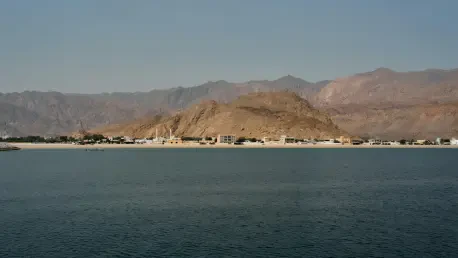

The current geopolitical equilibrium of the Persian Gulf remains the primary barometer for the health of the international economy, especially as renewed tensions threaten the maritime arteries through which a significant portion of the world’s crude oil and liquefied natural gas flows. As of early 2026, the Strait of Hormuz serves as a critical choke point, handling nearly twenty-one million barrels of oil daily, representing approximately twenty percent of global consumption. Any sustained disruption to this passage would likely trigger an immediate and aggressive spike in Brent Crude prices, potentially exceeding one hundred and fifty dollars per barrel within a matter of weeks. Such a surge would not only inflate transportation costs but also penetrate every level of the global supply chain, from agricultural fertilizers to petrochemical derivatives used in medical manufacturing. Financial analysts monitor these developments closely, noting that the margin for error in global energy markets has reached its narrowest point in recent years due to limited spare capacity.
Maritime Security: The Threat to Commodity Markets
The risk of a maritime blockade or localized skirmishes in the Gulf has prompted shipping companies to reassess their operational protocols and insurance coverage. War risk premiums for Very Large Crude Carriers (VLCCs) have climbed significantly, forcing logistics firms to either absorb these costs or pass them on to consumers at the pump. Beyond the immediate rise in fuel prices, the psychological impact on the commodities market often leads to speculative hoarding and increased volatility in futures contracts. Technological integration in maritime surveillance, such as real-time satellite telemetry and automated drone patrols, provides some clarity but cannot fully mitigate the physical risks of mine deployment or drone-based attacks on commercial vessels. These security concerns are exacerbated by the increasing interconnectedness of regional ports like Jebel Ali and Khalifa, where any slowdown in throughput ripples across the Indian Ocean and into European distribution centers, creating a persistent state of economic anxiety for traders.
Liquefied natural gas (LNG) represents another critical vulnerability, as many industrial economies have transitioned toward gas to meet carbon reduction targets while maintaining baseload power. Qatar, a dominant force in the LNG sector, relies almost exclusively on the Persian Gulf to export its production from the North Field Expansion project. A blockade would essentially isolate some of the world’s largest gas liquefaction facilities, leaving major importers like Japan, South Korea, and Germany scrambling for alternatives in an already tight market. Unlike oil, which can occasionally be rerouted or drawn from strategic reserves via land-based pipelines, LNG transport is constrained by the availability of specialized cryogenic tankers and regasification terminals. The inability to secure these shipments would likely result in industrial curtailments and mandatory energy rationing in several Northern Hemisphere nations, potentially stalling manufacturing output and reducing Gross Domestic Product growth across multiple continents simultaneously.
Macroeconomic Contagion: Institutional Response Strategies
Central banks across the globe face a precarious balancing act as they attempt to curb energy-driven inflation without triggering a deep contraction in consumer spending. Higher energy prices act as a regressive tax, disproportionately affecting emerging markets where fuel and food constitute a larger share of the average household budget. If the Federal Reserve and the European Central Bank are forced to maintain high interest rates to combat rising input costs, the resulting tightening of credit could stifle innovation and investment in the technology sector. Furthermore, the volatility in energy markets often leads to a “flight to safety,” where investors pull capital from developing economies and pour it into United States Treasuries, causing sharp currency devaluations. This fiscal pressure limits the ability of sovereign governments to provide stimulus or support for green energy transitions, creating a cycle of dependency and economic fragility that is difficult to break without significant structural reforms.
The historical response to these regional tensions focused on building systemic resilience through diverse energy corridors and enhanced strategic reserves. Policymakers successfully implemented decentralized energy grids that utilized localized renewables, thereby reducing the direct impact of fossil fuel price shocks on domestic consumers. Nations that invested in bypass pipelines, such as those cutting across the Arabian Peninsula to the Red Sea, effectively bypassed the most dangerous naval choke points. Diplomatic efforts also prioritized the establishment of maritime safety zones, which were protected by multilateral naval coalitions to ensure the unhindered flow of civilian commerce. Financial institutions adopted more robust stress-testing scenarios that accounted for prolonged supply chain disruptions, allowing them to maintain liquidity during periods of peak market stress. These proactive measures ultimately transformed the global economic landscape, shifting the focus from reactive crisis management to long-term structural stability.