
Trump’s Bold Housing Gambit: A Promise of Lower Mortgage Rates
In a move that caught both Wall Street and Main Street by surprise, former President Donald Trump announced a directive for his “Representatives” to purchase $200 billion in mortgage bonds. The stated goal is to directly combat the housing affordability crisis by lowering mortgage rates and, consequently, monthly payments for American families. Citing a $200 billion cash reserve held by government-sponsored mortgage giants Fannie Mae and Freddie Mac—a situation he attributes to his first-term policies—Trump has positioned this plan as a decisive solution to one of the most pressing economic issues facing voters. This article will dissect the ambitious proposal, examining the crucial questions of its implementation, legal authority, and potential effectiveness in an already complex economic landscape.
The Economic Backdrop: Why Housing Affordability Is Center Stage
To understand the significance of Trump’s announcement, one must consider the current housing market. For years, prospective homebuyers have been squeezed by a combination of high home prices and soaring mortgage rates, which have hovered near two-decade highs. This challenging environment has locked many out of the market and placed a significant financial strain on recent buyers. At the center of this ecosystem are Fannie Mae and Freddie Mac, the government-sponsored enterprises (GSEs) that play a pivotal role by purchasing mortgages from lenders, packaging them into mortgage-backed securities (MBS), and selling them to investors, thereby providing essential liquidity to the housing market. Since the 2008 financial crisis, both entities have operated under federal conservatorship, a status that places their major financial decisions under the strict oversight of the Federal Housing Finance Agency (FHFA).
Deconstructing the $200 Billion Directive: A Closer Look
Unpacking the Ambiguity: Who Holds the Reins?
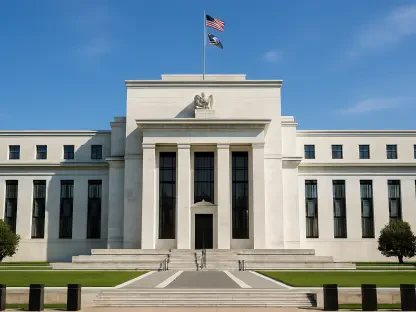
A significant cloud of uncertainty hangs over the plan’s execution, starting with the ambiguous identity of Trump’s “Representatives.” The directive lacks clarity on which government body would be tasked with such a massive purchase. While the White House has remained silent, a social media post from FHFA Director Bill Pulte suggested that Fannie and Freddie would be “executing” the plan. However, this raises immediate questions of authority. The Federal Reserve, an independent institution, has previously purchased mortgage bonds through its quantitative easing programs, but it cannot be directly ordered by the executive branch. The Treasury Department has also made similar purchases, but historically, such interventions have been reserved for moments of extreme financial crisis, making the chain of command a critical issue.
Market Realities vs. Political Promises: Gauging the Potential Impact
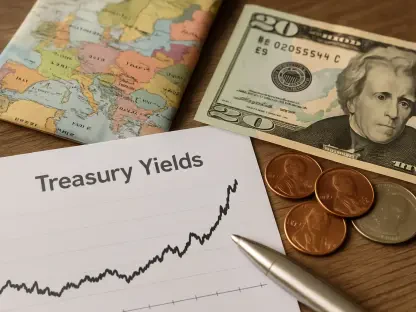
Beyond the logistical hurdles, there is considerable skepticism among economists about whether the action would achieve its intended goal. While injecting $200 billion into the mortgage bond market sounds substantial, its direct effect on consumer mortgage rates is not guaranteed. Mortgage rates are not set in a vacuum; they are primarily benchmarked against the yield on 10-year U.S. Treasury bonds, which are influenced by broader economic factors like inflation and Federal Reserve policy. Purchasing mortgage-backed securities could lower the spread—the additional yield investors demand to hold MBS over safer Treasury bonds—but the overall impact might be muted if Treasury yields remain elevated. The sheer scale of the U.S. mortgage market, which totals over $13 trillion, also raises questions about whether a $200 billion purchase is large enough to make a lasting dent in rates.
Echoes of Quantitative Easing: Lessons from the Past
The proposed action inevitably draws comparisons to the Federal Reserve’s quantitative easing (QE) programs, which involved large-scale purchases of both Treasury bonds and MBS to stimulate the economy after the 2008 crisis. While QE was credited with helping to lower long-term interest rates, it was part of a much broader, coordinated monetary policy strategy executed by an independent central bank. A one-off purchase directed by the executive branch is a fundamentally different proposition. Critics of QE have long pointed to its potential unintended consequences, such as inflating asset bubbles. A politically motivated intervention in the MBS market could similarly risk spooking investors, who value predictability and regulatory independence, potentially leading to volatility that could counteract the plan’s intended benefits.
The Path Forward: Political Maneuvering and Market Reactions
Looking ahead, the proposal’s future hinges on whether it evolves from a campaign promise into a concrete policy directive. If pursued, the first step would involve clarifying the legal authority and identifying the agency responsible for the purchases. This would undoubtedly face intense scrutiny from Congress, regulatory bodies, and financial markets. The reaction from investors in the MBS market would be critical; any perception of political interference could disrupt a cornerstone of the global financial system. Consequently, many analysts view the announcement less as a detailed economic plan and more as a powerful political statement aimed at addressing voters’ deep-seated anxieties about housing costs.
What This Means for Homebuyers and the Industry
The central takeaway from this analysis is that while Trump’s $200 billion proposal directly targets a real problem, it is fraught with uncertainty. Its path from announcement to implementation is littered with legal, regulatory, and economic obstacles. For prospective homebuyers, the most prudent approach is to proceed with caution. It would be unwise to delay purchasing decisions in the hope of a sudden, dramatic drop in mortgage rates resulting from this plan. Instead, consumers should continue to focus on foundational financial health and monitor the broader economic trends, particularly the Federal Reserve’s stance on inflation and interest rates, which will remain the primary drivers of mortgage costs for the foreseeable future.
A Bold Promise in an Uncertain Market
Ultimately, Trump’s plan to inject $200 billion into the mortgage market represented a high-stakes clash between political ambition and economic reality. It highlighted a genuine desire to tackle the housing affordability crisis but proposed a mechanism that was unconventional, legally ambiguous, and economically uncertain. While the goal of lowering monthly payments for American families was universally supported, the effectiveness and wisdom of using the executive branch to directly intervene in complex financial markets remained a subject of intense debate. This proposal forced a critical conversation about the proper role of government in housing finance and whether such bold directives could truly solve deeply rooted economic challenges.