
Navigating the New Diplomatic Friction Within the G20
The historical role of the Group of Twenty as a pillar of global financial stability is facing its most rigorous test as the United States shifts its strategy toward reintegrating Russian officials into the heart of high-level economic discourse. As the United States prepares for its G20 presidency, this diplomatic pivot has created a palpable sense of unease among traditional allies. Recent invitations extended to Russian representatives for the Bangkok finance summit highlight a significant departure from the isolationist policies that defined the previous few years. This shift suggests that Washington is now prioritizing a pragmatic approach to global governance, attempting to manage economic realities rather than maintaining a strict policy of exclusion.
From Economic Isolation to Contested Re-engagement
Since the escalation of geopolitical tensions in 2022, the G20 has struggled to maintain a unified front against global economic threats. For the past four years, the prevailing Western consensus focused on the systematic decoupling of the Russian economy from international financial markets. However, the current administration in Washington is testing the viability of a new paradigm that seeks to bring Moscow back to the table for specific sector discussions. By easing pressures on critical commodities, such as the temporary lifting of sanctions on Russian diesel, the U.S. is signaling a desire to return to a sense of economic normalcy. This recalibration reflects a growing fatigue with prolonged sanctions regimes that some believe have hit their ceiling of effectiveness.
The Transatlantic Rift and the Limits of Multilateralism
European Resistance to the Normalization of Moscow
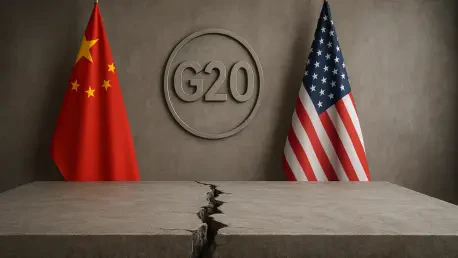
This American policy shift has triggered a sharp response from European capitals, creating a visible divide within the G20 alliance. Leaders in Europe, including high-ranking officials from Germany, maintain that any move to normalize relations with Russia is a premature concession that undermines the collective pressure intended to stop hostilities. This resistance was starkly visible at the recent meeting in Asheville, where European delegates boycotted official photographs to signal their disapproval. The moral and legal arguments posed by Europe suggest that the reintegration of a pariah state is a fundamental challenge to the shared values of the alliance.
The Breakdown of Consensus and the Rise of Disenchantment
The inability of the Bangkok finance meetings to produce a joint communique is a clear indicator of a paralyzed multilateral framework. Beyond the specific conflict with Russia, the G20 is increasingly bogged down by dissent on a variety of fronts, including trade imbalances and Middle Eastern volatility. U.S. Treasury Secretary Scott Bessent has pointed toward China as a significant obstacle to progress, accusing Beijing of blocking language related to global trade surpluses. This persistent gridlock means that the G20 is failing to provide the authoritative guidance that global markets require to navigate record public debt and energy security risks.
Middle Powers and the Burden of Geopolitical Polarization
The fallout of this outreach extends to middle powers, such as Australia, which are forced to use economic forums to voice regional security concerns. These nations find themselves caught between the competing interests of the great powers, as issues like maritime interference and territorial integrity bleed into financial policy. The notion that the G20 can remain a neutral space for technical cooperation is rapidly fading. As the U.S. pushes its “Freedom 250” theme to mark its upcoming anniversary, the reality remains one of fragmented interests where national security priorities often override the collective goal of global economic stability.
Future Projections: A Fragile Path Toward the Miami Summit
Looking forward, the upcoming leaders’ summit in Miami will serve as the definitive test for the sustainability of the transatlantic partnership. It is likely that the U.S. will continue to advocate for a pragmatic inclusion of Russia, framing it as an essential step for stabilizing global energy markets and managing international debt. However, this strategy carries the risk of creating a permanent regulatory divergence between American and European firms. If consensus remains elusive, there will likely be a move toward “minilateralism,” where smaller groups of like-minded nations coordinate policy independently of the larger G20 structure to bypass the systemic gridlock.
Strategic Takeaways for a Fragmented Global Economy
The current state of international diplomacy necessitates a shift in how global market participants approach risk. First, the era of predictable, unified Western policy in international finance has ended; businesses must now navigate a two-tier global system where allies may operate under different rules. Second, the U.S. outreach suggests a return to realpolitik, where short-term economic stability is prioritized over long-term diplomatic isolation. Professionals should focus on diversifying supply chains to withstand sudden shifts in sanction regimes and prepare for a G20 that serves as a debating floor rather than a legislative body.
Conclusion: The Precarious Future of Global Coordination
The outreach to Russia undeniably strained the internal cohesion of the G20 and exposed a widening chasm in the transatlantic alliance. As the summit in Miami approached, the focus shifted from policy coordination to the management of deep-seated rivalries between member states. This transformation highlighted that the G20’s role as the premier forum for economic stability was no longer guaranteed by shared values. Global stakeholders eventually realized that preparing for a world of fragmented leadership was more critical than waiting for a return to unified consensus. The strategic path forward required a focus on regional resilience to mitigate the risks of a fractured international order.